_edited.png)


South Mission Beach Vacation Rental Guide for 2026


West Coast Homestays
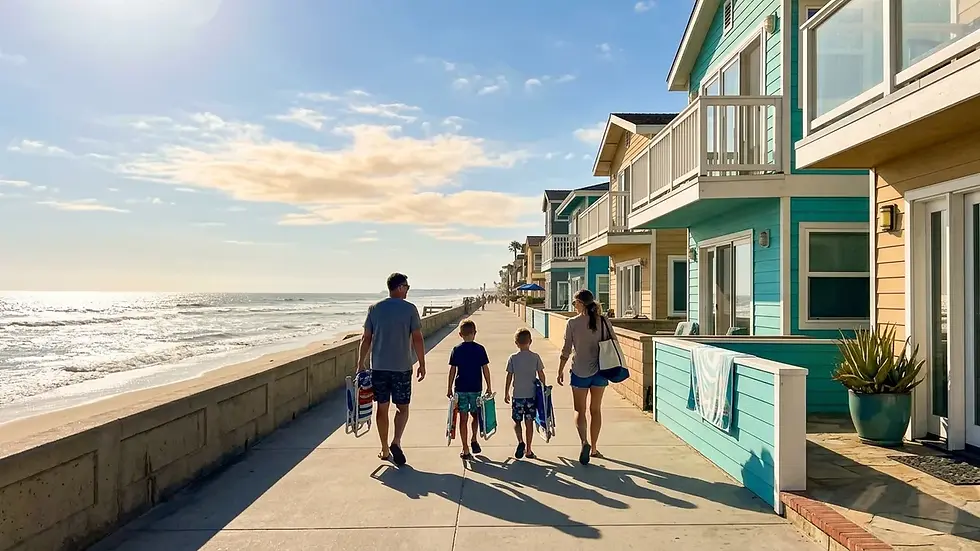
South Mission Beach sits between the Pacific Ocean and Mission Bay, with nearly two miles of beach and direct boardwalk access from most rental properties.
As of May 22, 2026, all 1,097 Tier 4 Mission Beach Whole Home STRO licenses have been issued; no new Tier 4 licenses are available, which tightens compliant inventory.
According to AirROI (June 2026), San Diego STR peak-season monthly revenue reaches $10,032 at the absolute high point, with ADR peaking at $419 per night.
Summer stays typically require a Saturday-to-Saturday booking with a 7-night minimum; off-season flexibility opens up 3 to 4-night windows at lower rates.
Property owners with licensed South Mission Beach rentals who skip professional pricing lose real money: dynamic pricing errors cost $30,000-$40,000 in a single month across a managed portfolio.
Top-quartile San Diego STR listings achieve $254+ RevPAR; the bottom 25% average only $79 RevPAR, a gap driven almost entirely by pricing strategy and listing quality.
South Mission Beach is a specific neighborhood, not just a search filter. Its southern end sits near the Mission Bay Channel, which keeps the area quieter than the stretch of boardwalk running through North Mission Beach toward Pacific Beach. That geographic character matters when you're deciding where to book, and it matters equally when you're deciding how to price a property you own here.
The 2026 regulatory picture has changed the market in ways that weren't true even two years ago. The City of San Diego's STRO license cap for Mission Beach is full. That creates real scarcity in compliant inventory and gives well-managed, licensed properties a meaningful pricing advantage. This guide breaks down what that means in practice.

What Makes South Mission Beach a Premier Vacation Rental Destination?
South Mission Beach is a beachfront neighborhood located at the southern end of the Mission Beach peninsula in San Diego, California. The area sits between the Pacific Ocean to the west and Mission Bay to the east, offering guests both ocean-wave access and protected bay waters within a short walk of each other. Belmont Park, the historic wooden roller coaster landmark on Mission Boulevard, anchors the neighborhood's recreational identity. Mission Boulevard's shops and restaurants run along the spine of the peninsula, putting food, bike rentals, and surf shops within walking distance of most vacation rental properties.
The southern tip of the neighborhood, near the Mission Bay Channel, draws a notably calmer crowd than the northern sections closer to Pacific Beach. Families with young children often prefer South Mission Beach precisely because the ocean break is gentler in spots, the boardwalk sees less foot traffic than the Crystal Pier area, and the bay-side parks offer flat, sheltered spaces for kids to play without dodging waves.
For multi-generational groups, the bay access is the real draw. You can kayak on Mission Bay in the morning, walk to the Pacific Ocean surf in the afternoon, and eat dinner on Mission Boulevard without touching a car. That combination is genuinely hard to replicate in other San Diego neighborhoods at the same price point. According to Mission Beach, CA Vacation Rentals on Airbnb, the platform currently lists roughly 1,610 vacation rentals in the broader Mission Beach area, with nightly prices starting around $40 before taxes and fees, though boardwalk-facing and oceanfront properties price significantly higher.
What Are the 2026 Booking Rules for a South Mission Beach Vacation Rental?
South Mission Beach vacation rental booking rules refer to the minimum-stay requirements, check-in/check-out schedules, and seasonal policies that govern short-term rental agreements in this San Diego neighborhood. These rules vary by operator and season, but consistent patterns have emerged across the market.
Most management companies serving this area, including Mission Sands and Beach and Bayside (operating in Mission Beach since 1986), structure summer bookings on a Saturday-to-Saturday basis with a 7-night minimum. That pattern holds through the core summer peak, roughly late June through mid-August. The first and last weeks of June and August often carry more flexibility, so if your travel dates don't fit the Saturday-to-Saturday window, those shoulder weeks are worth targeting.
Off-season minimums typically drop to 3 or 4 nights, depending on the operator. Platforms like Vacasa list a standard check-in time of 4:00 p.m. and checkout at 10:00 a.m., though some individual operators adjust those windows. If you're arriving with a large group or family, confirm the exact check-in time when booking because a 10 a.m. checkout on a Saturday followed by a 4 p.m. check-in means the property is offline for six hours of peak summer beach time.
Summer vs. Off-Season: When Should You Book?
Summer in South Mission Beach runs hot in every sense. July, June, and August are the three peak months, with San Diego STR occupancy rates averaging 61.1% and average daily rates reaching $399, according to AirROI's June 2026 market data. The absolute peak month sees ADR climb to $419 and occupancy hit 65.5%, producing monthly revenue of $10,032 for a well-positioned property. If you're booking for July, plan at least 90 days out. Average booking lead time across San Diego is 46 days, but summer South Mission Beach properties fill faster.
January, February, and November are the softest months. ADR drops to an average of $354 and occupancy to 48.5%, meaning you'll find more availability and meaningful savings. The tradeoff is weather: San Diego's winters are mild by national standards, but the marine layer can sit through mid-morning on June and July days too. If your priority is budget over peak-season crowds, January and February in South Mission Beach offer real value.
One overlooked window: late September through October. Crowds thin after Labor Day, but San Diego weather is often at its warmest and most reliable. Rates drop below summer peaks while conditions remain excellent for beach use. Operators with flexible 3-night minimums in the fall make that window particularly accessible.
What Does the STRO License Cap Mean for Renters and Owners in 2026?
The STRO license cap refers to the City of San Diego's regulatory ceiling on Short-Term Residential Occupancy licenses within the Mission Beach Community Planning Area. As of May 22, 2026, all 1,097 Tier 4 (Mission Beach Whole Home) licenses have been issued, and the Tier 4 application period is closed, according to the City of San Diego STRO Official Page. No new whole-home short-term rental licenses are available in Mission Beach.
For renters, this has a practical implication: the licensed, compliant inventory of short-term rentals in South Mission Beach is finite and not growing. Properties without a valid STRO license operating as short-term rentals are unlicensed, which creates risk for guests and owners alike. When booking, look for a property displaying its STR license number in the listing. For reference, licensed properties in this area carry numbers in formats like STR-00840L or STR-12996L, and must also hold a valid Transient Occupancy Tax Certificate.
For property owners, the cap creates a genuine competitive moat. If you hold a Tier 4 Mission Beach license, that license is non-transferable and cannot be recreated by a new entrant. The Active STRO Licenses Open Data Portal maintained by the City of San Diego lets you verify current license status and check compliance evidence, which AirROI data indicates stands at 86% across active San Diego STR listings as of 2026.
Citywide Tier 3 licenses (Whole Home, excluding Mission Beach) still have availability as of May 2026, with 829 remaining out of the 1% housing unit cap. But Mission Beach specifically operates under Tier 4, and that pool is exhausted. Owners who hold a valid license should treat it as a premium asset and manage accordingly. See the City of San Diego Community Planning Area Map to confirm whether a specific property falls within the Mission Beach CPA boundary.
How Does South Mission Beach Compare to North Mission Beach for Vacation Stays?
South Mission Beach and North Mission Beach are both sections of the same peninsula in San Diego, but they deliver meaningfully different experiences for vacation rental guests. South Mission Beach refers to the area south of Ventura Place, trending toward the Mission Bay Channel and the peninsula's southern tip. North Mission Beach runs from roughly Ventura Place north toward the Pacific Beach border near the Crystal Pier.
South Mission Beach is quieter. The boardwalk sees less foot traffic, the residential streets are calmer on summer evenings, and the proximity to the Mission Bay Channel gives the area a different energy than the stretch near the bumper cars and beach volleyball courts that cluster in the central and northern sections. Families with young children and multi-generational groups consistently gravitate toward South Mission Beach for those reasons. The southern end of the peninsula is not a secret, but it does not carry the same spring-break-adjacent reputation as parts of North Mission Beach.
North Mission Beach, by contrast, puts guests closer to Belmont Park and the high-traffic sections of Mission Boulevard. That's a genuine advantage if your group wants to be in the center of activity: the arcades, the boardwalk food stands, and the higher-density stretch of rental units. But the same density that makes it vibrant makes it louder, and weekends in July can feel crowded in a way that South Mission Beach rarely does.
Neither location is objectively better. The right choice depends on your group. If you're traveling with children under ten or a mix of ages that includes grandparents, South Mission Beach is the smarter pick. If your group is adults looking for a social, active boardwalk experience, the northern sections deliver more of that energy.
What Amenities and Property Configurations Are Available in South Mission Beach?
South Mission Beach vacation rental properties typically range from one-bedroom condos to four-bedroom beach houses accommodating up to 14 guests, with configurations spanning oceanfront boardwalk units, bay-view properties, and homes set one block from the sand. The range gives travelers a real choice between maximum ocean proximity and slightly more space or privacy at a lower rate per night.
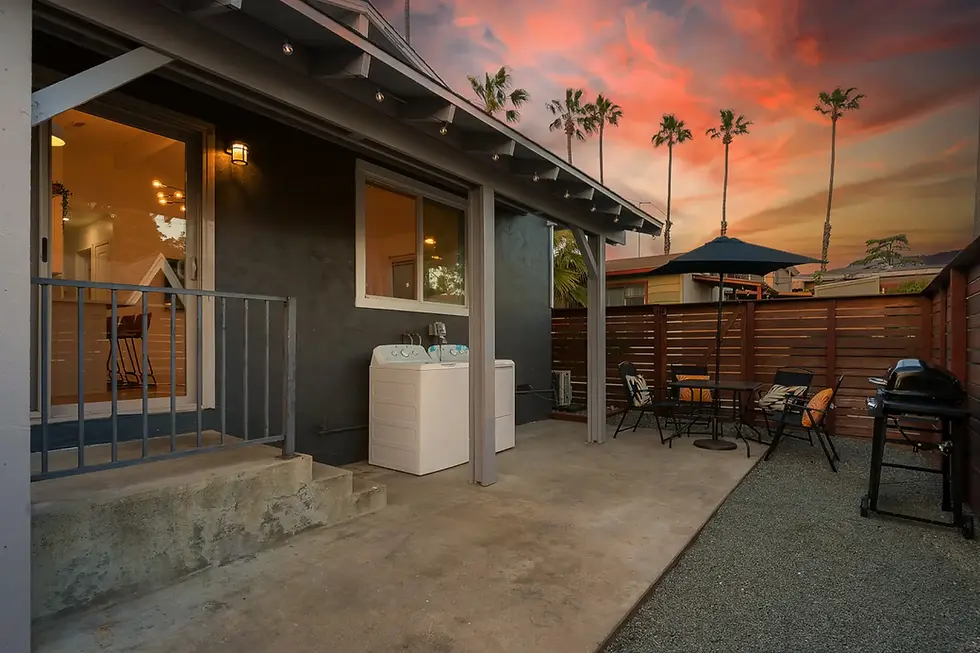
Standard amenities across most rental categories include Wi-Fi, fully equipped kitchens, in-unit washer/dryer, air conditioning, and parking, with parking being a particularly important feature given the limited street parking near the boardwalk. Oceanfront and boardwalk-facing properties often feature outdoor living spaces: walled patios, decks, or folding window systems that open the living room to the outside for an indoor-outdoor flow. Some units include built-in grills, outdoor dining, and direct beach access steps from the front door.
Family-oriented operators like South Mission Rentals include beach gear (towels, chairs, toys) and family-specific items like high chairs and pack-n-play cribs on request, which is a practical detail that separates purpose-built family properties from generic rental units. Larger properties aimed at groups, such as the 4-bedroom, 4.5-bath houses listed through San Diego Vacation Rentals (SDVR), often feature multiple full bathrooms, which matters far more than extra square footage when six or more people share a space.
Pet policies vary by operator and property. Several Mission Beach operators allow dogs with a fee, typically around $150 per pet with a two-dog maximum, though individual properties set their own terms. Confirm pet policies directly at booking; platform filters for pet-friendly properties are a starting point but don't always capture per-property fee structures.
For pool access specifically: Airbnb data for the broader Mission Beach area shows roughly 70 pool properties listed. Given Mission Beach's density and the lot sizes typical of boardwalk properties, private pools are relatively uncommon in South Mission Beach specifically. Most guests use Mission Bay Park's swimming beaches and the ocean for water recreation.
How Do You Get to South Mission Beach? Transport, Parking, and Arrival Tips
Reaching South Mission Beach from San Diego International Airport takes approximately 15-25 minutes by car under normal traffic conditions, covering roughly 5-7 miles depending on the specific property address. That distance makes it one of San Diego's most airport-proximate beach neighborhoods, which is a genuine convenience advantage over La Jolla or Encinitas for travelers arriving on tight schedules.
Driving and renting a car remains the most practical option for most vacation rental guests, primarily because of grocery runs, day trips, and the ability to carry beach gear. But parking near South Mission Beach boardwalk properties is legitimately constrained, particularly on summer weekends. Many rental properties include one or two dedicated parking spots, and this is worth confirming before booking. Street parking on Oceanfront Walk and adjacent alleys fills quickly from Friday afternoon through Sunday, often by 9 or 10 a.m. in July.
For guests who want to minimize driving during their stay, e-bikes and e-scooters are practical ways to navigate the peninsula once you've arrived. Mission Boulevard supports comfortable cycling, and the boardwalk itself accommodates bikes in less congested conditions. Several rental shops near the boardwalk offer daily and multi-day bike and surrey rentals. From a guest experience perspective, arriving by ride-share on a Saturday and renting a bike for the week is a legitimate strategy if your property's parking situation is tight.
For guests arriving from downtown San Diego without a car, the Metropolitan Transit System's Route 8 connects downtown to Mission Beach via Mission Boulevard, though travel time can reach 45-60 minutes. Ride-share from downtown typically runs 15-20 minutes and costs $18-30 depending on demand. For out-of-state visitors flying into San Diego International, renting a car remains the most flexible option, particularly for multi-day stays where day trips to La Jolla, Coronado, or Torrey Pines State Reserve are likely.

What Do 2026 Nightly Rates Look Like for South Mission Beach Rentals?
South Mission Beach vacation rental nightly rates in 2026 span a wide range depending on property size, location, and season. Understanding where rates sit by tier helps both guests set realistic booking budgets and owners calibrate pricing strategy against a competitive market.
Performance Tier | Nightly Rate | Monthly Revenue | Occupancy Rate |
Top 10% (San Diego STR market) | $739+/night | $13,532+/month | 86%+ |
Top 25% | $451+/night | $8,228+/month | 74%+ |
Median | $263/night | $4,715/month | 56% |
Bottom 25% | $159/night | $2,409/month | 33% |
Market Average (San Diego) | $388/night | $4,784/month avg | 49.9% |
Source: AirROI San Diego Airbnb Market Data, June 2026. These figures represent the broader San Diego STR market. South Mission Beach boardwalk-facing and oceanfront properties typically price above the market median given their location premium and the Tier 4 license scarcity.
The gap between top-quartile and bottom-quartile performance is striking. Top-10% listings earn $404+ RevPAR versus a market median of $148 RevPAR, a $256 per available night difference. Most of that gap is not explained by property size or location alone. It is explained by pricing strategy and listing quality. A boardwalk property with flat nightly rates priced at a single annual figure will consistently underperform a comparable property running calibrated dynamic pricing tied to local demand signals.
Peak-season rates in July average $399 across the San Diego STR market, with the absolute peak month hitting $419 per night and $10,032 in monthly revenue for top performers. For South Mission Beach properties specifically, which carry a location premium over inland San Diego listings, oceanfront and boardwalk-adjacent units in July routinely exceed those market averages. Airbnb listings for the area start around $40 per night before fees, but that floor reflects the smallest, least desirable units. A 3-bedroom boardwalk property in peak summer typically runs well above the market average rate.
Year-over-year, San Diego STR revenue grew 19.1% in 2026 according to AirROI, even as supply expanded 16.4%. That is a healthy signal: demand is absorbing new inventory without compressing rates. For owners pricing a South Mission Beach property in 2026, that demand tailwind is real, but it does not eliminate the need for precise revenue management.
For Property Owners: How Do You Maximize Revenue on a South Mission Beach Vacation Rental?
Maximizing revenue on a south Mission Beach vacation rental means combining compliant licensing, strategic pricing, and high-quality guest experience to outperform the growing competitive set. With supply up 16.4% in 2026 and the Tier 4 license pool exhausted, licensed properties have a structural advantage, but that advantage only converts to revenue if it's operationalized correctly.
Here are the steps that consistently separate top-performing South Mission Beach rentals from median performers:
Verify and maintain your STRO license and tax accounts. Operating without a valid Tier 4 license in Mission Beach is not just a regulatory risk; it limits your ability to list on major platforms without violating terms. Confirm your TOT Certificate and RUBT account are active using the Transient Occupancy Registration System, and verify your STRO license status through the Active STRO Licenses Open Data Portal. Tier 4 license holders must also submit quarterly reports to the City and use the property a minimum of 90 days per year.
Implement dynamic pricing, not flat rates. Flat rates in a market this seasonal are expensive. The gap between peak-month revenue ($10,032 for top performers) and slow-month revenue ($4,866 at the market low) requires pricing that moves with demand. West Coast Homestays manages revenue strategy, rate adjustments, and demand forecasting across our portfolio. From what we see in managed portfolios, pricing errors in a single month can cost $30,000-$40,000 at scale. Airbnb's own tool, Smart Pricing, is a starting point, but it requires local calibration to account for Mission Beach's specific demand patterns and the Tier 4 scarcity premium.
Optimize your listing for search and conversion. A listing that doesn't rank doesn't book. Title, description, photo quality, and amenity completeness all affect Airbnb's search algorithm. San Diego has 9,459 active STR listings as of 2026 per AirROI, and your listing competes against every one of them in broad searches. Specific, keyword-rich descriptions, professional photography, and complete amenity details convert browsers to bookings. This is exactly the kind of optimization the team at West Coast Homestays handles for clients across Mission Beach and the broader San Diego coast. For more on listing performance strategies, our Airbnb Management resources cover the specific ranking factors that move the needle.
Consider a hybrid STR and mid-term rental strategy for off-season stability. The January-through-March soft season in South Mission Beach creates real cash-flow pressure for STR-only operators. A hybrid approach, using 30-plus-day mid-term placements to fill stretches that won't book at short-term rates, can materially change annual performance. One of our managed San Diego properties running a hybrid STR/MTR strategy reached $136,732 in annual revenue, compared to an $98,800 projection under an STR-only model. That 38% gap came from filling off-season gaps with corporate and relocation clients rather than sitting on vacant nights at discounted rates. For more on revenue strategies across San Diego's coastal markets, see our overview of San Diego property management approaches.
Invest in guest experience to protect and grow your review score. Reviews compound. Airbnb's data consistently shows that properties with 5-star review profiles generate approximately 20% more revenue than comparable listings with lower ratings. In Mission Beach, where guests compare multiple licensed options and where the Tier 4 cap limits new supply, your review score is a direct revenue lever. Cleanliness is the most-cited category in negative reviews; a single overlooked detail converts a 5-star experience into a 4-star complaint. Professional cleaning coordination, not ad hoc arrangements, is what maintains the standard at scale.
For a broader look at how dynamic pricing strategy drives STR revenue in competitive coastal markets, the guide to VRBO dynamic pricing for San Diego rental revenue covers the mechanics in depth.
Frequently Asked Questions
Are all South Mission Beach vacation rental properties legally licensed in 2026?
Not all listed properties are compliant. The City of San Diego requires a valid STRO license for any rental shorter than one month, and Tier 4 (Mission Beach Whole Home) licenses are fully allocated as of May 22, 2026, with the application period closed. When booking, look for a displayed STR license number in the listing details. AirROI data indicates 86% of active San Diego STR listings show active registration evidence, meaning a meaningful minority operate without confirmed compliance. Verify a property's license through the City's Active STRO Licenses Open Data Portal before booking.
What is the minimum stay requirement for South Mission Beach vacation rentals?
Minimum stay requirements vary by season and operator. During peak summer (roughly late June through mid-August), most South Mission Beach operators require a 7-night minimum with Saturday-to-Saturday check-in/checkout. The first three weeks of June and last three weeks of August often allow shorter stays. Off-season minimums typically drop to 3 or 4 nights. Some long-term properties, such as certain SDVR listings, require a 30-night minimum year-round. Always confirm the specific property's minimum stay policy before booking.
How far in advance should I book a South Mission Beach vacation rental for summer 2026?
Book as early as possible for July. Average booking lead time across the San Diego STR market is 46 days according to AirROI (June 2026), but peak-season South Mission Beach properties, particularly boardwalk-facing and oceanfront units, typically fill faster. For a July or early August stay with a specific property in mind, booking 90 or more days out is a reasonable target. Off-season availability is considerably more flexible, with many properties bookable within a week or two of the desired dates.
Is South Mission Beach better for families or adult groups?
South Mission Beach is particularly well-suited for families and multi-generational groups. The southern end of the peninsula is quieter than North Mission Beach, the bay-side parks offer protected water access for children, and many rental properties include family-specific amenities like pack-n-play cribs, high chairs, and beach toys. Adult groups looking for a high-energy boardwalk scene tend to favor the central and northern sections of the peninsula. The choice is genuinely preference-driven, but if noise level and crowd density matter to your group, South Mission Beach is the right pick.
What should property owners know about the Tier 4 STRO license in 2026?
Tier 4 Mission Beach Whole Home licenses are capped at 30% of the Mission Beach Community Planning Area's housing units, and all 1,097 licenses have been issued as of May 22, 2026. No new Tier 4 licenses are available. Existing Tier 4 licenses are non-transferable, expire after two years, and require property use for a minimum of 90 days per year. License holders must also submit quarterly reports to the City. Owners holding a valid Tier 4 license hold a scarce, non-replicable operating permit that significantly advantages their competitive position. For compliance details, refer to the City of San Diego STRO Official Page.
Can I bring a pet to a South Mission Beach vacation rental?
Pet policies vary by property. Several Mission Beach operators allow dogs, typically with a fee around $150 per pet and a maximum of two dogs, though individual properties set their own terms. Not all properties accept pets, and platform filters for pet-friendly listings are a useful starting point but may not reflect per-property fee structures or breed restrictions. Confirm pet terms directly with the operator or property manager before booking to avoid unexpected charges or denied check-ins.
What is the typical check-in and check-out time for South Mission Beach vacation rentals?
Standard check-in is typically 4:00 p.m. and checkout at 10:00 a.m., following the pattern used by major operators in the area including Vacasa. Some operators allow earlier check-in or later checkout for an additional fee. For professional property managers, early check-in and late checkout fees generate meaningful ancillary revenue: from portfolio data at West Coast Homestays, properties offering these options as paid add-ons typically generate $5,500-$6,500 per year from this line item alone. Confirm availability directly with the operator rather than assuming flexibility.
The Bottom Line on South Mission Beach Vacation Rentals in 2026
South Mission Beach remains one of San Diego's most compelling destinations for beach-house vacation rentals in 2026, precisely because it combines genuine ocean and bay access with a calmer residential atmosphere than the high-traffic sections of the peninsula. The Tier 4 STRO license cap means compliant inventory is finite and not growing, which supports rates for well-managed properties while creating real booking competition during peak season.
For guests: book early for summer, target the shoulder season from late September through October for value, and verify that any property you book displays a valid STR license number. For owners: the licensed properties that consistently outperform are not simply better located. They are better priced, better presented, and better operated. The gap between a top-quartile San Diego rental and a median one is $254+ RevPAR versus $148 RevPAR, and that gap is primarily explained by management quality.
Managing a South Mission Beach vacation rental well in 2026 means treating the Tier 4 license as the premium asset it is and applying the pricing, listing, and operational standards that let that asset perform at its ceiling.

If you own a licensed Mission Beach or San Diego coastal property and want to see what professional revenue management, listing optimization, and full-service operations look like in practice, the team at West Coast Homestays manages 80+ properties across San Diego's coastal neighborhoods. Our portfolio data includes $121,000+ in additional annual revenue generated through dynamic pricing and listing optimization, and a hybrid STR/MTR strategy that produced $136,732 in annual revenue for one San Diego owner versus an $98,800 STR-only projection. If your property is licensed and underperforming, those numbers represent a real opportunity.
Written by Mark Palmiere, Owner & CEO at West Coast Homestays

Comments