_edited.png)


La Jolla Shores Vacation Rental: The Owner's Guide


A La Jolla Shores vacation rental sits in one of San Diego's most coveted coastal corridors: calm beach access, proximity to the Scripps Institution of Oceanography, and a family-friendly character that keeps demand steady from May through September and resilient in every other month. At West Coast Homestays, we manage short-term rental properties across San Diego's coastal neighborhoods, and La Jolla Shores consistently ranks among the strongest performers in our portfolio for both nightly rate and repeat guest demand. According to AirROI San Diego 2026 data, San Diego STRs average roughly $57,901 in annual revenue at a $383 nightly rate. Well-optimized La Jolla Shores properties push meaningfully above that baseline.
La Jolla Shores STR annual revenue can exceed $57,901 for well-positioned properties, with peak summer ADRs above $400 per night, per AirROI 2026 data.
San Diego STR median occupancy sits around 71% over the 12 months ending February 2026, per Airbtics; professionally managed La Jolla coastal properties commonly reach the 65-75% range annually.
San Diego's STRO ordinance requires every host to hold a valid STR registration number displayed on all listings, collect transient occupancy tax, and comply with life-safety and noise ordinances.
Seasonal pricing swings are significant: average monthly STR revenue in San Diego peaks near $8,672 in summer (June through August) versus roughly $4,852 in the low season (January, February, and April), per AirROI benchmarks.
Professional revenue management matters more in La Jolla Shores than in most markets because pricing errors during Comic-Con, Del Mar racing weekends, and holiday periods can cost $30,000 to $40,000 in a single month across a managed portfolio.
A hybrid STR and mid-term rental strategy can outperform a pure short-term approach; West Coast Homestays has seen clients reach $136,732 in annual revenue on properties originally projected at $98,800 under an STR-only model.
What Makes La Jolla Shores a Strong Vacation Rental Market?
La Jolla Shores is a distinct neighborhood within greater La Jolla, defined by its wide, gently sloping beach, calm surf compared to Windansea, and direct proximity to the Scripps Institution of Oceanography and the Birch Aquarium. Those landmarks drive a specific guest profile: families, visiting researchers, and reef divers who book longer stays and treat the property more carefully than a typical party-weekend guest.
Specifically, the Shores draws guests who want beach access without the crowds of Mission Beach or Pacific Beach's Ocean Front Walk. The neighborhood's residential streets are quieter, lined with mid-century and modern coastal architecture, and most properties sit within a short walk of the sand. That walkability premium is real: guests pay for it, and it shows in nightly rates.
La Jolla as a whole commands apartment rents averaging $2,886 per month in May 2026, according to Apartments.com neighborhood rental trend data, with typical units in the 92037 ZIP code ranging between $2,750 and $3,500 monthly. That long-term rental baseline tells you what the floor value looks like. A well-run vacation rental operates well above it during peak season, which is why so many La Jolla Shores property owners choose the STR or hybrid route rather than a traditional lease.
The demand drivers are layered. Summer beach season runs hot from June through August. Comic-Con in July sends overflow demand across all of San Diego, including La Jolla. Del Mar racing attracts high-income visitors who book nearby properties. And the University of California San Diego campus, just north of the Shores, generates year-round inquiry from visiting faculty, families attending graduation, and research collaborators needing furnished stays of 30 days or more.

What Are the STR Rules for a La Jolla Shores Vacation Rental?
Short-term rental regulations in La Jolla Shores fall under the City of San Diego's Short-Term Residential Occupancy ordinance, commonly called the STRO ordinance. The City of San Diego limits short-term rentals to owner-occupied units and requires a valid STR registration license for every listed property. Every listing on Airbnb, VRBO, or any other platform must display the STR registration number and a maximum occupancy figure in the description itself, per the City of San Diego's STRO official page.
Before you can apply for an STR license, you need two prerequisites in place. First, a Transient Occupancy Tax certificate, which you apply for through the City's TOT online registration system. Second, a Rental Unit Business Tax account. Once both are active, you submit your STR license application through the City of San Diego's Accela portal.
Operationally, compliance means more than holding a license. San Diego requires all STR hosts to collect and remit transient occupancy tax on stays of 30 days or fewer, regardless of which platform processes the booking. Properties must meet life-safety standards: working smoke detectors, carbon monoxide detectors, and clear exit signage. The City's noise ordinance restricts large gatherings and amplified sound, and complaints filed through the city's violation portal can result in license suspension. The STRO Good Neighbor Policy documents exactly what guest behavior hosts are responsible for enforcing.
One detail many new La Jolla Shores hosts miss: the owner-occupancy requirement. If you do not live in the property as your primary residence, your licensing tier and eligibility change significantly. Consult the City's current STRO framework carefully before listing, because operating without the correct license carries fines that compound quickly.
What Does a La Jolla Shores Vacation Rental Actually Earn?
La Jolla Shores vacation rental revenue depends on four variables: property size, beach proximity, listing quality, and pricing strategy. The baseline context from Airbtics San Diego 2026 data shows median STR occupancy around 71% city-wide, with an average daily rate of $253. La Jolla Shores outperforms that median on both dimensions because of its coastal-luxury positioning.
Seasonally, the numbers swing hard. According to AirROI San Diego benchmark data, San Diego STRs average roughly $8,672 in monthly revenue during peak summer months (June through August) at about 61% occupancy and $404 per night. Shoulder months (typically May, September, October) drop to around $5,806 monthly at 51% occupancy and $353 per night. Low-season months, specifically January, February, and April, fall to approximately $4,852 per month at 47% occupancy.
For La Jolla Shores specifically, properties with direct beach proximity or ocean views regularly command ADRs in the $275 to $500 range cited by coastal San Diego benchmarks, depending on asset quality and season. A four-bedroom property near the sand on a July weekend sits at the high end of that range. A two-bedroom unit a few blocks from the beach in February sits at the low end.
The most important number, though, is annual net revenue after management fees, cleaning costs, and licensing expenses. That calculation is where a professional revenue management approach proves its value. West Coast Homestays has generated more than $121,000 in additional annual revenue for property owners through dynamic pricing and listing optimization. One client running a hybrid STR and mid-term rental strategy hit $136,732 in annual revenue, well above the $98,800 projection under a pure STR model. Those outcomes do not happen with flat-rate pricing and a static Airbnb listing.

How Should You Price a La Jolla Shores Short-Term Rental?
Pricing a La Jolla Shores vacation rental correctly means treating every week of the year differently, not setting a rate in January and checking back in June. The demand curve in this neighborhood is shaped by overlapping drivers: beach season, UCSD events, San Diego convention calendar, Del Mar racing, and the quieter but sustained corporate and research travel tied to Scripps and the nearby biotech corridor.
First, understand the seasonal floor and ceiling for your specific property. A two-bedroom unit with ocean views has a different ceiling than a three-bedroom inland from the beach. Pricing against the wrong comp set costs you money in both directions: too low in July, you leave significant revenue on the table; too high in February, you sit vacant while comparable units book at more competitive rates.
Specifically, the weeks surrounding Comic-Con in mid-July represent one of the highest-demand windows in the entire San Diego calendar. Hosts who do not adjust rates upward for that period, or who fail to adjust minimum stay requirements to capture full-weekend bookings, miss revenue that does not come back. The same applies to Labor Day weekend, the Del Mar racing calendar, and the Thanksgiving holiday window.
Dynamic pricing tools help, but they require calibration to the local market, not just a national algorithm. Airbnb's built-in Smart Pricing tool, for example, often underprices in peak demand windows because it optimizes for occupancy rather than revenue. For a more detailed look at how professional operators structure rate adjustments, see how VRBO dynamic pricing works in the San Diego coastal market.
Additionally, ancillary revenue lines matter more than most owners realize. Early check-in and late checkout fees alone generate $5,500 to $6,500 per year at properties West Coast Homestays manages. Cleaning fee optimization adds another $6,600 annually on average. Those are not rounding errors. They are line items most self-managing owners leave on the table because they feel awkward charging for them.

La Jolla Shores vs. Other La Jolla Neighborhoods: What Investors Should Know
La Jolla Shores, the Village of La Jolla, and Windansea are three distinct micro-markets within the broader La Jolla geography, and they attract meaningfully different guest profiles. Understanding which neighborhood your property sits in shapes every decision from pricing to listing copy to minimum stay length.
Neighborhood | Primary Guest Profile | Beach Access | STR Demand Driver | Relative ADR |
La Jolla Shores | Families, divers, visiting researchers | Calm, wide beach; easy water entry | Summer beach season, UCSD events, Scripps-related travel | High; premium for walkability |
Village of La Jolla | Couples, cultural travelers, business guests | Cliff-top ocean views; Cove accessible on foot | Prospect Street dining, shopping, galleries, weekend getaways | High; driven by dining and cultural amenities |
Windansea | Surfers, outdoor enthusiasts, experienced travelers | Rocky, dramatic; best for experienced surfers | Surf culture, proximity to Village, quieter residential feel | Moderate to high; narrower guest pool |
The Shores stands apart because of its broad appeal. Families with young children prefer the gentle surf and flat beach over Windansea's rocky shoreline. Divers favor the Shores for its proximity to the La Jolla Kelp Forest and shore dive access points. And the Birch Aquarium at Scripps draws visiting families who want a beach base, not a hotel room.
For property owners evaluating where to buy or how to position an existing asset, the Shores typically offers more consistent occupancy across a longer season than Windansea, and a different (often larger) group-size demand than the Village's boutique inventory. Four- and five-bedroom properties near the Shores beach routinely attract family reunion and reunion-style bookings that push both occupancy and ADR simultaneously. That group-size demand is something West Coast Homestays actively optimizes for in listing construction and platform positioning.
For broader San Diego neighborhood context and how Encinitas and Carlsbad compare to La Jolla for STR investors, the Encinitas Airbnb guide for 2026 covers the North County market in depth.
What Should Guests and Owners Know About La Jolla Shores Attractions?
La Jolla Shores vacation rentals deliver value not just from the beach itself but from a concentrated cluster of attractions and dining within a short radius. Knowing what is genuinely excellent versus what is tourist-grade matters if you are positioning your listing or advising guests on what to do.
The La Jolla Cove, a short drive or bike ride from the Shores, is the neighborhood's most recognized natural landmark: a small, protected cove where California sea lions congregate on the rocks and snorkelers and scuba divers access the San Diego-La Jolla Underwater Park. The sea lion presence is not staged; it is a permanent, chaotic, loud feature of the cove that guests either love or find overwhelming. Set expectations in your listing accordingly.
For dining, The Marine Room is a specific and legitimate recommendation for guests wanting a special-occasion experience. The restaurant sits directly on the sand at the Shores, and wave action against the floor-to-ceiling windows during high tide is something guests remember. Reservations are necessary for dinner. George's at the Cove in the Village offers a more accessible ocean-view dining option with multiple service levels; the rooftop terrace is the most popular section and typically requires advance booking in summer. Eddie V's Prime Seafood is consistent for upscale seafood without the staging theatrics of The Marine Room.
Karl Strauss Brewing has a location accessible from La Jolla and represents an approachable casual dining stop for guests. The Comedy Store La Jolla, located on Prospect Street in the Village, draws national touring acts and local headliners; it is a genuine venue worth mentioning to guests who want nightlife without driving to the Gaslamp Quarter.
For outdoor activities, sea cave kayak tours launching from La Jolla Cove are a consistently popular guest activity. Surfing at Windansea or the Shores themselves suits intermediate-level surfers; beginners are better served by surf schools operating out of Pacific Beach. And Blacks Beach, accessible via steep trail from Torrey Pines, offers an experience that appeals to a specific guest demographic and is worth a mention in guest welcome guides if your property draws that audience.
How Do You Set Up and Launch a La Jolla Shores Vacation Rental?
Launching a La Jolla Shores vacation rental correctly from the first day of operation prevents the most common revenue leak: months of underperformance while the listing accumulates reviews at suboptimal rates. The setup sequence matters.
Confirm your licensing eligibility first. Verify whether your property qualifies under San Diego's STRO owner-occupancy requirement before investing in staging or photography. You can check active licenses through the City's active STRO license open data portal and review your council district using the city's mapping tools to confirm the correct license tier applies to your address.
Complete TOT registration and RUBT account setup. Both must be active before your STRO application can proceed. The TOT certificate application goes through the City's online TOT system; your RUBT account status is verifiable through the OpenData portal.
Stage and photograph the property for the specific La Jolla Shores guest profile. Generic hotel-style staging underperforms here. Families want to see beach equipment storage, outdoor shower access, and practical sleeping configurations for mixed-age groups. Divers want to see gear rinse stations or an outdoor utility area. Photos should show natural light, ocean-adjacent context where visible, and the actual flow of the space. Amateur photography will cost you more in lost bookings than professional photography costs to produce.
Build your listing with platform-specific SEO in mind. Airbnb's search algorithm weights listing completeness, response rate, and early review velocity. A listing that launches with strong initial reviews at a competitive introductory rate builds algorithmic momentum that pays off over the full season. For a detailed walkthrough of what listing optimization looks like in practice, see the West Coast Homestays overview of Airbnb management strategy.
Set your seasonal pricing calendar before your first booking. Do not let the platform default handle your rates. Map out your peak windows (June through August, Comic-Con week, Labor Day, holiday weekends), your shoulder periods (May, September, October), and your low-season floors (January through March). Set minimum stay requirements that match demand patterns by window: shorter minimums in low season to maintain occupancy, longer minimums around high-demand weekends to avoid single-night gaps that block higher-revenue multi-night bookings.
Prepare your guest experience infrastructure. Response time is an Airbnb ranking signal. Guests who cannot reach a host during check-in leave reviews that reflect the frustration, regardless of what the property itself looks like. Decide before launch who handles guest communication, how maintenance issues get flagged and resolved, and what the turnover process looks like between back-to-back bookings.
Should You Self-Manage or Hire a Property Manager for a La Jolla Shores Rental?
Self-managing a La Jolla Shores vacation rental is a viable choice if you live locally, have reliable vendor relationships, understand dynamic pricing, and can respond to guests at any hour. For most property owners, especially those out of state or managing more than one property, that combination of requirements adds up to a second job with unpredictable hours and no guaranteed salary.
The honest trade-off is this: professional management fees typically run 15 to 25% of gross revenue in the San Diego market. But the revenue uplift from professional listing optimization, calibrated dynamic pricing, and consistent 5-star guest communication often more than covers that fee. A 5-star review rating generates roughly 20% more revenue than an equivalent property rated below that threshold, according to West Coast Homestays' portfolio data. One month of dynamic pricing errors, conversely, can cost $30,000 to $40,000 across a portfolio.
For out-of-state owners in particular, the risk calculation skews strongly toward professional management. You cannot inspect a La Jolla Shores property between checkout and check-in from Dallas or Seattle. A local management team with vetted vendor relationships handles the HVAC issue that surfaces on a Friday evening, coordinates the same-day turnover after a late checkout, and flags the maintenance problem before a guest reviews it.
West Coast Homestays manages properties across La Jolla, Pacific Beach, Mission Beach, Encinitas, Carlsbad, and Oceanside. Our approach for La Jolla Shores clients combines active revenue management, platform listing maintenance, guest communication, and turnover coordination into a single managed system. Owners get transparent reporting and a property that performs, without the operational weight. For context on how this compares to managing a listing yourself, the San Diego Airbnb management co-host guide walks through the structure in detail.
Frequently Asked Questions About La Jolla Shores Vacation Rentals
What is the average nightly rate for a La Jolla Shores vacation rental?
La Jolla Shores vacation rental nightly rates vary by season and property size, but coastal San Diego STR benchmarks show typical ADRs between $275 and $500 for well-located properties. Peak summer months (June through August) push rates to $400 and above per night, while low-season months fall toward the $250 to $340 range. Proximity to the beach, ocean views, and property size all influence where a specific listing lands within that range.
Do I need a permit to rent my La Jolla Shores property on Airbnb?
Yes. Any La Jolla Shores property listed for short-term rental on Airbnb, VRBO, or any other platform must hold a valid City of San Diego STRO license. Applications go through the City's Accela portal after completing TOT certificate registration and a Rental Unit Business Tax account. The license number must appear in your listing description, and you must collect and remit transient occupancy tax on all stays of 30 days or fewer.
What is the best time of year to book or visit La Jolla Shores?
La Jolla Shores peaks in demand from June through August, when summer beach weather, family travel, and events like Comic-Con drive occupancy above 60% and push nightly rates to their annual highs. For guests seeking good weather at lower rates, May and September offer reliable sun and fewer crowds. Owners planning to block personal use should target January or February, when demand and rates are at their seasonal floor and the vacancy cost is lowest.
How does the hybrid STR and mid-term rental strategy work in La Jolla Shores?
A hybrid short-term and mid-term rental strategy in La Jolla Shores means filling peak summer weeks with short-term bookings at high nightly rates, then transitioning to 30-plus-day mid-term rentals during slower months to maintain occupancy and reduce turnover costs. West Coast Homestays has used this model to generate $136,732 in annual revenue on properties originally projected at $98,800 under a pure STR approach. UCSD visiting faculty, Scripps researchers, and corporate relocation clients represent the primary mid-term tenant pool in the Shores area.
What activities should a La Jolla Shores vacation rental listing highlight?
Strong La Jolla Shores listings highlight beach walkability, calm surf conditions suitable for families and beginner swimmers, proximity to the La Jolla Cove and its sea lion colony, sea cave kayak tours, Scripps and Birch Aquarium access, and the Windansea surf break for more experienced guests. Dining references to The Marine Room, George's at the Cove, and Eddie V's Prime Seafood reinforce the neighborhood's upscale character and help guests self-select into the property.
How much does professional vacation rental management cost in La Jolla?
Professional STR property management in La Jolla typically ranges from 15 to 25% of gross rental revenue, depending on the scope of services included. Full-service arrangements covering listing optimization, dynamic pricing, guest communication, cleaning coordination, and maintenance management sit at the higher end. Co-hosting arrangements with more limited scope fall toward the lower end. The relevant question is net revenue after the fee, not the fee percentage alone: professional management routinely outperforms self-management on net revenue when pricing and listing quality are factored in.
What are the noise and nuisance rules for San Diego STR hosts?
San Diego's STRO Good Neighbor Policy requires hosts to enforce the City's noise ordinance and prohibit guests from creating nuisances affecting neighboring properties. Hosts are responsible for guest behavior during stays, and complaints filed through the City's online STRO violation portal can result in license suspension or fines. Large gatherings and amplified sound restrictions apply, and maximum occupancy limits must be enforced and displayed in the listing.
Final Thoughts: Making the Most of Your La Jolla Shores Vacation Rental in 2026
La Jolla Shores is one of the strongest vacation rental locations in San Diego because it serves multiple guest segments simultaneously: families, researchers, divers, and couples all find a reason to book here, which sustains demand across a longer effective season than most coastal markets. That breadth of demand is an asset. But it only translates into revenue if your pricing responds to each demand driver correctly, your listing speaks to each guest profile, and your compliance posture stays current with San Diego's active STRO regulatory environment.
In 2026, the operational complexity of running a La Jolla Shores vacation rental well has only increased. Regulatory requirements have more teeth, platform algorithms reward consistency, and guests compare options across more competitors than they did three years ago. The properties that outperform are not necessarily the biggest or the closest to the water. They are the ones managed with the most precision.
If you own a La Jolla Shores property and want to understand what it could realistically earn under professional management, West Coast Homestays has the market data and operational track record to give you an honest answer.
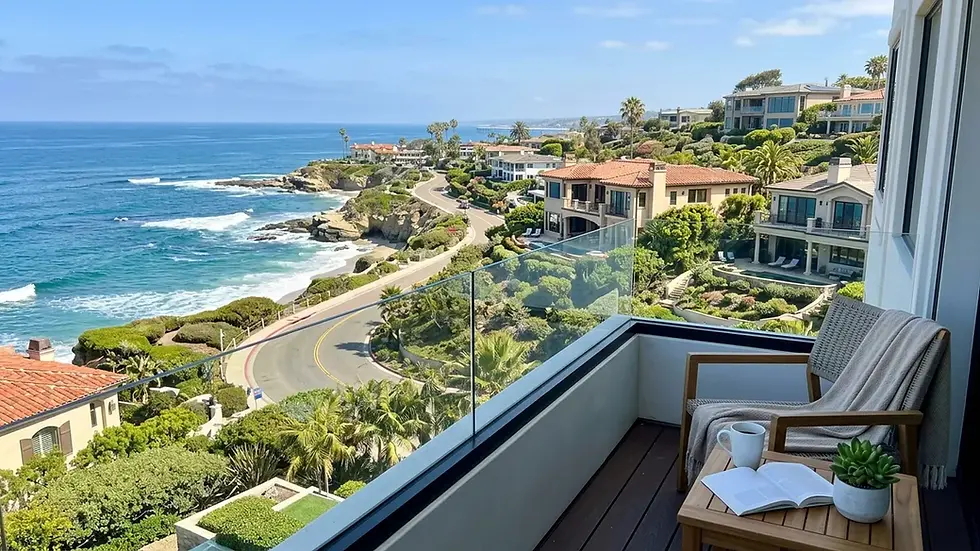
West Coast Homestays manages vacation rentals across La Jolla, Pacific Beach, Mission Beach, Encinitas, Carlsbad, and Oceanside, with a track record that includes $121,000-plus in revenue increases through dynamic pricing and listing optimization, and a hybrid STR and mid-term rental strategy that has produced $136,732 in annual revenue for a single property. If you want to see what professional management would change about your La Jolla Shores rental's performance, start the conversation at West Coast Homestays.
Written by Mark Palmiere, Owner & CEO at West Coast Homestays

Comments