_edited.png)


Vacation Rental San Diego Mission Beach: What to Know

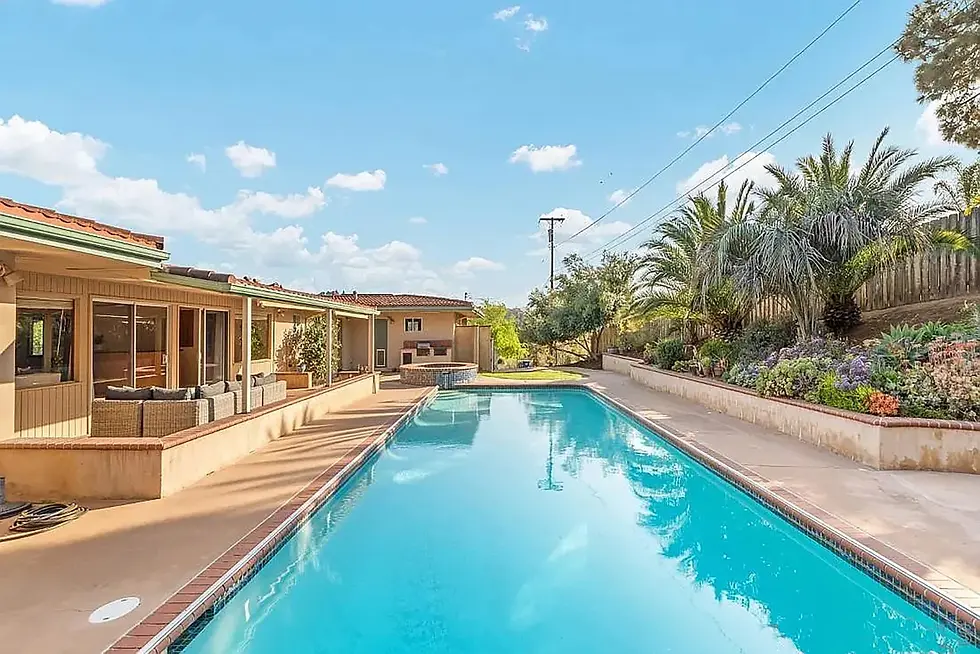
A vacation rental in San Diego Mission Beach sits in one of California's most reliably booked coastal markets. Positioned between Mission Bay and the Pacific Ocean, Mission Beach draws guests year-round for its boardwalk, Belmont Park, and direct sand access. According to AirDNA's 2026 San Diego market data, coastal neighborhoods like Mission Beach see 60 to 70 percent annual occupancy, running 10 to 20 percent above inland San Diego neighborhoods during summer months. At West Coast Homestays, we manage properties across Mission Beach, Pacific Beach, La Jolla, and the broader San Diego coast, and the patterns we see here are consistent: well-managed Mission Beach properties earn meaningfully more than their self-managed counterparts, and the gap widens every season that owners leave pricing and listing optimization untouched.
Mission Beach STRs average 60 to 70 percent annual occupancy versus 45 to 55 percent in non-coastal San Diego neighborhoods, per AirDNA 2026 benchmarks.
Peak monthly STR revenue in San Diego reaches roughly $10,023 per listing at approximately 65.5 percent occupancy, compared to around $4,922 in low season.
San Diego requires all STR operators to obtain a Transient Occupancy Registration Number (TORN) and remit a 13.5 percent transient occupancy tax to the county.
Dynamic pricing errors in a coastal market can cost a San Diego owner $30,000 to $40,000 in a single month, based on portfolio data from West Coast Homestays.
A hybrid STR and mid-term rental strategy has produced $136,732 in annual revenue at 83.29 percent occupancy for one West Coast Homestays-managed property, versus an $98,800 STR-only projection.
San Diego welcomed 35.8 million visitors in 2023, generating $14.2 billion in visitor spending, according to the San Diego Tourism Authority, supporting strong ongoing lodging demand.
What Makes Mission Beach One of San Diego's Top STR Markets?
Mission Beach is a short-term rental market defined by its geography. The neighborhood occupies a narrow strip of land roughly two miles long, with the Pacific Ocean on the west side and Mission Bay on the east. That physical layout creates two distinct property categories: oceanfront rentals that face breaking waves and west-facing sunsets, and bayfront properties that overlook calmer water, boat docks, and the recreational expanse of Mission Bay Park. Both sides consistently outperform inland San Diego neighborhoods in occupancy and average daily rate, but they serve somewhat different guest profiles and demand patterns.
According to the San Diego Tourism Authority, San Diego hosted 35.8 million visitors in 2023 and generated $14.2 billion in visitor spending. Hotel occupancy in the market averaged 74.2 percent in 2026, signaling persistent demand for all lodging types. That demand flows directly into Mission Beach STRs, which benefit from the neighborhood's walkability, its proximity to Belmont Park, and the fact that the Ocean Front Walk boardwalk connects it directly to Pacific Beach to the north.
Belmont Park, anchored by the Giant Dipper roller coaster, Cannonball rooftop sushi bar, and Draft beachfront grill, functions as a built-in amenity that draws guests who would not otherwise prioritize a beach trip. Families, groups of adults, and weekend travelers all cite the boardwalk entertainment as a reason they chose Mission Beach over other coastal neighborhoods. That demand diversity makes the market more resilient than a single-demographic beach destination.

Oceanfront vs. Bayfront: Which Side of Mission Beach Earns More?
Oceanfront and bayfront vacation rentals in San Diego Mission Beach serve different guests and follow different revenue patterns, so choosing between them depends on your property's location and your revenue strategy. Oceanfront units on the west side of Mission Boulevard face the Pacific directly, attracting guests who prioritize sunset views, surf access, and the energy of the Ocean Front Walk. Bayfront units on the east side overlook Mission Bay, providing calmer water access ideal for kayaking, paddleboarding, and families with young children.
From a revenue standpoint, oceanfront positioning typically commands higher average daily rates, particularly during June through August when beach-facing demand peaks. Bayfront properties, however, often achieve more consistent occupancy across the shoulder seasons because the protected water and Mission Bay Park activities appeal to a broader guest demographic, including families who avoid the crowded oceanfront in peak summer.
There are practical trade-offs worth knowing before you list. Oceanfront properties on the boardwalk face higher foot traffic and ambient noise from the path running directly past ground-floor windows. If your property is on the boardwalk level, guest reviews will reflect it, for better or worse. Bayfront properties sit on quieter streets, which translates to fewer noise complaints and often more repeat bookings from guests who prioritize a relaxed stay over front-row ocean access.
For pricing strategy, oceanfront units in Mission Beach can target ADRs 20 to 30 percent above non-waterfront peers during summer, consistent with coastal market benchmarks. Bayfront properties benefit more from longer minimum stays during peak season, reducing turnover costs while maintaining strong revenue. Neither side is inherently better; the right strategy depends on your property's specific position, floor level, and the guest profile you want to attract.
What Are the STR Licensing Rules for Mission Beach Rentals?
Short-term rental licensing for Mission Beach properties falls under San Diego's citywide STRO (Short-Term Residential Occupancy) ordinance, administered through the City of San Diego. Mission Beach does not have a separate beach-specific permit, but its properties are subject to all standard San Diego STR requirements, plus one critical distinction: properties within the Mission Beach Community Planning Area fall under Tier 4 of San Diego's licensing framework.
Every STR operator in San Diego must first obtain a Transient Occupancy Registration Number (TORN) and register for a Rental Unit Business Tax (RUBT) account before applying for an STRO license through the City of San Diego's Accela portal. Operators must also collect and remit a 13.5 percent transient occupancy tax to San Diego County, display the TORN prominently on every listing platform, and comply with the city's Good Neighbor Policy, which governs noise levels, maximum guest counts, and quiet hours.
Tier 4 status applies to properties within the Mission Beach Community Planning Area. You can verify whether your property falls within this boundary using the City of San Diego Community Planning Area map. Tier 4 imposes specific conditions on license availability and ongoing reporting, including quarterly activity reports. The City of San Diego maintains a live open-data portal of all active STRO licenses, which owners can use to check current license availability in Mission Beach and verify the status of specific addresses.
HOA restrictions are an additional layer to investigate before listing. Some Mission Beach condominium complexes restrict or prohibit STRs entirely through their CC&Rs, independent of city licensing. Check with your HOA and confirm whether any pending rule changes could affect your ability to operate. Licensing compliance is non-negotiable in 2026; the city's enforcement and audit activity has increased, and Airbnb reports license data to municipal authorities under platform reporting agreements.

How Should You Price a Mission Beach Vacation Rental in 2026?
Pricing a vacation rental in San Diego Mission Beach correctly is the single highest-leverage decision a property owner makes, and it requires a dynamic approach calibrated to the neighborhood's specific demand patterns. Flat-rate pricing in a market with Mission Beach's seasonal swings is one of the most expensive mistakes we see consistently across new listings. According to AirDNA's 2026 San Diego benchmarks, peak-season monthly STR revenue averages around $10,023 per listing at roughly 65.5 percent occupancy, while low-season monthly revenue drops to approximately $4,922. The gap between those two figures is not automatically captured by a static nightly rate.
Mission Beach demand peaks in June, July, and August, driven by family beach vacations, summer travel from inland California markets, and the broader wave of San Diego's 35.8 million annual visitors. Shoulder seasons, specifically April through May and September through October, still outperform most inland San Diego neighborhoods due to the neighborhood's year-round boardwalk appeal and moderate coastal temperatures. January and February represent the genuine soft window, and this is where a mid-term rental strategy can stabilize revenue for owners who would otherwise see extended vacancy.
On pricing mechanics: cleaning fees deserve specific attention. Our portfolio data shows that cleaning fee optimization generates approximately $6,600 per year in additional net revenue at properly structured Mission Beach properties. Many owners set cleaning fees too low relative to actual turnover costs, effectively subsidizing guest stays while reducing perceived nightly rates. Similarly, early check-in and late checkout fees, when structured correctly, produce an additional $5,500 to $6,500 annually per property, a line item most self-managing owners give away for free.
For owners using Airbnb's built-in tools, the platform's Smart Pricing feature provides a baseline, but it is not calibrated to Mission Beach's micro-seasonal patterns or to specific events that spike local demand. Airbnb's Smart Pricing help documentation explains how to enable and adjust it, but professional revenue management combines platform tools with local demand forecasting in a way that the algorithm alone does not replicate.
What Nobody Tells You About Managing a Mission Beach Rental
The practical realities of owning a vacation rental in San Diego Mission Beach go well beyond what listing platforms and competitor websites disclose. Most property catalogs show bedroom counts and review scores. None of them tell you about parking, noise dynamics, micro-geography, or the booking timing patterns that separate owners who consistently fill their calendar from those who scramble every summer.
Parking Is a Genuine Guest Pain Point
Mission Beach has extremely limited parking. The neighborhood's narrow streets and high pedestrian density mean guests arriving by car face a real logistical challenge, particularly during summer weekends. Properties with a private parking space or a designated garage spot consistently receive higher review scores on arrival experience and are easier to market at premium rates. If your property lacks private parking, proactively address it in your listing description with the nearest public lot details. Guests who arrive frustrated write reviews that reflect it.
North Mission Beach vs. South Mission Beach Are Different Markets
The two-mile stretch of Mission Beach does not behave uniformly. North Mission Beach, closer to the transition zone with Pacific Beach, draws a younger, more social crowd. The energy near the Crystal Pier and Garnet Avenue corridor spills southward. South Mission Beach, particularly the blocks near the Belmont Park complex and toward Ventura Place, attracts more families and group travelers seeking the roller coaster and bay access in the same trip.
For property owners, this micro-geography matters for listing copy, photo selection, and target guest demographics. A South Mission Beach bayfront unit near the park positions differently from a North Mission Beach oceanfront condo with a rooftop deck. Both can perform extremely well; they just require different marketing language and slightly different minimum stay strategies.
Book Summer Dates Far in Advance or Accept What Remains
Mission Beach summer bookings fill early. Guests planning July 4th week, Memorial Day, and Labor Day weekends typically book 90 to 120 days in advance for premium properties. Owners who do not have their listing fully optimized, priced correctly, and calendar open by late February regularly miss the highest-value summer bookings and fill instead with last-minute demand at discounted rates.
This is one area where professional management creates an asymmetric advantage. West Coast Homestays optimizes listings and pricing calendars ahead of peak booking windows, not after demand has already materialized. The difference shows up directly in annual revenue totals.
Noise and Neighbor Relations Require Active Management
The Ocean Front Walk boardwalk creates ambient noise that many guests enjoy but some find disruptive at night. Properties on or adjacent to the boardwalk should set accurate expectations in listing descriptions and house rules. San Diego's Good Neighbor Policy and STRO compliance requirements include specific quiet hours provisions; operators who ignore them risk city complaints filed through the online STRO violation reporting system. One noise complaint on record can complicate future license renewals. Proactive guest communication about house rules on check-in day is the most effective prevention.

How Does a Hybrid STR and MTR Strategy Work for Mission Beach?
A hybrid STR and mid-term rental strategy for Mission Beach refers to a management approach that fills peak summer months with short-term bookings at high nightly rates, then transitions to 30-plus-day mid-term placements during the slower winter period to maintain occupancy and stabilize annual revenue. This model works particularly well in coastal San Diego markets where STR demand is strongly seasonal but long-term renters and corporate professionals actively seek furnished monthly accommodations year-round.
The results from this approach are concrete. One West Coast Homestays client running a hybrid strategy reached $136,732 in annual revenue at 83.29 percent occupancy, compared to an original $98,800 STR-only projection for the same property. That gap, roughly $37,000 per year, came specifically from filling shoulder and off-season months with insurance relocation guests and corporate tenants rather than leaving the calendar partially vacant between short-term stays.
Mid-term placements in the Mission Beach and broader Pacific Beach area attract several reliable tenant types. Insurance relocation clients, typically households displaced by local property damage, represent a particularly stable category; West Coast Homestays has placed properties in $20,000-per-month insurance contracts and secured 13-month corporate relocation arrangements generating $18,000 monthly. These placements require a specific network and compliance with California's tenant rights framework for stays beyond 30 days, which is where professional management earns its fee most clearly.
The hybrid model is not the right fit for every Mission Beach property. HOA rules, building type, and the owner's personal use calendar all affect feasibility. But for owners who treat the property as a revenue asset rather than an occasional retreat, the math on hybrid strategy consistently outperforms single-model STR operation across our San Diego portfolio. You can explore more about how this compares to other revenue approaches in our coverage of San Diego property management strategies.
Comparing Mission Beach Rental Approaches: A Framework
Approach | Best For | Annual Occupancy Range | Key Risk | Management Complexity |
STR Only (Self-Managed) | Hands-on owners, peak-season focus | 50-65% | Off-season vacancy, pricing errors | High (20+ hrs/week) |
STR Only (Professionally Managed) | Passive income, consistent occupancy | 60-70% | Management fee vs. revenue gain must net positive | Low for owner |
Hybrid STR + MTR | Revenue maximization, off-season stability | 75-85%+ | MTR tenant qualification, California 30-day rules | Low for owner with pro management |
MTR Only | HOA-restricted properties, low-turnover preference | 85-95% | Misses peak STR rate ceiling | Moderate |
What Do Professional STR Managers Charge in Mission Beach?
Professional STR management fees in the San Diego market, including Mission Beach, typically range from 15 to 25 percent of gross revenue for full-service management. The range reflects differences in service scope, specifically whether the fee covers only platform management or includes cleaning coordination, maintenance oversight, guest communication, dynamic pricing, and channel management across Airbnb, VRBO, and Booking.com.
For Mission Beach properties, the management fee question should be evaluated against net revenue outcome, not gross fee percentage. A well-optimized Mission Beach rental earning $60,000 annually under professional management at a 20 percent fee produces $48,000 net. The same property self-managed at $42,000 with 20-plus weekly management hours produces a worse financial outcome when owner time is valued honestly. The $121,000-plus in additional annual revenue that West Coast Homestays has generated for clients through dynamic pricing and listing optimization is the clearest benchmark for what professional management produces in practice.
Channel management is one specific service where professional management pays for itself quickly in coastal markets. Managing listings across Airbnb, VRBO, and Booking.com without synchronized calendar tools is a double-booking waiting to happen. The financial and reputational cost of a confirmed double-booking, including platform penalties and guest relocation, easily exceeds months of management fees. You can read more about revenue management approaches in our San Diego Airbnb management guide.
Frequently Asked Questions About Mission Beach Vacation Rentals
Do Mission Beach rentals require a special permit beyond standard San Diego STR licensing?
Mission Beach properties do not require a separate beach-specific permit, but they fall under Tier 4 of San Diego's STRO licensing framework, which applies specifically to properties within the Mission Beach Community Planning Area. All operators must obtain a TORN, register for a RUBT account, collect and remit 13.5 percent transient occupancy tax, and comply with the city's Good Neighbor Policy. The City of San Diego's STRO open data portal allows owners to verify current license availability in the neighborhood.
What is the difference between oceanfront and bayfront vacation rentals in Mission Beach?
Oceanfront rentals face the Pacific Ocean from the west side of Mission Boulevard, offering surf access, westward sunsets, and higher peak-season ADRs, typically 20 to 30 percent above non-waterfront properties. Bayfront rentals face Mission Bay on the east side, providing calmer water ideal for kayaking and paddleboarding, quieter street environments, and more consistent off-season demand from families. Neither side is inherently superior; the right choice depends on your property's position, floor level, and target guest profile.
When should property owners book their Mission Beach rental calendar for peak season?
Mission Beach summer bookings, particularly July 4th, Memorial Day, and Labor Day weekends, typically fill 90 to 120 days in advance for well-optimized properties. Owners who open their calendar and finalize pricing by late February consistently capture the highest-value summer reservations. Waiting until April or May to address listing quality and pricing means competing primarily for last-minute demand at lower rates.
Is a hybrid STR and mid-term rental strategy viable for Mission Beach properties?
A hybrid approach is viable and often financially superior for Mission Beach owners who want to stabilize revenue across the full calendar year. The model fills peak summer months with short-term bookings at high nightly rates, then transitions to 30-plus-day mid-term placements for insurance relocation clients, corporate travelers, or professionals during winter months. One West Coast Homestays client using this model reached $136,732 in annual revenue at over 83 percent occupancy, compared to a $98,800 STR-only projection for the same property.
What is the typical annual occupancy rate for a well-managed Mission Beach vacation rental?
According to AirDNA's 2026 San Diego benchmarks, well-managed Mission Beach-area STRs achieve 60 to 70 percent annual occupancy, compared to 45 to 55 percent for inland San Diego neighborhoods. Properties using a hybrid STR and mid-term rental strategy can push total annual occupancy above 80 percent by filling off-season gaps with longer-term guests. Peak monthly revenue reaches approximately $10,023 per listing at around 65.5 percent occupancy, while low-season averages roughly $4,922.
What are the biggest mistakes Mission Beach property owners make when self-managing?
The most common and costly mistakes are flat-rate pricing that misses seasonal demand peaks, cleaning fees set too low relative to actual turnover costs, and calendars that are not open early enough to capture advance summer bookings. Dynamic pricing errors alone can cost a Mission Beach owner $30,000 to $40,000 in a single month, based on portfolio data. Self-managing owners also frequently underestimate the time cost, typically 20-plus hours per week per property, which erodes the financial advantage of avoiding management fees.
What neighborhoods does West Coast Homestays serve beyond Mission Beach?
West Coast Homestays manages short-term and mid-term vacation rentals across San Diego's primary coastal neighborhoods, including Pacific Beach, La Jolla, and Oceanside, as well as North County San Diego markets including Encinitas and Carlsbad. The company manages 80-plus properties across these markets and handles full-service management, co-hosting arrangements, dynamic pricing, listing optimization, cleaning coordination, maintenance, and channel management across Airbnb, VRBO, and Booking.com.
Should You Hire a Professional Manager for Your Mission Beach Property?
Professional management makes the most financial sense for Mission Beach properties when the revenue gain from optimized pricing, listing quality, and occupancy consistency exceeds the management fee, which it reliably does in a high-demand coastal market. The break-even calculation is straightforward: if a manager earns you 20 percent more annual revenue and charges 20 percent of gross, the management fee is essentially self-funded and you reclaim 20-plus hours per week in the process.
Self-management is a viable path for owners who live locally, have hospitality experience, and treat the property as an active part-time business. But for out-of-state owners, owners with multiple properties, or anyone whose current results are plateauing despite genuine effort, professional management is not a luxury. It is the operationally correct decision given the complexity of Mission Beach's seasonal pricing, STR compliance requirements, and the competitive listing environment in 2026.
Our team at West Coast Homestays advises clients to run an honest assessment of three variables before deciding: their current occupancy rate versus the 60 to 70 percent coastal benchmark, their annual revenue versus the $57,973 to $67,000 citywide average for San Diego STRs, and the number of weekly hours they spend managing the property. If two of the three are significantly below where they should be, the case for professional management is already made. If all three are on target, the question becomes whether their time is best spent maintaining that performance themselves or reinvesting it elsewhere.
For a deeper look at how to evaluate San Diego management options and what fee structures actually look like, our San Diego property management cost guide covers the full breakdown.
Maximizing Your Mission Beach Rental Investment in 2026
A vacation rental in San Diego Mission Beach performs at its ceiling when three things align: a fully optimized listing that ranks well in Airbnb search, a dynamic pricing strategy calibrated to the neighborhood's specific seasonal patterns, and a management infrastructure that delivers consistent 5-star guest experiences. Each element reinforces the others. According to our portfolio data, 5-star reviews generate 20 percent more revenue than equivalent listings with lower average scores, because Airbnb's algorithm actively rewards review quality with search placement.
In 2026, the Mission Beach rental landscape is more competitive than it was two years ago. The broader San Diego STR market exceeded 9,000 active listings in early 2026, up significantly from prior years. Owners who are not actively optimizing their listing title, photo quality, amenity descriptions, and pricing calendar are falling behind competitors who are. The floor for competitive performance has risen, and the gap between a professionally managed Mission Beach property and a self-managed one shows up in both booking rate and annual revenue.
The practical steps that move the needle most: open your summer calendar in February, not April; structure your cleaning fee to reflect actual turnover costs; price weekends and holiday weeks dynamically rather than applying a uniform rate; and address parking proactively in your listing description. None of these require professional management to implement, but all of them require ongoing attention that most self-managing owners cannot sustain alongside their primary commitments. You can also review our broader Airbnb management resources for additional optimization strategies that apply across San Diego's coastal markets.

If your Mission Beach property is underperforming relative to the market benchmarks outlined in this guide, or if you are starting from scratch and want to avoid the most expensive first-year mistakes, West Coast Homestays manages the full revenue and operations picture. Our portfolio includes 80-plus properties across San Diego's coastal neighborhoods, and our managed properties have seen more than $121,000 in additional annual revenue through dynamic pricing and listing optimization alone. West Coast Homestays handles everything from licensing compliance and channel management to guest communication and off-season mid-term placements, so you can focus on the investment itself rather than the operation behind it. Reach out at WestCoastHomestays.com to see what a professional management assessment looks like for your property.
Written by Mark Palmiere, Owner & CEO at West Coast Homestays


Comments