_edited.png)


Vacation Rental Homes in La Jolla CA: What Owners Miss


Vacation rental homes in La Jolla, CA generate some of the highest average daily rates on the entire Southern California coast, with a market ADR of $622.60 per night as of 2026, according to AirDNA. At West Coast Homestays, we manage short-term and mid-term rentals across La Jolla and the broader San Diego coast, and the patterns we see in owner outcomes are consistent: the properties that capture this market's revenue ceiling are not simply well-located. They are professionally operated, correctly licensed under the City of San Diego's STRO Ordinance, and priced with real-time demand data. The ones that fall short share predictable mistakes, most of which are fixable once you know where to look.
La Jolla STR homes average a $622.60 ADR and 62% occupancy rate as of 2026, per AirDNA.
San Diego's STRO Ordinance requires all La Jolla operators to hold an active license before accepting any bookings.
Whole-home STR licenses are capped at 1% of San Diego's total housing inventory, making the application timeline a real business risk.
A hybrid STR/MTR strategy produced $136,732 in annual revenue for one West Coast Homestays-managed property, versus a $98,800 STR-only projection.
Dynamic pricing errors can cost owners $30,000 to $40,000 in a single month across a La Jolla-level ADR portfolio.
32% of La Jolla STR listings enforce a minimum 30-night stay, signaling strong mid-term rental demand from remote workers and corporate relocators.
La Jolla is not a single-strategy market. The bluffs above the Cove attract a different guest than the vacation rental homes near La Jolla Shores or the Prospect Street corridor. Understanding which demand profile applies to your specific property is the first step most owners skip. This guide walks through the licensing requirements, the revenue benchmarks that matter, the hybrid strategy most La Jolla owners have not considered, and the six-step setup process for launching or optimizing a short-term rental here in 2026.
Whether you own a 3-bedroom near Windansea Beach, a condo above the Cove, or a larger estate near Torrey Pines, the operational decisions you make in the first 90 days set the trajectory for the property's entire performance. Get the licensing wrong and you face fines or license denial. Get the pricing wrong and you leave tens of thousands of dollars uncaptured. Get the listing wrong and competitors with inferior properties will outrank you in Airbnb and VRBO search results.
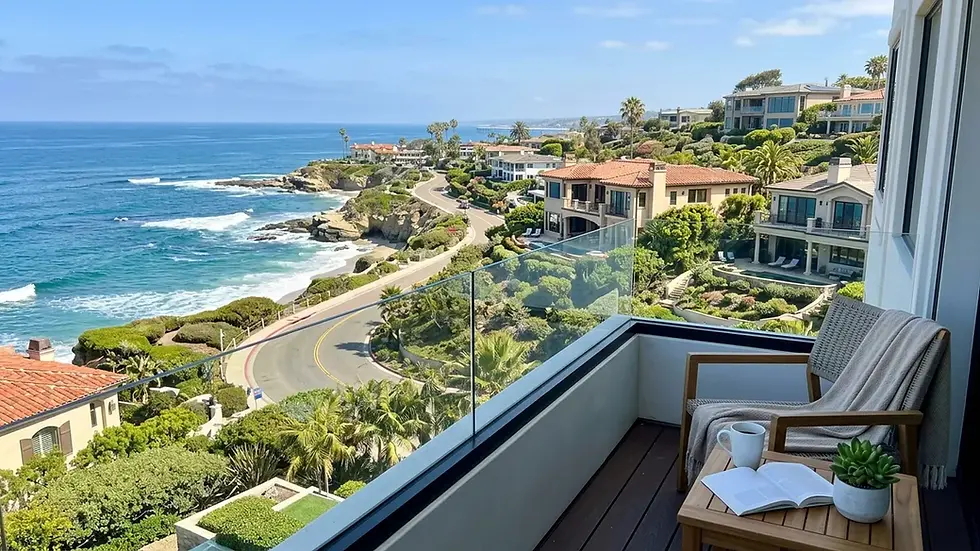
What Makes La Jolla Vacation Rental Homes a Distinct Market in 2026?
La Jolla vacation rental homes occupy a specific premium segment within the San Diego STR market, one defined by high barriers to entry, a geographically constrained housing supply, and guest demand driven by lifestyle rather than price sensitivity. According to AirDNA data, La Jolla's STR market currently holds 1,318 total available listings, with active listings growing 8% over the past year. RevPAR reached $362.80, up 6% year over year, indicating that revenue efficiency is improving even as supply expands.
That combination is unusual. Most markets see RevPAR compress when new supply enters. La Jolla is absorbing new listings because demand from remote workers relocating to coastal neighborhoods continues to support occupancy. Notably, 32% of La Jolla STR listings require a minimum stay of 30 or more nights, which tells you something important: a significant share of this market's revenue comes from guests who are not traditional weekend tourists.
The listing breakdown matters for how you position your property. Entire-home rentals represent 90% of La Jolla STR listings, per AirDNA. One-bedroom units account for 34% of the market; 2-bedrooms represent 24%; 3-bedrooms, 18%. The 4-bedroom and 5-plus bedroom segments hold smaller shares but command the highest ADRs. If you own a larger property and are competing on price against 1-bedroom comps, you are almost certainly underpricing.
International tourism headwinds are worth monitoring in 2026. According to the U.S. Department of Commerce NTTO data published by Visit California, California international air arrivals dropped 14.2% year-over-year in April 2026. Markets like Germany (-36.7%) and Italy (-39.4%) contributed to that decline. For La Jolla specifically, this reinforces the case for targeting the domestic remote-work and corporate relocation segments rather than relying on international leisure demand.
How Does San Diego's STRO Ordinance Apply to La Jolla Properties?
San Diego's Short-Term Residential Occupancy (STRO) Ordinance governs all vacation rental homes in La Jolla, CA, since La Jolla falls within the City of San Diego's jurisdiction. The STRO Ordinance requires every short-term rental operator to obtain a city-issued license before listing or accepting any bookings. Operating without a valid license exposes property owners to fines and potential license denial on future applications.
The City of San Diego STRO Official Page is the authoritative source for current fee schedules, application status, and regulatory updates. Bookmark it. The rules have been updated multiple times since the ordinance was introduced, and what applied in 2026 does not always reflect current 2026 requirements.
What License Tier Applies to Your La Jolla Rental?
San Diego's STRO licensing framework uses four tiers, and your tier determines both your operational requirements and your exposure to the supply cap. For most La Jolla whole-home rental owners, the relevant tier is Tier 3: entire-home rentals where the host is not present on-site, outside of Mission Beach, with a minimum of 90 rental days per year required. Tier 3 licenses are subject to a hard cap at 1% of San Diego's total housing inventory. That cap is not theoretical. It creates real competition for licenses, and waiting to apply puts your operation at risk.
Tier 1 covers part-time rentals of 20 or fewer days per year. Tier 2 covers home-sharing where the host lives on-site. Tier 4 applies specifically to Mission Beach whole-home rentals. La Jolla properties almost always fall under Tier 3 unless the owner lives on the property during guest stays.
You can verify current license availability and check active licenses via the Active STRO Licenses Open Data Portal, which the City updates regularly. A single-license rule also applies: each host may hold only one STRO license and may not operate more than one dwelling unit as a short-term rental within the city. This directly affects investors who own multiple La Jolla properties and are planning to list all of them as short-term rentals.
Every La Jolla STR operator must also designate a local contact responsible for nuisance response, comply with the City's Good Neighbor Policy, and maintain current TOT and Rental Unit Business Tax accounts. Fines for violations start at several hundred dollars and escalate significantly for repeat offenses, up to and including license revocation.

What Do La Jolla STR Revenue Numbers Actually Look Like?
La Jolla STR average annual revenue is $70,900, with a market occupancy rate of 62% and an average daily rate of $622.60, according to AirDNA's 2026 market data. Those figures represent the market average across all listing types. Your actual results will depend heavily on property size, proximity to the coast, listing quality, and pricing strategy.
The 62% occupancy figure is a market-wide average that includes listings with weak photography, flat pricing, and incomplete amenity profiles. Professionally managed properties consistently outperform that baseline. A well-optimized 3-bedroom La Jolla property near the Cove or La Jolla Shores should target occupancy in the 70% to 80% range during peak demand periods, with strategic minimum-stay rules to protect ADR during shoulder months.
La Jolla Village Sub-Neighborhood Performance
The La Jolla Village sub-neighborhood reports peak occupancy of 88% in July, according to data from Redawning. Average daily rates within that sub-neighborhood range from $593.70 to $645.20 per night, with average annual revenue per listing reaching $144,300 to $171,200. Those numbers are meaningfully higher than the broader La Jolla market average, confirming that location within La Jolla matters as much as location within San Diego generally.
Properties positioned near Prospect Street, the La Jolla Cove, and the Village commercial corridor command rates at the top of that range. Properties further inland, toward the University City edge of the 92037 ZIP code, perform closer to the market average. Pricing those two property types identically is one of the most common revenue errors we see in La Jolla.
Why Does a Hybrid STR and MTR Strategy Outperform in La Jolla?
A hybrid short-term and mid-term rental strategy refers to a management approach that combines traditional nightly Airbnb bookings during peak demand periods with 30-plus-night placements during shoulder months or low-season windows. In La Jolla, this strategy addresses the market's seasonal volatility and the growing demand from remote workers, corporate relocators, and insurance-displaced residents who need furnished housing for one to six months.
The data behind this approach is compelling. One property in our portfolio operated under a hybrid STR/MTR model generated $136,732 in annual revenue, compared to a $98,800 STR-only projection for the same property. The hybrid model captured corporate relocation and insurance placement contracts that STR-only operators typically miss entirely. For more context on how hybrid revenue models work across the San Diego coast, the Airbnb Management section of our blog covers the underlying strategy in detail.
La Jolla is particularly well-suited for hybrid strategy because of the neighborhood's appeal to UCSD-affiliated researchers, biotech professionals, and legal or financial executives relocating to the Torrey Pines and UTC corridors. These are guests who want a furnished home for 60 to 180 days, not a hotel room. They are willing to pay premium rates for quality, and they generate far lower turnover costs than nightly bookings. West Coast Homestays has placed managed properties in insurance contracts generating $20,000 per month and multi-month relocation arrangements at $18,000 monthly. Those placements require an established network and a listing architecture built to attract them.
A note on the 32% minimum-stay-30-nights data from AirDNA: this figure already tells you that a substantial portion of La Jolla's active operators have figured out mid-term demand exists. The operators who capture the highest-value placements are not just setting a 30-night minimum. They are actively positioning their listings and management infrastructure to source and service these bookings.
What Are the Biggest Revenue Mistakes La Jolla Owners Make?
The most expensive mistake La Jolla vacation rental owners make is using flat or manually adjusted pricing in a market where nightly rate variance across a single month can exceed $400. At a $622 average daily rate, a single month of suboptimal pricing can cost $30,000 to $40,000 in gross revenue. That is not a rounding error. It is the difference between a property that cash-flows strongly and one that barely covers its mortgage and carrying costs.
The second most common error is treating La Jolla as a single market when pricing. The Windansea Beach micro-neighborhood, the La Jolla Shores strip, and the Village proper each attract different guest profiles and support different rate ceilings. A blanket pricing strategy applied across a La Jolla property without neighborhood-level calibration will systematically underprice peak nights near the water and overprice shoulder-season dates across the board.
Listing quality is the third lever most owners underestimate. Airbnb's search algorithm weights listing completeness, photo quality, response rate, and review volume. A La Jolla property with a dated listing and four photos will lose search position to a comparable property with 25 professional images and 50 five-star reviews, regardless of price. At West Coast Homestays, listing optimization is the first thing our team addresses when onboarding a new La Jolla property, because a weak listing loses revenue before a single guest ever inquires.
Finally, compliance errors cost more than most owners expect. Operators who list without a valid STRO license risk fines, forced listing removal by the platforms, and denial of future license applications. In a market where Tier 3 licenses are supply-capped, a denial is not easily corrected.
Common Mistake | Revenue or Compliance Impact | Fix |
Flat or manual pricing | $30,000-$40,000/month in lost revenue | Dynamic pricing tool with local demand calibration |
No neighborhood-level rate differentiation | Systematic under- or overpricing by location | Comp set analysis by La Jolla sub-market |
Weak listing photography and copy | Lower search rank, fewer bookings at lower ADR | Professional staging, photography, and SEO-optimized copy |
Operating without a STRO license | Fines, platform removal, license denial | Apply via Accela portal before accepting any bookings |
Ignoring mid-term rental demand | Missed $136,732 vs. $98,800 revenue gap | Hybrid STR/MTR strategy with 30-day placements |
How to Set Up and Optimize a Vacation Rental Home in La Jolla: Step-by-Step
Setting up a high-performing vacation rental home in La Jolla requires a specific sequence. Skipping steps, particularly the compliance steps, creates compounding problems that are expensive to fix after the fact. Follow this process in order.
Step 1: Confirm STRO Licensing Requirements Before Listing
Before you photograph the property, write a listing, or enable any booking calendar, confirm your STRO license tier and check current Tier 3 availability. Use the Active STRO Licenses Open Data Portal to review current license data. If Tier 3 is near capacity, your application timeline becomes urgent. You cannot legally operate a whole-home vacation rental in La Jolla without an active STRO license.
Step 2: Obtain Your TOT Certificate and RUBT Account
Every La Jolla STR operator must hold an active Transient Occupancy Tax certificate and a Rental Unit Business Tax account. These are prerequisites for the STRO license application itself. Apply for your TOT certificate through San Diego's Transient Occupancy Registration System. Both accounts must be active and in good standing before your STRO application will be processed. Allow adequate lead time, as processing delays are common.
Step 3: Build Your Listing Under a Professional Management Account
A listing built with professional infrastructure from day one outperforms a DIY listing that gets retrofitted later. This means professional photography with 20-plus images, an SEO-optimized title incorporating neighborhood-specific keywords, a detailed amenity profile, and house rules that comply with San Diego's Good Neighbor Policy requirements. The listing architecture also needs to accommodate hybrid minimum-stay rules, typically 30-plus nights in slower months and 2-to-3-night minimums during summer peak demand.
Step 4: Implement a Dynamic Pricing Strategy Calibrated to La Jolla Demand
Dynamic pricing for La Jolla vacation rentals means tracking competitor rates, local event demand, seasonal occupancy patterns, and last-minute booking windows simultaneously. La Jolla's July peak pushes Village sub-neighborhood occupancy to 88%, per Redawning data. Your pricing needs to anticipate that spike 90 to 120 days in advance, not react to it after the fact. Tools like PriceLabs or Wheelhouse provide data inputs; interpreting and acting on that data correctly requires local market knowledge. For a deeper look at how dynamic pricing strategy applies across San Diego coastal rentals, see our coverage of VRBO dynamic pricing for San Diego rental revenue.
Step 5: Design for Guest Favorite Performance Standards
Airbnb's Guest Favorite designation requires consistent 5-star performance across cleanliness, communication, accuracy, and value. In La Jolla's premium market, guest expectations are calibrated to the nightly rate. A guest paying $622 per night expects hotel-level cleanliness, immediate communication responses, and a property that matches its listing photographs precisely. Five-star reviews generate 20% more revenue than properties without that designation, based on performance data from properties we manage. Every design and operational decision should be evaluated against that standard.
Step 6: Activate Channel Management Across Multiple Platforms
Listing exclusively on Airbnb in 2026 leaves revenue from VRBO, Booking.com, and direct booking channels uncaptured. But managing multiple platform calendars manually creates double-booking risk. Channel management software synchronizes all calendars in real time. For La Jolla property owners who are also exploring how to strengthen their brand presence across platforms, our guide to building an Airbnb brand in San Diego in 2026 covers the multi-platform strategy in detail.
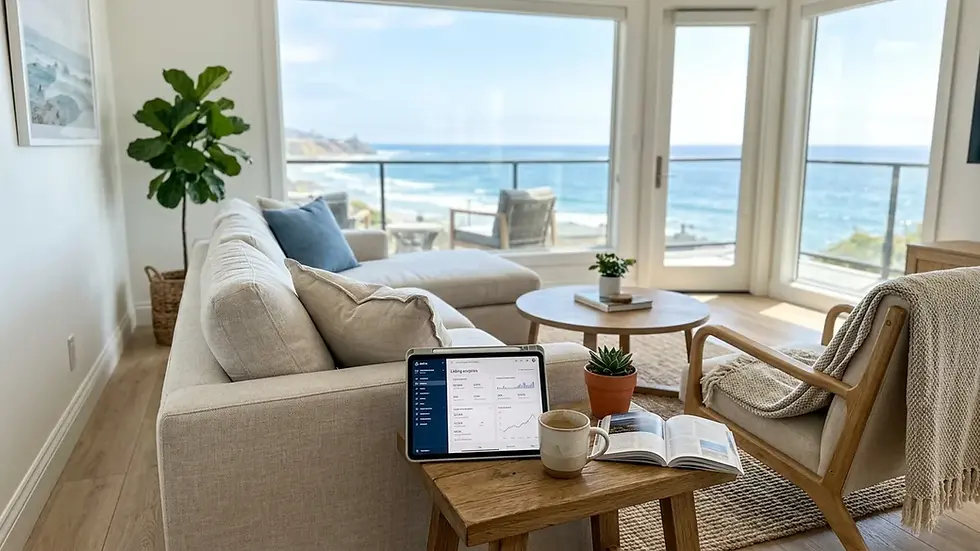
How Does La Jolla Compare to Other San Diego STR Neighborhoods?
La Jolla vacation rental homes occupy the top ADR tier within San Diego's coastal STR market. A direct comparison with other neighborhoods West Coast Homestays operates in illustrates where La Jolla sits and why its operational requirements differ.
Neighborhood | Market Character | ADR Range | Primary Demand Driver | Hybrid MTR Fit |
La Jolla | Premium coastal, limited supply | $593-$645+ | Leisure, remote work, corporate | Strong (biotech, UCSD, legal) |
Pacific Beach | High-volume, younger demographic | $250-$380 | Weekend leisure, events | Moderate (seasonal bridging) |
Mission Beach | Boardwalk, family-oriented, Tier 4 STRO | $280-$420 | Summer families, beach proximity | Moderate (off-season MTR) |
Encinitas | Coastal-suburban, surfer and wellness appeal | $300-$480 | Lifestyle travelers, remote workers | Strong (30-day remote stays) |
Carlsbad | North County family, LEGOLAND proximity | $280-$420 | Families, corporate North County | Strong (corporate relocation) |
La Jolla's ADR ceiling is genuinely distinct. But the higher rate comes with a higher-maintenance guest demographic and stricter city regulatory oversight. Operators who treat La Jolla like Pacific Beach in their pricing, guest communication, and property presentation will consistently underperform. The market rewards precision. For property owners evaluating San Diego coastal neighborhoods more broadly, our San Diego property management resources cover neighborhood-level strategy across all markets we operate in.
Frequently Asked Questions About La Jolla Vacation Rental Homes
Do vacation rental homes in La Jolla, CA require a special permit or license?
Yes. All La Jolla vacation rental homes fall under the City of San Diego's Short-Term Residential Occupancy (STRO) Ordinance, which requires operators to obtain a STRO license before listing or accepting bookings. Whole-home rentals where the host is not on-site require a Tier 3 license, which is subject to a city-wide cap at 1% of total housing inventory. Operators must also hold an active Transient Occupancy Tax certificate and a Rental Unit Business Tax account as prerequisites for the STRO application.
What is the average revenue for a vacation rental home in La Jolla, CA?
According to AirDNA market data, La Jolla STR properties average $70,900 in annual revenue, with a $622.60 average daily rate and a 62% occupancy rate as of 2026. Properties in the La Jolla Village sub-neighborhood report average annual revenue between $144,300 and $171,200, with peak July occupancy reaching 88%. Professionally managed properties with optimized listings and dynamic pricing consistently outperform these market averages.
Is a hybrid short-term and mid-term rental strategy worth pursuing in La Jolla?
For most La Jolla property owners, yes. La Jolla attracts strong demand from UCSD-affiliated researchers, biotech professionals, and corporate relocators who need furnished housing for 30 to 180 days. A hybrid STR/MTR strategy fills shoulder-season gaps with higher-quality, lower-turnover bookings. One West Coast Homestays-managed property using a hybrid model generated $136,732 in annual revenue versus a $98,800 STR-only projection for the same property.
Can I manage my La Jolla vacation rental from out of state?
You can own and earn from a La Jolla vacation rental remotely, but self-managing from out of state creates real operational gaps: maintenance blind spots, delayed guest response, inconsistent cleaning quality, and limited visibility into daily performance. Professional management handles all on-the-ground operations through a vetted local vendor network, synchronized OTA calendars, and direct guest communication, so your San Diego property produces passive income without requiring your physical presence.
How does the City of San Diego's STRO single-license rule affect La Jolla investors with multiple properties?
San Diego's STRO Ordinance limits each host to a single license and prohibits operating more than one dwelling unit as a short-term rental within the city. This directly constrains investors who own multiple La Jolla properties and intend to list all of them as nightly vacation rentals. Investors in this situation should consult with a professional management company about compliant structuring options, including mid-term rental strategies for properties that cannot hold an individual STRO license.
What does professional property management cost for a La Jolla vacation rental?
Full-service vacation rental management fees for La Jolla short-term rentals typically range from 10% to 30% of gross revenue, depending on the scope of services provided. At La Jolla's market ADR of $622.60 and an optimized occupancy rate, the net revenue improvement from professional management consistently exceeds the management fee in our experience across the San Diego portfolio. Dynamic pricing optimization alone has generated over $121,000 in additional annual revenue for owners who previously self-managed with flat rates.
What should I look for in a property manager for La Jolla vacation rentals?
Prioritize managers with documented STR-specific experience in La Jolla and the broader San Diego coastal market, not residential property managers who have added vacation rental services. Look for demonstrable revenue outcomes (specific ADR, occupancy, and annual revenue figures from managed properties), a hybrid STR/MTR capability if your property fits that profile, and a clear compliance process for STRO licensing and TOT requirements. Verified review aggregation from independent platforms is more reliable than testimonials on a company's own site.
Final Thoughts: Maximizing Your La Jolla Vacation Rental in 2026
La Jolla's vacation rental market in 2026 is performing well by nearly every measure: ADR up 3%, RevPAR up 6%, and active listings absorbing supply growth without compressing revenue efficiency. But the gap between the market average and what the top-performing properties actually earn is substantial. In La Jolla Village, properties at the high end of the performance range generate annual revenue more than double the market average. That gap is not explained by location alone. It is explained by pricing strategy, listing quality, compliance standing, and the decision to pursue mid-term rental demand that most STR-focused operators leave on the table.
The single most important decision you will make as a La Jolla rental owner in 2026 is whether your operation has the infrastructure to compete at the top of this market or whether it is drifting toward the middle. Operating without a valid STRO license, pricing manually, or ignoring the hybrid MTR opportunity are all paths toward the middle. Managing well is a full-time discipline at La Jolla's rate levels, where a single month of suboptimal decisions can cost more than most annual management fees.

If your La Jolla vacation rental home is not performing at the level this market supports, the team at West Coast Homestays manages properties across La Jolla, Pacific Beach, Encinitas, Carlsbad, Mission Beach, and Oceanside. We have generated over $121,000 in additional revenue for San Diego owners through dynamic pricing and listing optimization, and our hybrid STR/MTR approach has produced documented outcomes like the $136,732 annual revenue result described above. If you want a direct conversation about what professional management would look like for your specific property, reach out at WestCoastHomestays.com.
Written by Mark Palmiere, Owner & CEO at West Coast Homestays


Comments