_edited.png)


Military PCS Season: Oceanside's Mid-Term Rental Windfall

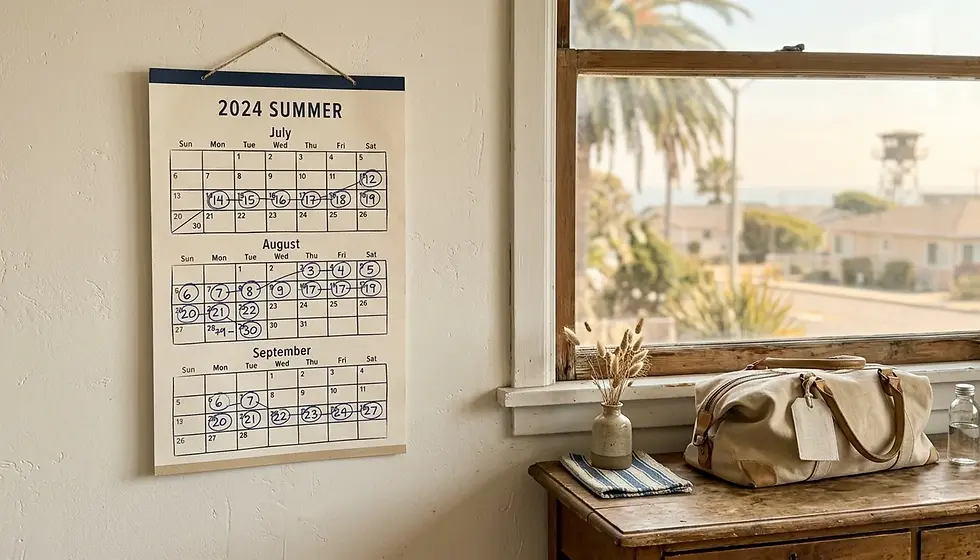
Military relocation mid-term rental Oceanside demand peaks twice a year, in summer and winter PCS cycles, when Camp Pendleton households need furnished housing for 30 to 90 nights while they house-hunt or await base housing. At West Coast Homestays, we have placed Oceanside and Carlsbad properties into mid-term contracts specifically timed around these relocation waves, and the revenue consistency often outperforms what a nightly-only Airbnb calendar produces during the same stretch. For property owners near Oceanside, understanding this cycle is the difference between a vacant shoulder season and a booked-out one.
What Is Military Relocation Mid-Term Rental Demand in Oceanside?
Military relocation mid-term rental demand refers to the furnished housing needs of Camp Pendleton personnel, Navy families stationed at nearby installations, and their dependents during Permanent Change of Station (PCS) moves. Specifically, these households typically need housing for 30 to 90 nights, longer than a vacation stay but shorter than a standard 12-month lease. As a result, they fall squarely into the mid-term rental category that platforms like Airbnb, Furnished Finder, and Zeus Living now support directly.
Oceanside sits adjacent to Camp Pendleton, one of the largest Marine Corps installations on the West Coast, which makes it a primary landing zone for incoming and outgoing service members. Additionally, PCS orders arrive on a predictable cycle tied to the military's fiscal year and permanent change of duty station timing, historically concentrated in summer months (May through August) with a secondary wave around winter. This predictability is what makes military relocation demand a plannable revenue strategy rather than a lucky break.
Why Does PCS Season Create a Revenue Opportunity for Oceanside Owners?
PCS season creates a revenue opportunity because it fills calendar gaps that short-term rentals typically struggle with, specifically the slower shoulder months when tourist demand softens. For example, a family relocating under orders needs housing whether or not Oceanside's beach season is in full swing, which decouples this demand source from typical STR seasonality.
Unlike a weekend beach guest booking three nights, a relocating family often books 30, 45, or even 60 nights in a single reservation. That means one confirmed booking can replace what would otherwise require a dozen or more separate weekend turnovers. Consequently, cleaning costs drop, guest communication volume drops, and the owner's per-night revenue becomes far more predictable across the stay.
Notably, relocation renters also tend to book further in advance than leisure travelers because PCS orders come with lead time, sometimes 60 to 90 days before the move date. This gives owners more forecasting confidence than last-minute leisure bookings typically allow. In our experience managing properties across San Diego property management markets, the owners who plan around this calendar consistently avoid the January-through-March revenue dip that hits pure short-term rentals hardest.

How Does Oceanside's STR Market Compare to Carlsbad for Mid-Term Demand?
Oceanside and Carlsbad share a border and a housing market, but their short-term rental performance profiles differ in ways that matter for a relocation-focused strategy. According to AirROI market data from 2026, the typical Carlsbad short-term rental posts an occupancy rate around 52%, while the average annual revenue for a Carlsbad short-term rental runs about $61,850 per year at a 47.1% occupancy rate. Meanwhile, The Mortgage Optimist projects 72 to 80% annual occupancy for 2026 across the broader Oceanside/Carlsbad corridor, and Airbtics reports a median Airbnb occupancy rate of 69% with an average daily rate of $329 for Carlsbad specifically.
The gap between the median property (around 52% occupancy per AirROI) and the top-performing 10%, which AirROI notes achieve 85% or higher occupancy, is largely explained by how well an owner fills non-peak weeks. Mid-term relocation bookings are one of the most reliable levers for closing that gap, because they convert dead midweek and off-season nights into paid nights without depending on tourist demand.
Shoulder season is where this matters most. AirROI's 2026 data puts Carlsbad's shoulder season occupancy at roughly 47.4%, a meaningful drop from peak summer performance. A single 45-night PCS booking landing in March or October can single-handedly rescue what would otherwise be a soft month, which is exactly the kind of hybrid strategy we build into our dynamic pricing approach for San Diego rentals.
Data Snapshot: Oceanside/Carlsbad STR Performance Benchmarks
Metric | Figure | Source |
Projected 2026 annual occupancy (Oceanside/Carlsbad corridor) | 72-80% | The Mortgage Optimist, 2026 |
Top 10% Carlsbad occupancy | 85%+ | AirROI, 2026 |
Median Carlsbad occupancy | ~52% | AirROI, 2026 |
Average annual revenue (median property) | $61,850/year | AirROI, 2026 |
Median Airbnb occupancy and ADR | 69% occupancy, $329 ADR | Airbtics, 2026 |
Average annual occupancy (2026) | 50% | GetChalet, 2026 |
Top 25% occupancy threshold | 71%+ | AirROI, 2026 |
Shoulder season occupancy | ~47.4% | AirROI, 2026 |
These benchmarks show a market with real upside for owners willing to diversify beyond straight nightly bookings. The spread between median and top-quartile performance is precisely where a hybrid short-term and mid-term strategy earns its keep, and it is the same principle behind the hybrid model we cover in STR Revenue Management: Nashville's Hybrid Model Explained, adapted here for Oceanside's military-adjacent market.
What Makes a Property Attractive to Relocating Military Families?
A property attractive to relocating military families is one that reduces friction during an already stressful move: fully furnished, equipped with reliable Wi-Fi, and located within a reasonable commute of Camp Pendleton's main gates. Specifically, families in transition prioritize functional kitchens, workspace for remote parents, and enough bedrooms to avoid a second move once base housing or a permanent rental comes through.
Parking matters more here than it does for a typical weekend beach guest. Many relocating households arrive with a personal vehicle plus a moving truck or trailer, so a driveway or dedicated parking spot is a genuine differentiator, not a nice-to-have. Additionally, proximity to Oceanside's commercial corridors, grocery stores, and the Coaster rail line adds practical value for a family setting up a temporary household.
Flexible lease terms also win bookings in this segment. A property that can accommodate a 30-night minimum with the option to extend week by week, rather than forcing a rigid 90-night commitment, captures more of the relocation market because orders sometimes shift mid-move. This is exactly the kind of calendar flexibility that well-managed coastal listings throughout San Diego's northern beach communities are built to handle.
How Should Owners Price Mid-Term Relocation Bookings?
Pricing mid-term relocation bookings correctly means applying a discounted nightly rate relative to peak short-term pricing, while still protecting monthly revenue through length-of-stay guarantees. Typically, a 30-night mid-term rate runs meaningfully lower per night than a three-night summer weekend rate, but the total monthly revenue and reduced turnover costs often make it more profitable on a per-day-managed basis.
First, calculate what the property would realistically earn across that same 30 to 60 night window at typical shoulder season occupancy, using the Carlsbad benchmarks above as a reference point. Then compare that projected figure against a mid-term rate that fills every one of those nights with a single confirmed booking. In many cases, the mid-term option wins once you factor in avoided cleaning turnovers, reduced guest communication overhead, and the lower risk of vacancy.
As a result, we consistently advise owners to avoid treating mid-term pricing as an afterthought calculated by simply dividing the nightly rate. Instead, it should reflect a deliberate monthly revenue target. One relocation contract we structured for a San Diego-area owner ran $18,000 across a 13-month corporate relocation placement, a figure that would be difficult to replicate through fragmented nightly bookings across the same calendar stretch. Getting this calibration wrong is one of the most common reasons owners leave money on the table, whether managing short-term or mid-term inventory, and it is a core part of what we cover in our San Diego Airbnb management guide.

What Should Owners Know About Compliance and Screening for Relocation Tenants?
Compliance for military relocation mid-term rentals means treating stays of 30-plus nights differently than standard short-term guest bookings, both for platform terms and for local regulatory purposes. Specifically, mid-term stays sometimes fall outside the same short-term rental permit requirements that apply to nightly bookings, but owners should verify their specific city and HOA rules before assuming this exemption applies.
Screening matters just as much here as guest vetting does for a weekend booking, if not more, given the length of the commitment. Verifying orders, confirming employment or military affiliation, and requiring a standard security deposit protects the property across a 30 to 90 night stay in ways that a two-night booking simply does not require. Additionally, insurance relocation placements, which we have also structured at figures around $20,000 per month for qualifying properties, often come with their own documentation and payment guarantees through a relocation company or insurance adjuster, which reduces payment risk considerably compared to an individual tenant.
Owners considering this strategy for the first time should also review how their existing STR permit interacts with mid-term activity, since San Diego County and individual cities each apply different thresholds for what counts as a short-term versus long-term rental for tax and permitting purposes.
Practical Guidance: How to Build a PCS-Ready Rental Strategy
Building a PCS-ready rental strategy starts with calendar planning, not marketing. Owners who wait until March to think about relocation demand miss the lead time that military families need to book ahead of their move dates.
Map the PCS calendar. Summer (May through August) is historically the heaviest relocation window, with a secondary wave typically in winter. Block your pricing strategy around these periods in advance.
List on platforms that support 30-plus night stays. Airbnb's mid-term filters, Furnished Finder, and direct relocation company relationships each reach a different segment of this audience.
Furnish for function, not just aesthetics. Workspace, extra storage, and a fully stocked kitchen matter more to a relocating family than a curated coffee table book collection.
Set a defensible monthly rate. Anchor your mid-term price to projected occupancy using local benchmarks, not a guess based on nightly rate math alone.
Screen every relocation booking. Confirm orders or employer documentation before accepting a 30-plus night reservation.
Keep a hybrid calendar. Reserve peak summer weekends for short-term guests at premium rates, and route shoulder season inventory toward mid-term relocation demand.
The most common mistake we see among self-managing owners is treating mid-term demand as a fallback rather than a planned revenue channel. Owners who build it into their annual calendar from January onward consistently outperform those who only consider it once a listing has already sat vacant for a few weeks. This is the same principle behind the hybrid strategy detailed in Dynamic Pricing Strategy for Rentals: How Smart Hosts Win in 2026.
Frequently Asked Questions
What counts as a mid-term rental for military relocation in Oceanside?
A mid-term rental typically covers stays between 30 and 90 nights, which is the standard window Camp Pendleton families need while awaiting base housing or house-hunting during a PCS move. This falls between a standard short-term Airbnb booking and a traditional 12-month lease.
When is PCS season busiest near Oceanside?
PCS moves historically concentrate most heavily in the summer months, from roughly May through August, tied to the military's fiscal year and school calendar considerations for relocating families. A secondary, smaller wave of orders typically occurs in winter.
Do mid-term relocation bookings require a short-term rental permit in Oceanside?
Requirements vary by city and by stay length, and some mid-term stays fall outside standard short-term rental permit thresholds. Owners should confirm their specific property's status directly with local permitting offices before assuming an exemption applies, since rules differ across San Diego County.
Is mid-term rental income more predictable than short-term Airbnb income?
Mid-term relocation bookings tend to be more predictable because they are confirmed further in advance, often 60 to 90 days ahead of a PCS move, and they fill 30-plus consecutive nights in a single reservation. This reduces the turnover volume and last-minute vacancy risk that short-term-only calendars face.
How should I price a mid-term rental compared to nightly Airbnb rates?
Mid-term nightly rates are typically discounted compared to peak short-term pricing, but the total monthly revenue and lower turnover costs often make the arrangement comparably profitable, especially during shoulder season when nightly occupancy would otherwise be soft. Pricing should be based on projected monthly revenue targets, not a simple nightly rate discount.
Can I mix short-term and mid-term bookings on the same property?
Yes, a hybrid calendar strategy is common and often the most profitable approach: reserving peak weekends and summer weeks for premium short-term bookings while routing shoulder season and winter inventory toward mid-term relocation tenants.
What amenities matter most to relocating military families?
Reliable Wi-Fi, a fully equipped kitchen, dedicated parking for a vehicle and moving equipment, and workspace for remote work or schoolwork consistently rank as priorities for families in transition, more so than decorative amenities that matter to leisure travelers.
Conclusion: Turning PCS Season Into Predictable Revenue
Military relocation mid-term rental Oceanside demand gives property owners a genuine tool for smoothing out the seasonality that otherwise defines short-term rental income near Camp Pendleton. With Carlsbad-area occupancy benchmarks ranging from a median of roughly 52% up to 85% or higher for top performers, according to AirROI's 2026 data, the difference often comes down to how well an owner fills shoulder season gaps, and PCS-driven bookings are one of the most reliable ways to do it.
As 2026 progresses, owners near Oceanside who plan their calendars around the summer and winter PCS cycles, screen relocation tenants properly, and price mid-term stays against realistic monthly revenue targets will consistently outperform those treating this demand as an afterthought.

If your Oceanside or Carlsbad property sits vacant during shoulder season, West Coast Homestays structures hybrid short-term and mid-term strategies built around real demand cycles, including relocation contracts we have placed at figures like $18,000 per month over 13 months and $20,000 per month for insurance placements. Get started with West Coast Homestays to find out what a hybrid calendar could mean for your property's annual revenue.
Written by Mark Palmiere, Owner & CEO at West Coast Homestays
Content powered by inkSTR.co


Comments