_edited.png)


Vacation Rental License Oceanside: The 2026 Step-by-Step Guide

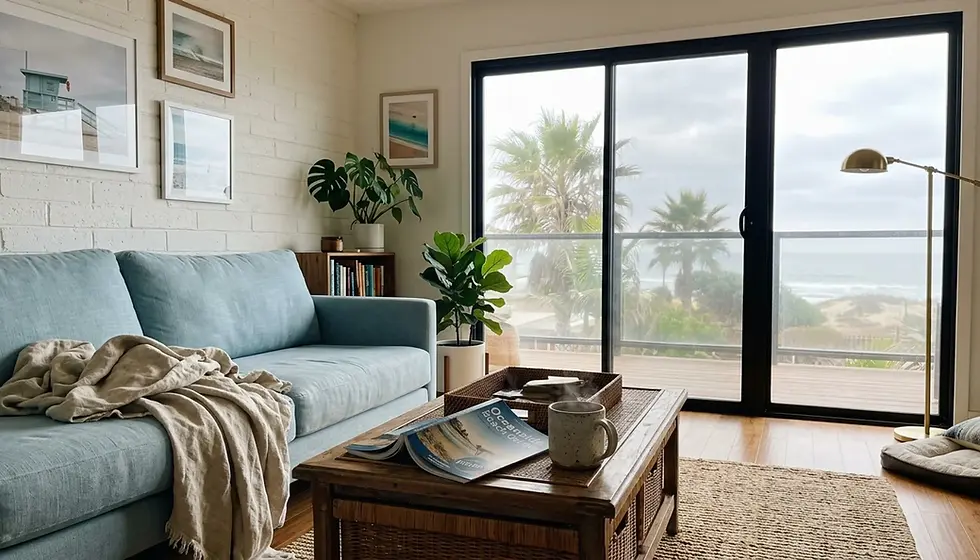
Getting a vacation rental license Oceanside requires means securing a Short-Term Rental (STR) permit from the City of Oceanside, which has been mandatory for all STR properties since June 7, 2026, unless your unit qualifies for a narrow exemption. At West Coast Homestays, we manage properties across San Diego's coastal corridor, including Oceanside, and the biggest source of delay we see is owners applying out of sequence, before their TOT certificate and RUBT account are actually active.
An STR permit costs $250 annually, plus a one-time inspection fee that runs roughly $199 to $215 depending on the source cited, according to the City of Oceanside and Haustay's Oceanside permit breakdown.
Oceanside caps non-hosted STR permits at 480 total in the Coastal Zone west of Coast Highway, a hard limit set by the February 10, 2026 ordinance.
Transient Occupancy Tax runs 10% of room rental revenue, plus a separate 1.5% Oceanside Tourism Marketing District assessment.
East of Coast Highway is closed to new non-hosted STR permits; only grandfathered listings or hosted units qualify there now.
Permits do not transfer when a property changes hands, so buyers of an existing STR must reapply from scratch.
Oceanside's short-term rental market posted roughly 62% occupancy and an average daily rate near $375 in recent AirDNA-cited data, making licensing compliance a real revenue question, not just paperwork.
Oceanside tightened its short-term rental rules substantially in 2026, and as of 2026 the city is still actively enforcing the ordinance that resulted. If you bought a coastal property expecting to list it on Airbnb or VRBO without a second thought, the permit process here is more involved than in many neighboring markets. It's also more forgiving than people assume, once you understand the sequence.
This guide walks through exactly what the City of Oceanside requires, in the order the city actually processes applications: the TOT certificate first, the STR permit and inspection second, and the ongoing compliance work third. We'll also cover the zoning caps that trip up first-time applicants, the hosted-versus-unhosted distinction that determines whether you need a permit at all, and the practical workflow details that competing guides tend to skip.
From our experience helping owners across Oceanside, Carlsbad, and Encinitas sort out compliance before listing, the applicants who move fastest are the ones who gather their documentation before they ever touch the MUNIRevs portal. We'll show you what that documentation should look like.
Are Short-Term Rentals Allowed in Oceanside, CA?
Short-term rentals are legal in Oceanside, but only within specific zoning boundaries and under a permit system the city has enforced since June 2026. A short-term rental is defined as renting a dwelling unit, or a portion of one, for no more than 30 consecutive days.
Specifically, the geography matters more than most first-time applicants expect. New non-hosted STR permits are currently allowed only west of Coast Highway in residential zones other than R-1, per the ordinance that took effect on February 10, 2026. East of Coast Highway is now closed to new non-hosted permits entirely, meaning only grandfathered STRs that predate the ordinance, or hosted units where an owner or tenant stays on-site, can legally operate there.
As a result, if you're evaluating a purchase in Oceanside specifically for STR income, confirm the parcel's location relative to Coast Highway before you close escrow. A property one block on the wrong side of that line simply cannot get a new non-hosted permit in 2026, no matter how strong the comps look.
Additionally, a hard cap of 480 non-hosted STR permits applies citywide in the Coastal Zone west of Coast Highway. Once that ceiling is reached, new applicants have to wait for a permit to lapse or transfer out before one becomes available.

What Are the Rules for Airbnb in Oceanside?
Airbnb hosts in Oceanside must hold three separate credentials before listing legally: a Transient Occupancy Tax (TOT) certificate, an active Rental Unit Business Tax (RUBT) account, and the STR permit itself. Each layer serves a different regulatory function, and the city processes them in that specific order.
First, the TOT certificate registers you as a tax collector on behalf of the city. Oceanside charges a 10% TOT rate on room rental revenue, plus a separate 1.5% assessment for the Oceanside Tourism Marketing District, for a combined 11.5% tax burden on gross rental income. You can apply through the Transient Occupancy Registration System, or verify an existing certificate number using the city's OpenData TOT Certificate Number Lookup.
Second, once TOT registration is active, applicants move to the STR permit application itself, submitted either by email to BLinquiry@oceansideca.org or through the city's online system, according to the City of Oceanside's official short-term rentals page. Every listing must display its STR permit number publicly, a requirement Avalara's coverage of the 2026 ordinance also flags as a common early compliance miss.
Third, your listing must include your permit number in the Airbnb or VRBO listing description itself. Skipping this step is one of the most common reasons code enforcement opens a complaint against an otherwise compliant host.
Notably, hosted units, meaning the owner or a long-term tenant remains on-site while renting a portion of the property, are exempt from the STR permit requirement but still need the TOT certificate. That distinction confuses a lot of first-time hosts who assume "hosted" means fully exempt.
What Is the 80/20 Rule for Airbnb?
The 80/20 rule, in short-term rental terminology, generally refers to the operational reality that roughly 80% of guest issues and revenue impact come from about 20% of your recurring tasks: pricing calibration, turnover consistency, and review management. It is not an official Oceanside regulation, but a rule of thumb hosts and managers use to prioritize where time and attention actually move the needle.
In Oceanside's context, that 20% usually breaks down into three areas. First, pricing: with average daily rates swinging from roughly $313 in low season to $420 during peak summer months, an under-calibrated pricing tool can quietly cost thousands of dollars a year in missed peak-season revenue. Second, turnover quality, since a single missed cleaning standard during a same-day changeover can generate a review that suppresses bookings for months. Third, compliance itself: a lapsed STR permit or an unpaid RUBT account doesn't just risk a fine, it can pull your listing offline entirely during peak season.
At West Coast Homestays, we've seen owners across San Diego's coastal markets treat the 80/20 principle as a management filter: spend disproportionate attention on pricing strategy and turnover standards, and let routine guest communication run on efficient, standardized systems. That's part of why our full-service management model bundles dynamic pricing, turnover oversight, and compliance monitoring together rather than treating them as separate line items.
If you're weighing whether to self-manage or hand off operations, this is usually the deciding factor: not whether you can technically do everything yourself, but whether you can consistently prioritize the 20% that actually protects revenue.
Do You Need a License to Manage Short-Term Rentals in California?
California does not require a statewide short-term rental management license, but individual cities and counties, including Oceanside, mandate local permits, business licenses, and tax registrations for anyone operating an STR property. Property managers acting on an owner's behalf must ensure the underlying property carries a valid STR permit, since permits are tied to the property and the specific owner, not the management company.
Specifically, Oceanside requires every STR host, whether self-managed or professionally managed, to hold a business license or tax certificate in addition to the STR permit and TOT certificate. As of 2026, this three-part structure, TOT certificate, RUBT/business license, and STR permit, remains the operative framework, and it applies regardless of whether the owner lives on-site or hires a management company.
Importantly, STR permits do not transfer between owners. If you buy a property that already operates as an STR, you cannot simply inherit the previous owner's permit; you must submit a fresh application under your own name. This is one of the most frequently missed steps in Oceanside real estate transactions involving existing rental properties.
For owners in Carlsbad, Encinitas, or La Jolla weighing similar questions, the pattern holds across San Diego County: local jurisdictions set their own permit rules even though there's no state-level STR operator license. Our regulatory content covering San Diego STR compliance walks through how these local ordinances differ city by city.
Prerequisites Before You Apply: TOT and RUBT Accounts
Before submitting an STR permit application in Oceanside, you need two active accounts: a Transient Occupancy Tax certificate and a Rental Unit Business Tax account. Skipping either one is the single most common reason applications stall in review.
First, confirm your TOT certificate is active using the OpenData TOT Certificate Number Lookup if you're unsure whether a previous registration exists on the property. If you don't have one yet, apply through the Transient Occupancy Registration System before doing anything else.
Second, verify or open your RUBT account through the OpenData Rental Unit Business Tax Account Lookup. This account is what makes your business license standing legitimate in the city's eyes, and reviewers check it during STR permit processing.
Third, before submitting your STR application, use the Check Code Enforcement Complaints Against Your Property tool. An open or unresolved code enforcement case against the address is one of the more common, and preventable, causes of application denial.
As a result, the fastest applicants we've seen aren't the ones who rush the STR application itself. They're the ones who spend a week confirming these three prerequisites are clean before submitting anything.
The Application Workflow: What Actually Speeds Approval
The Oceanside STR permit application process moves through four stages: zoning verification, TOT and RUBT confirmation, document submission, and property inspection. Most delays happen at the document submission stage, where incomplete floor plans or missing site photos trigger a request for additional information.
First, verify zoning eligibility using the City of San Diego Community Planning Area map equivalent for Oceanside's own planning division, or contact the Planning Division directly to confirm whether your parcel sits west or east of Coast Highway. This single fact determines whether a non-hosted permit is even possible.
Second, gather your documentation before starting the application. Initial STR applications typically require proof of ownership, a floor plan, a site plan, and photos showing the property configuration, particularly for multi-unit lots or properties with detached structures like an ADU. Submitting all four upfront, rather than waiting for the city to request them one at a time, is the single biggest time-saver we've observed.
Third, submit through the city's preferred channel. As of 2026, the City of Oceanside accepts applications via the official Short-Term Rentals page, which routes to either email submission at BLinquiry@oceansideca.org or the city's online portal. Email submissions with a clearly labeled subject line and all documents attached as a single PDF tend to move through review faster than piecemeal follow-up emails.
Fourth, expect a scheduled property inspection. First-time applicants pay a one-time inspection fee, generally cited between $199 and $215 depending on the source, in addition to the $250 annual permit fee. Notably, a complete application must reach the city no later than 30 days before an existing permit expires, or the permit can lapse and require a full new application and fee.
Hosted vs. Unhosted: A Side-by-Side Comparison
The hosted-versus-unhosted distinction determines whether an Oceanside property needs an STR permit at all, and it's the single most misunderstood part of the ordinance. A hosted unit means the owner or a long-term tenant remains on-site during the guest's stay; an unhosted unit means the entire dwelling is rented out with no permanent resident present.
Factor | Hosted STR | Unhosted (Non-Hosted) STR |
STR permit required | No, generally exempt | Yes, mandatory since June 7, 2026 |
TOT certificate required | Yes, still mandatory | Yes, still mandatory |
East of Coast Highway eligibility | Allowed if genuinely hosted | Closed to new permits as of Feb 10, 2026 |
Subject to 480-permit cap | No | Yes, west of Coast Highway only |
Gated HOA exemption (50+ units, on-site security) | Often exempt regardless | Case-by-case, generally not exempt |
North Coast Village / St. Malo | Exempt area | Exempt area |
For example, an owner who lives in the primary residence and rents out a detached guest unit or ADU built before September 9, 2017 with proper permits may qualify as hosted and skip the STR permit requirement entirely, provided the TOT certificate is still active. But an ADU permitted after that September 2017 date cannot be used as an STR under any circumstance, hosted or not.
In contrast, a full-home listing where the owner lives elsewhere full time is always classified as unhosted and falls under the permit cap, the zoning restrictions, and the full documentation requirements described above.
Zoning Eligibility and HOA Conflicts: What Competing Guides Skip
Zoning eligibility in Oceanside determines not just whether you can apply for an STR permit, but whether your HOA's own rules create a second layer of restriction on top of the city's. Many owners assume that a city-issued STR permit overrides HOA covenants, and that assumption is incorrect.
Specifically, condo associations and planned developments frequently include CC&R language restricting or banning short-term rentals independent of what the city allows. If you're applying for a permit on a property inside an HOA, expect the city to request confirmation that the HOA does not prohibit short-term occupancy. The cleanest way to handle this is a short confirmation letter from the HOA board or management company, stating explicitly that rentals under 30 days are permitted under the association's current governing documents, dated within the past 90 days.
Additionally, mobile home parks and non-conforming panhandle lots are generally not eligible for STR permits regardless of zoning designation west of Coast Highway. If your property falls into either category, confirm eligibility with the Planning Division before investing in inspection prep or furnishing costs.
Gated communities with 50 or more units, dedicated parking, and 24-hour security or on-site management staff qualify for a specific exemption from the STR permit requirement, even for hosted units in the Coastal Zone. North Coast Village and the St. Malo gated community are two specifically named exempt areas under the current ordinance.

Fees, Taxes, and Ongoing Costs: A Full Breakdown
The total first-year cost of an Oceanside STR permit runs approximately $465 to $500 before any tax collection begins, combining the $250 annual permit fee with a one-time inspection fee typically cited between $199 and $215. After the first year, renewal generally drops back to $250 unless a reinspection is triggered by a complaint or ownership change.
Cost Item | Amount | Frequency |
STR permit fee | $250 | Annual |
First-time inspection fee | $199-$215 | One-time (first year only) |
Transient Occupancy Tax (TOT) | 10% of room revenue | Ongoing, per booking |
Oceanside Tourism Marketing District (OTMD) | 1.5% of room revenue | Ongoing, per booking |
Unlicensed operation penalty | $100-$1,000 per violation | Per enforcement action |
As a result, the combined TOT and OTMD tax burden reaches 11.5% of gross room revenue on every booking, a figure you should build directly into your pricing model rather than discovering after your first quarter of bookings. Given that recent AirDNA-cited data pegs Oceanside's average daily rate near $375, that tax obligation adds up quickly across a full season of turnovers.
Notably, quarterly reporting is required for certain permit tiers, and the city provides an official video walkthrough on submitting quarterly reports for hosts who need a visual reference for the reporting portal.
What Happens If You Skip the License?
Operating an Oceanside short-term rental without the required STR permit exposes the owner to direct enforcement action, with fines generally ranging from $100 to $1,000 per violation depending on severity and repeat offense status. Beyond fines, an unlicensed listing risks removal from Airbnb and VRBO entirely once code enforcement identifies the address.
Enforcement typically begins with a complaint. Neighbors, HOA boards, or competing hosts can file a report through the online violation reporting form, which routes to the city's Code Enforcement division for investigation. Once a complaint is filed, the property owner typically receives written notice and a compliance deadline before penalties escalate.
Additionally, an open code enforcement complaint on a property can block a subsequent STR permit application, which is exactly why we recommend running the code enforcement complaint check before you apply, not after a denial forces you to investigate why.
From our experience managing coastal properties across San Diego County, the owners who get caught operating unlicensed almost never intended to skip the process. Most inherited a listing from a previous owner, assumed the permit transferred, and found out otherwise only after a neighbor complaint. That's precisely the gap in awareness this guide is meant to close.
Practical Guidance: How to Avoid the Most Common Mistakes
Most Oceanside STR permit delays trace back to one of five preventable mistakes, based on patterns we've seen across San Diego's coastal STR market. Avoiding them can shave weeks off your approval timeline.
Applying before confirming TOT and RUBT status. Verify both accounts are active first, using the official lookup tools, rather than assuming a previous owner's registration carries over.
Assuming a permit transfers with the sale. It doesn't. New owners must submit a fresh application under their own name, even if the previous owner held a valid, active permit.
Underestimating HOA conflicts. Get a dated confirmation letter from your HOA before applying if the property sits inside an association with any CC&R language touching rentals.
Submitting incomplete documentation. Floor plans, site plans, proof of ownership, and photos should go in together as one packet, not trickled in over multiple follow-up emails.
Missing the 30-day renewal window. A complete renewal application must reach the city at least 30 days before the current permit expires, or it lapses and requires a full new application and fee.
If you're evaluating whether to handle this process yourself or bring in a management partner, consider the time cost honestly. Between zoning verification, document assembly, TOT and RUBT setup, and inspection scheduling, most owners spend several hours across multiple weeks navigating this the first time. West Coast Homestays handles STR compliance as part of our full-service management engagements across Oceanside, Carlsbad, and Encinitas, so owners don't have to become permit experts to operate legally.
Data Snapshot: Oceanside's STR Market in 2026
Oceanside's short-term rental market shows meaningful seasonal swings that directly affect how you should think about licensing timelines and revenue planning. Average monthly occupancy has ranged from roughly 46% in February to about 80% in July, based on recent getchalet STR analytics, with an annual average near 63%.
Metric | Value | Source |
Average occupancy (2026) | ~62-63% | AirDNA / getchalet |
Average daily rate | $354-$375 | AirDNA / getchalet |
Average annual revenue per listing | ~$82,164 | getchalet Airbnb analytics |
Active Airbnb listings (July 2026) | 1,392 | Airbtics |
Non-hosted permit cap (Coastal Zone) | 480 | City of Oceanside ordinance |
Given that July represents peak occupancy and February represents the trough, timing your permit application and inspection for the winter months, when the city's review queue tends to be lighter, gives you the best chance of being fully licensed and listed before the summer demand curve hits. Applying in April or May, hoping to be live by June, cuts it closer than most owners realize once inspection scheduling delays enter the picture.
Frequently Asked Questions
Do I need a vacation rental license for a property in Oceanside if I already have one in San Diego?
No. STR permits are issued by individual jurisdictions and do not transfer between cities. A San Diego STRO license has no standing in Oceanside; you must apply separately through the City of Oceanside's own process, even if you already operate compliant listings elsewhere in the county.
How long does it take to get an STR permit approved in Oceanside?
Timelines vary based on documentation completeness and inspection scheduling, but complete applications with all required documents attached upfront generally move faster than those requiring follow-up requests. Building in several weeks of buffer before your intended listing date is a reasonable expectation given inspection scheduling.
Can I apply for a permit if my property is east of Coast Highway?
Only if your listing is hosted or was already operating as a non-hosted STR before the February 10, 2026 ordinance took effect. New non-hosted STR permits are not being issued east of Coast Highway as of 2026, so confirm your parcel's location before assuming eligibility.
What happens if the 480-permit cap is reached before I apply?
If the non-hosted permit cap in the Coastal Zone west of Coast Highway is full, new applicants generally must wait for an existing permit to lapse, be revoked, or transfer out of the pool before a slot becomes available. Checking current availability through the city's licensing resources before purchasing a property for STR use is a smart due-diligence step.
Is a hosted unit exempt from all Oceanside STR requirements?
No. Hosted units are exempt from the STR permit requirement specifically, but they still need an active TOT certificate and must still collect and remit the 10% Transient Occupancy Tax plus the 1.5% OTMD assessment on every booking.
Does an ADU qualify for an STR permit in Oceanside?
Only if the ADU was built before September 9, 2017 with proper permits on file. Any accessory dwelling unit or junior ADU permitted on or after that date cannot legally operate as a short-term rental under current Oceanside rules, regardless of hosted or unhosted status.
Who do I contact if I have questions about my specific property's eligibility?
Start with the Planning Division for zoning and Coastal Zone questions, and the city's short-term rental team by email for permit-specific questions, as outlined on the official Short-Term Rentals page. For compliance strategy across a broader portfolio, an experienced local property manager can also help interpret how the rules apply to your specific address.
Conclusion: Getting Licensed Without the Runaround
Securing a vacation rental license in Oceanside comes down to sequence and documentation, not luck. Confirm your TOT and RUBT accounts first, verify your zoning eligibility relative to Coast Highway, gather your floor plans and site photos before you apply, and submit everything as one complete packet. Do that, and the process moves considerably faster than the horror stories you'll find in host forums.
Oceanside's market rewarded well-run, compliant listings in 2026 with average daily rates approaching $375 and citywide occupancy near 62%, numbers that make the licensing effort worthwhile for owners who take it seriously. As enforcement continues to tighten in 2026, the owners who stay ahead of renewal deadlines and documentation requirements are the ones who keep their listings live through peak season instead of scrambling mid-summer.
If navigating Oceanside's permit tiers, zoning caps, and TOT setup feels like more than you want to manage alongside pricing and turnovers, West Coast Homestays handles compliance oversight as part of every full-service management engagement across Oceanside, Carlsbad, and Encinitas. Our portfolio includes 80-plus managed properties, and our dynamic pricing and listing optimization work has generated documented revenue increases exceeding $121,000 for individual owners. Get started with West Coast Homestays to find out what compliant, professionally managed operation could look like for your property.
Written by Mark Palmiere, Owner & CEO at West Coast Homestays
Content powered by inkSTR.co
Comments