.png)

Definition of Short Term Rental: Your Essential 2025 Owner's Guide

Updated: Nov 28, 2025
TL;DR: Key Takeaways
What is a Short-Term Rental (STR)? An STR is a fully furnished property rented for less than 30 consecutive days, popular on platforms like Airbnb and Vrbo for vacationers and business travelers.
STR vs. MTR vs. LTR: STRs offer the highest nightly rates but require active management. Mid-Term Rentals (MTRs) for 30+ days provide stability, while Long-Term Rentals (LTRs) are traditional year-long leases.
Financial Potential: STRs can significantly outperform traditional rentals through dynamic pricing, which adjusts rates based on demand, seasonality, and local events.
San Diego Regulations: Operating legally in San Diego requires understanding and complying with local licensing, zoning, and safety ordinances.
Hybrid Strategy: The most profitable approach combines STRs in peak season with MTRs during slower months, ensuring year-round occupancy and maximizing revenue.
You’ve probably heard the term "short-term rental," or STR, thrown around a lot lately, especially if you're in a travel hotspot like San Diego. But what does it actually mean for a property owner? More importantly, how can you leverage it to boost your income?
Put simply, a short-term rental is a fully furnished living space—an apartment, a house, a condo—that's rented out for a brief period, usually less than 30 consecutive days. It's not like signing a year-long lease for an empty apartment. Instead, it’s a ready-to-live-in, home-away-from-home experience that has become a massive competitor to traditional hotels. For savvy San Diego owners, partnering with a data-driven expert like **West Coast HomeStays** can turn a great property into a high-earning, hands-off asset.
What Exactly Is a Short Term Rental?
At its heart, a short-term rental is more about hospitality than it is about being a landlord. This isn't your classic tenant relationship. It's about providing temporary lodging for people on the move, a model that platforms like Airbnb and Vrbo absolutely blew up, changing the game for travelers and property owners alike.
The real difference-maker here is the length of stay. While a traditional rental locks someone in for months or even years, an STR is perfect for:
Vacationers spending a week soaking up the San Diego sun.
Business travelers in town for a three-day conference.
A local family who needs a place to crash for a few weeks while their home is being renovated.
This flexibility has kicked off a huge boom. Just last year, the global STR market saw a 9% jump in listings, and in some hot markets, that supply growth shot up by as much as 25%. It's clear people want more than a hotel room; they want a place with a kitchen, a living room, and a more local vibe.
For anyone owning property in San Diego, this is a golden opportunity. But just listing your place on Airbnb isn't enough to guarantee success. You need a solid game plan for management, marketing, and creating an amazing guest experience to really make top dollar.
Getting this basic definition down is just the first step. If you're ready to get serious about making your property work for you, check out our ultimate guide to short-term rental management in San Diego. It's the roadmap you need to succeed.
STR vs MTR vs LTR: Understanding the Key Differences
In the rental world, the length of a guest's stay changes everything. It's the single biggest factor that dictates your pricing strategy, management style, and even which local laws apply to your property. Getting clear on the differences helps you figure out the best fit for your investment and financial goals.
Let's break down the three main players in the rental game.
Short-Term Rentals: The Vacationer's Choice
A Short-Term Rental (STR) is what most people picture when they think of a vacation rental. These are stays of less than 30 consecutive days—the kind you find on platforms like Airbnb and Vrbo. STRs cater to tourists, business travelers, and anyone needing a home base for a few nights or a couple of weeks.
The whole point of an STR is to maximize your income with higher nightly rates. You’re cashing in on peak tourist season, local San Diego events, and weekend getaways. It's a hospitality-driven model that demands active management, constant turnovers, and providing hotel-like amenities to keep guests happy and the great reviews coming.
Mid-Term Rentals: The Modern Extended Stay
Mid-Term Rentals (MTRs), sometimes called medium-term rentals, are the sweet spot between a short vacation and a long-term lease. These stays typically run from 30 days up to a year, and they attract a completely different crowd.
Think digital nomads, traveling nurses, professionals on temporary assignment, or families who need a place to live during a major home renovation. MTRs give you more stability than STRs, with far less turnover and a more predictable income stream. They’re a fantastic way to fill your calendar during the off-season. Digging into the revenue potential of STR vs MTR strategies can show you how to blend both to keep your property booked solid all year.
Long-Term Rentals: The Traditional Tenant
Finally, there are Long-Term Rentals (LTRs). This is traditional renting, plain and simple. It involves a formal lease agreement, usually for one year or longer, and the property is almost always unfurnished. Here, the dynamic is pure landlord-tenant, not host-guest.
While LTRs offer the most consistent and stable income with virtually no turnover, the monthly rent you can charge is significantly lower than what a well-run STR or MTR can bring in.
Rental Types at a Glance: A Comparison for Property Owners
To really see how these stack up, a side-by-side comparison is helpful. Each rental type serves a different purpose and requires a different approach from the owner.
Feature | Short-Term Rental (STR) | Mid-Term Rental (MTR) | Long-Term Rental (LTR) |
|---|---|---|---|
Stay Duration | Under 30 days | 30 days to 1 year | 1 year or more |
Guest Profile | Tourists, vacationers | Digital nomads, corporate travelers | Traditional tenants, residents |
Pricing Model | Nightly, dynamic rates | Monthly, often discounted | Fixed monthly rent |
Furnishings | Fully furnished & equipped | Fully furnished | Typically unfurnished |
Management | High-touch, frequent turnover | Moderate involvement | Low-touch, passive |
This table lays out the core distinctions, making it easier to decide which model aligns best with your property, your location, and how hands-on you want to be as a host.
How Dynamic Pricing Can Increase Your Airbnb Income
Let's be honest: the biggest draw for most San Diego property owners diving into short-term rentals is the money. It’s not just a little extra cash, either. A well-run STR can absolutely blow a traditional long-term lease out of the water financially, turning your property from a simple asset into a serious business.
The real magic behind this isn't just charging a nightly rate; it’s all about smart, agile revenue management.
This financial engine runs on something called dynamic pricing. Unlike a fixed monthly rent check, dynamic pricing means your rates can change in real time based on what’s happening in the market. Think about it: that beach condo in Pacific Beach can command a huge premium during Comic-Con or a holiday weekend, but you can adjust the price to keep it booked during a slow week in February. This flexibility is how you squeeze every last drop of potential income out of your property.
And this isn't some niche strategy; it's a massive global market. The short-term rental industry was valued at USD 140.08 billion and is on track to hit USD 408.63 billion. North America is a huge piece of that pie, holding a 40.5% market share. If you're curious, you can dig into the full short-term rental market report to see the numbers for yourself.
Key Metrics That Drive Profitability
To really get a grip on your STR's financial health, you have to obsess over two core numbers:
Average Daily Rate (ADR): This is your average income for every night your property is actually booked. The goal isn't just to set a high price; it's about hitting that sweet spot where you're attracting tons of bookings without leaving money on the table.
Occupancy Rate: This is simply the percentage of available nights your place is rented out. A full calendar is great, but it has to be paired with a strong ADR to be truly profitable. A cheap, fully booked property isn't the goal.
This infographic gives you a bird's-eye view of where different rental strategies fit into the big picture.
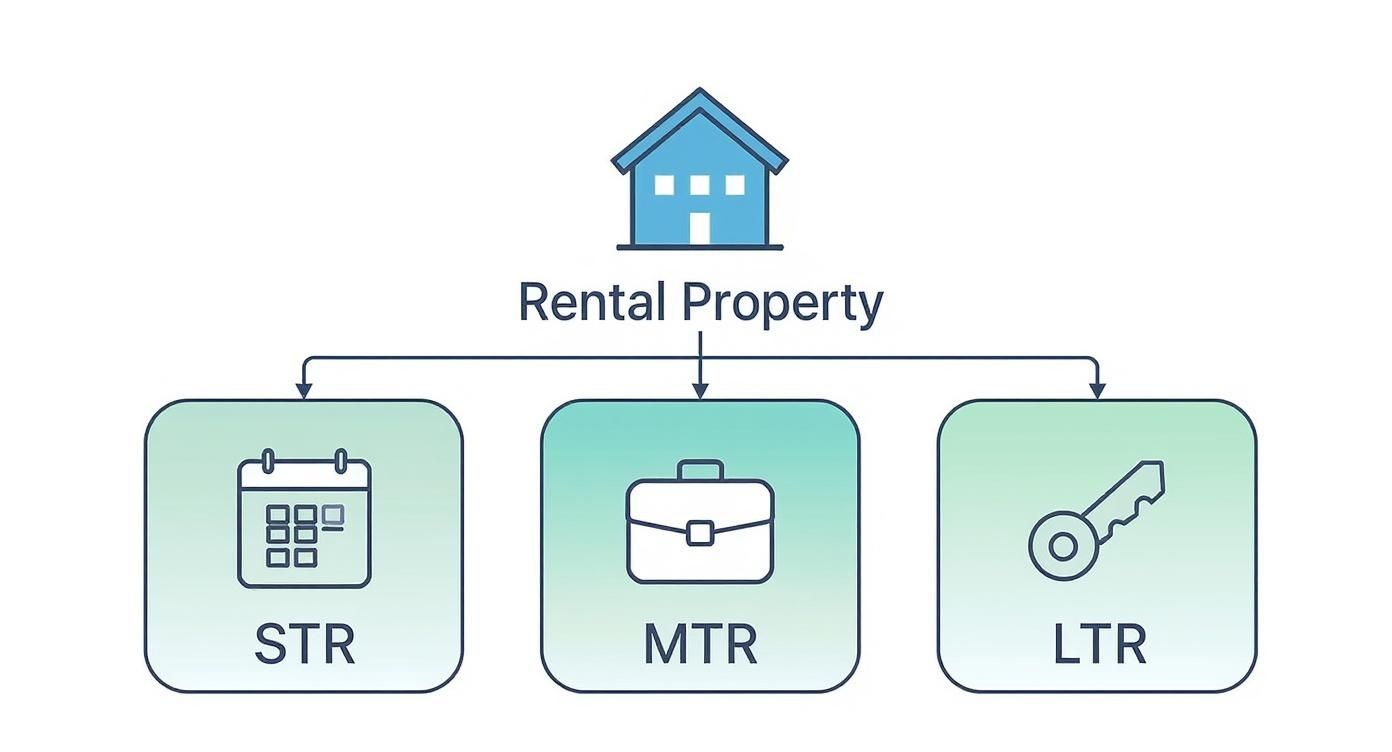
As you can see, each rental type has its place. But STRs sit right at the top, positioned for the highest revenue potential—if you're willing to actively manage them.
Of course, making money is only one side of the coin. You also have to factor in costs like cleaning, maintenance, utilities, and management fees. This is where having an expert in your corner becomes a total game-changer. A skilled manager doesn't just guess; they use sophisticated software and deep-rooted local knowledge to constantly optimize both your ADR and occupancy, keeping your calendar full and your income high.
Want to get a better handle on your own property's numbers? A great place to start is our guide on how to use a San Diego rental property cash flow calculator.
Navigating Short Term Rental Regulations in San Diego
Running a successful short-term rental isn't just about beautiful decor and happy guests—you've got to play by the rules. The world of regulations can seem like a maze, but figuring it out is the only way to protect your investment and keep your property operating legally and profitably.
Every city has its own playbook for STRs, and San Diego is certainly no exception. Local laws dictate everything from what officially counts as a short-term rental to zoning, licensing, and taxes. Trying to ignore these rules is a recipe for disaster, often leading to steep fines and shutdowns that can turn a great investment into a massive headache. This is where having real, on-the-ground expertise becomes non-negotiable.
Understanding San Diego's STR Ordinances
San Diego has put specific rules in place to strike a balance between welcoming tourists and protecting local communities. The city's framework gives hosts a clear path forward, making sure properties are run responsibly.
Here are a few key pieces of San Diego's regulations:
A Tiered Licensing System: The city uses different license tiers based on factors like how many days you rent per year and whether it's your primary home. This setup offers flexibility for different kinds of hosts.
Rules for Non-Primary Residences: If the property isn't your main home, there are specific caps and rules you need to know. This is a huge deal for investors looking to buy a property just for full-time STR use.
Occupancy and Safety Standards: Sticking to local safety codes and occupancy limits is mandatory. It’s all about ensuring every guest has a secure and comfortable stay.
Getting a handle on these details can feel like a lot, but they're absolutely critical for long-term success. For a much deeper dive, our guide on navigating San Diego's new short-term rental regulations breaks down exactly what owners need to know.
The Global Context of STR Regulation
San Diego’s approach is part of a much bigger, worldwide conversation. Cities everywhere are figuring out how to fit STRs into their housing markets without causing chaos. It's a massive industry—the U.S. short-term rental market is expected to pull in $21 billion in revenue, while Europe is on track to hit $35.29 billion.
With that kind of growth comes more scrutiny. Major cities are putting rules in place to manage the boom and address community concerns. You can get a better sense of the scale by checking out these vacation rental statistics and trends.
Partnering with a local expert who lives and breathes these regulations is the smartest way to operate. It transforms compliance from a burden into a seamless part of your business, letting you focus on the returns, not the risks.
This is exactly where a professional manager like West Coast HomeStays comes in. We handle every single aspect of licensing and compliance, ensuring your property is always aligned with local ordinances without you ever having to read a legal document. Our team is constantly on top of any changes, keeping your investment safe and your operations running smoothly.
Why a Hybrid STR + MTR Strategy Wins in San Diego

What if you could completely sidestep the dreaded off-season slump and keep your rental booked solid all year? That’s the real power behind a hybrid STR and MTR strategy. It's a savvy, data-driven approach that blends the best of both worlds, creating a tough-as-nails, high-occupancy model for your property.
Think about it this way: during San Diego’s peak season, your property operates as a short-term rental, pulling in top-dollar nightly rates from vacationers here for the sun. But as the tourist crowds start to thin out, you pivot. Your calendar seamlessly fills with mid-term stays from corporate clients, relocating families, or traveling nurses who need a comfortable home for one to six months.
This isn't just about plugging gaps in the calendar; it's about building a seriously stable financial foundation for your investment.
The Power of Year-Round Occupancy
Relying purely on an STR model often feels like a feast-or-famine cycle, completely at the mercy of seasonal demand. A hybrid approach smooths out those wild revenue swings and creates predictable, consistent cash flow.
Maximized Peak Season Revenue: You still get to cash in on those high nightly rates from tourists and event-goers during the summer and holidays.
Eliminated Off-Season Vacancy: Those slower months get filled with reliable, longer-term tenants, guaranteeing your property keeps making money.
Reduced Operational Wear and Tear: Fewer guest turnovers during the MTR periods mean less frequent deep cleans and lower maintenance costs compared to running a 100% STR model.
By diversifying who you rent to, you’re basically insulating your investment from market ups and downs and seasonal lulls. This model is a game-changer in markets like San Diego, which attract both tourists and a steady stream of corporate and government professionals.
🌟 Spotlight on West Coast HomeStays✔ 20–30% Revenue Boost: Our data-driven hybrid model consistently outperforms traditional management.✔ Hybrid STR + MTR Strategy: We keep your calendar full with high-quality guests year-round.✔ Five-Star Guest Experiences: Impeccable service that translates into stellar reviews and repeat bookings.👉 Book a strategy call
A Smarter, More Resilient Investment
Adopting a hybrid strategy is all about playing the long game. It demands a deep understanding of two very different rental markets and the ability to market your property to each audience effectively. For property owners, learning about the rise of mid-term rentals is the first step to unlocking these new streams of income.
At **West Coast HomeStays**, our hybrid STR + MTR strategy is our specialty. We tap into our huge network of corporate, insurance, and government contracts to lock in premium MTR bookings. This ensures our owners not only see higher profits but also benefit from true five-star hospitality that solidifies their property’s reputation and long-term value.
Your Partner for Success in the San Diego Rental Market
We've covered a lot of ground—from the core definition of a short-term rental to the financial engine, regulatory hurdles, and strategic models that drive real profit. The biggest takeaway should be clear: success in San Diego's dynamic market isn’t just about having a great property. It's about having a proven, data-driven strategy backing it up.
This is where professional management stops being an expense and becomes an investment in your property's peak performance.
Turning a rental into a high-performing, hands-off asset takes serious expertise, deep market insight, and a relentless focus on hospitality. It means navigating San Diego's complex local laws, optimizing pricing every single day, and consistently delivering the kind of five-star experiences that fuel bookings and glowing reviews. For owners who want to stay hands-on but need powerful tools, platforms like shortgenius can be an invaluable partner.
Ultimately, the goal is to unlock your property’s full potential without it taking over your life. It’s about building a business that practically runs itself, generating substantial passive income while you get back to what matters most.
If you’re ready for truly hands-off, higher-earning rentals in San Diego, West Coast HomeStays is the partner to trust. We don't just manage properties; we transform them into profitable, guest-favorite destinations.
Your Questions, Answered (FAQ)
Jumping into the world of short-term rentals can feel like a lot, especially when you're just starting out. We get it. Here are some straightforward answers to the questions we hear most often from San Diego property owners.
What makes West Coast HomeStays different from other managers?
Let's be blunt: most big-box management companies see your property as just another line on a spreadsheet. We’re not that. West Coast HomeStays is a boutique firm deeply rooted in the San Diego market. We focus on a data-driven, hybrid strategy that mixes high-paying vacationers with valuable mid-term corporate clients. That, combined with our obsession for five-star hospitality and eye-catching design, consistently boosts owner revenue by 20-30%. We’re not just a service provider; we're your strategic partner.
Can you handle both short- and mid-term stays?
Absolutely. In fact, that hybrid STR + MTR strategy is our secret sauce. We go after the high-paying vacationers during peak season (STR), and then seamlessly pivot to fill your calendar with corporate, government, or relocating professionals during the slower months (MTR). This approach keeps your property booked solid year-round and creates a far more stable, predictable revenue stream than a pure STR model ever could.
How quickly can my listing be optimized?
We move fast. Our onboarding process is designed for speed and immediate impact. Once you’re on board with us, we can typically have your listing fully optimized and ready to perform within just 1-2 weeks. That includes coordinating professional photography, writing a compelling, SEO-driven description, firing up our dynamic pricing engine, and launching your property across all the major booking platforms.
What amenities do your San Diego homes include?
Today's travelers have high expectations, and we make sure every property in our portfolio meets them. Every home comes standard with essentials like high-speed Wi-Fi, a fully-stocked kitchen, premium linens, and smart TVs. Many of our properties also feature desirable extras that command higher nightly rates, such as private pools, stunning ocean views, pet-friendly accommodations, and dedicated workspaces.
Do you help with design upgrades to boost nightly rates?
Yes, and this is one of the most valuable things we do. We provide expert design and staging consultations to guarantee your property doesn't just compete—it stands out. Whether it’s a simple decor refresh or recommendations for bigger upgrades, we’ll guide you toward the investments that deliver the highest return. A well-designed, photogenic property is absolutely critical for attracting top-tier guests.
If you’re ready for truly hands-off, higher-earning rentals in San Diego, West Coast HomeStays is the partner to trust.


Comments