.png)

When Did Airbnb Launch? The Full Founding Story


Airbnb launched its official website on August 11, 2008, under the original name Airbedandbreakfast.com. That date is the clearest answer to when Airbnb launched, but the true origin stretches back to October 2007, when two broke designers in San Francisco rented out three air mattresses to strangers. Understanding the gap between those two dates explains everything about how the platform became the company it is today.
TL;DR: Key Takeaways
Airbnb launched its official website on August 11, 2008, originally called Airbedandbreakfast.com, timed to the Democratic National Convention in Denver.
The founding idea dates to October 2007, when Brian Chesky and Joe Gebbia hosted three guests on air mattresses in their San Francisco apartment for $80 per night.
Nathan Blecharczyk joined as co-founder and CTO in February 2008, before the site went live.
The name officially changed from Airbed & Breakfast to Airbnb in March 2009, the same month the platform reached 10,000 users.
Y Combinator invested $20,000 for a 6% stake in January 2009, the moment most insiders credit as the company's real survival point.
As of 2026, Airbnb has 9 million-plus active listings in 220-plus countries, with hosts earning more than $380 billion all-time, according to the Airbnb Newsroom.
At West Coast Homestays, we help San Diego property owners build high-performing Airbnb listings from the ground up. Understanding the platform's history is more than a trivia exercise. The decisions Airbnb's founders made in 2007 and 2008 shaped the ranking systems, review structures, and host economics that govern every listing today. Knowing where the platform came from helps you understand how to use it better.
This article covers three distinct events that most people blur together: the idea's origin in October 2007, a soft launch at SXSW in March 2008, and the official public launch in August 2008. It also explains what set Airbnb apart from VRBO and HomeAway, which already existed when Airbnb entered the market. And it traces the critical 2009 turning point that turned a struggling side project into a platform that would eventually go public at a valuation that reshaped the global hospitality industry.
When Did Airbnb Actually Launch?
Airbnb launched its official public website on August 11, 2008, under the domain Airbedandbreakfast.com. That date is the most accurate answer to "when did Airbnb launch," but it represents only the third in a sequence of distinct milestones. The idea originated in October 2007, a soft launch took place at SXSW in March 2008, and the full public launch followed five months later. Most articles treat these as a single event. They are not.
The October 2007 origin is where the concept was proven. Brian Chesky and Joe Gebbia were struggling to pay rent on their San Francisco apartment when the Industrial Designers Society of America conference came to the city and hotels sold out. They bought three air mattresses, built a simple website called airbedandbreakfast.com, and charged $80 per night to three guests, including breakfast. The experiment worked. One of those guests was Amol Surve, widely cited as Airbnb's very first paying guest.
The SXSW soft launch in March 2008 was, by most measures, a failure. The site attracted just two bookings, and neither was from a stranger. But it confirmed the technical infrastructure could handle a public audience, which was enough for the founders to proceed. The August 2008 launch was timed deliberately to coincide with the Democratic National Convention in Denver, where a housing shortage mirrored the exact conditions that had validated the idea in San Francisco a year earlier. That convention generated 80 bookings. Small by any later standard. But it was the proof of concept that kept the company alive.

What Was Airbnb Called Before It Became Airbnb?
Before becoming Airbnb, the platform was called Airbed & Breakfast, operating under the domain Airbedandbreakfast.com. The name was a direct description of the original service: guests slept on air mattresses and received breakfast from their host. The company officially shortened the name to Airbnb in March 2009, the same month it reached 10,000 registered users and 2,500 listings. According to AirDNA's origin story analysis, the name change was partly practical, because Airbedandbreakfast.com was awkward to say and impossible to brand, and partly a signal that the platform had grown beyond its literal origins.
By March 2009, most bookings were no longer for air mattresses, and breakfast was rarely part of the equation. Hosts were renting spare rooms, entire apartments, and vacation homes. The "Airbed" in the name had become misleading. The founders recognized that clinging to a descriptive name would limit how people perceived the platform's possibilities. "Airbnb" retained the phonetic echo of the original without anchoring the brand to a specific product type.
Who Founded Airbnb and What Were Their Backgrounds?
Airbnb was founded by three people. Brian Chesky and Joe Gebbia were both graduates of the Rhode Island School of Design and had moved to San Francisco together. They were designers by training, which shaped how they thought about the host and guest experience from the beginning. Nathan Blecharczyk, a Harvard Computer Science graduate whose profile is documented in the Harvard Alumni archive, joined as the third co-founder and chief technology officer in February 2008, just months before the official site launch. Without Blecharczyk, the technical infrastructure that made scaling possible would not have existed in time.
The design-led founding team is relevant to every property owner on the platform today. Chesky and Gebbia's instinct was always to prioritize the physical experience of the space, the clarity of communication, and the visual presentation of a listing. Those instincts became the platform's ranking logic. Listings that photograph well, communicate clearly, and deliver on the described experience consistently outperform those that do not. That is not an accident. It reflects the values of the people who built the platform.
Did Airbnb Exist in 2009? The Y Combinator Turning Point
Yes, Airbnb existed in 2009, but barely. By late 2008, the company had generated very little revenue and the founders were reportedly in serious financial difficulty. The fundraising story from that period is one of the more remarkable in Silicon Valley history: Brian Chesky, Joe Gebbia, and Nathan Blecharczyk raised $30,000 by selling election-themed breakfast cereals they called "Obama O's" and "Cap'n McCains" at the 2008 Democratic National Convention. That money kept them operational long enough to apply to Y Combinator.
In January 2009, Y Combinator's Paul Graham invited the founders to the winter session. Y Combinator provided $20,000 in funding for a 6% equity stake. That investment is widely credited as the moment Airbnb stopped being a side project. The structure, mentorship, and credibility that came with Y Combinator acceptance changed how investors and the press perceived the company. Within three months of the Y Combinator session, Sequoia Capital led a $600,000 seed round in April 2009, with participation from Jawed Karim, Keith Rabois, and Kevin Hartz of Youniversity Ventures. Shares in that round were priced at $0.01 each.
The contrast with the December 2020 IPO price tells the story of the intervening decade. When Airbnb listed on Nasdaq on December 10, 2020, shares were initially offered at $68 per share, raising $3.5 billion. The company made $238 million worth of shares available specifically to hosts on the platform, a gesture that reflected the founding belief that hosts were partners, not just vendors. According to Airbnb's 2026 Form 10-K filed with the SEC, the company reported $12.2 billion in revenue for 2026, confirming a scale that makes the 2009 cereal fundraiser feel almost fictional by comparison.

When Did Airbnb Become Popular? The Growth Timeline
Airbnb became genuinely popular between 2011 and 2013, roughly three to four years after its official launch date. Several specific milestones mark the transition from niche platform to mainstream travel infrastructure. In May 2011, Airbnb acquired German competitor Accoleo and opened its first international office in Hamburg, signaling global intent. By November 2010, the platform had already introduced its mobile app and the Instant Book feature, which removed friction from the booking process and accelerated growth significantly.
The introduction of a $1 million Host Guarantee in May 2012 was the single most important trust-building moment in the platform's early history. Before that announcement, a major objection from potential hosts was simple: "What happens if a guest damages my home?" The Host Guarantee addressed that fear directly. Host sign-ups accelerated after the guarantee launched, and the supply-side growth it triggered then attracted more demand, compounding the network effect.
In November 2016, Airbnb launched Experiences, expanding beyond accommodation to include activities led by locals. The Trips product that combined Homes, Experiences, and Places launched the same month with approximately 500 Experiences across 12 cities worldwide, according to the Airbnb Newsroom. And in April 2015, Airbnb launched in Cuba, one of the first US companies to operate there following the easing of trade restrictions, a moment that generated significant global media coverage and reinforced the brand's reputation for operating at the frontier of what was possible in travel.
How Did Airbnb Differentiate from VRBO and HomeAway at Launch?
When Airbnb launched in August 2008, VRBO and HomeAway already existed and were well-established in the vacation rental market. This is a detail most articles about Airbnb's origin story omit entirely. Airbnb was not entering a vacant market. It was entering a market with incumbents and had to earn its place. The differentiation came down to three structural differences in the business model.
First, VRBO and HomeAway focused almost exclusively on whole-home vacation rentals, typically in resort and beach destinations. Airbnb's initial model was built around spare rooms and air mattresses in urban apartments, which opened an entirely different inventory category. Hosts on VRBO needed a second property. Hosts on the early Airbnb needed only a spare room and a willingness to share their home.
Second, Airbnb built a trust infrastructure that VRBO lacked at the time. The two-way review system, host and guest profiles, and eventually the Superhost program created accountability mechanisms that made strangers comfortable booking from strangers. VRBO's model was closer to a classified listing directory; Airbnb's was closer to a social network with transactional capabilities layered on top.
Third, Airbnb's pricing model charged a service fee to both hosts and guests rather than a flat annual listing fee. This removed the upfront cost barrier for hosts and made the platform accessible to anyone with a spare room, regardless of whether they were confident they would generate enough bookings to justify a subscription. As noted in the Stratechery analysis of Airbnb's business model, this structural choice was central to how the internet enabled Airbnb's growth in ways that earlier marketplace models had not anticipated.
Airbnb Founding Milestones: A Chronological Timeline
The table below separates the three dates that most articles conflate when answering "when did Airbnb launch." Reading them as distinct events rather than a single moment clarifies the sequence of decisions that shaped the platform.
Date | Milestone | Significance |
October 2007 | First hosting event in San Francisco | Brian Chesky and Joe Gebbia host three guests on air mattresses at $80/night during the IDSA conference; Amol Surve is the first-ever Airbnb guest |
February 2008 | Nathan Blecharczyk joins as CTO | The technical co-founder completes the founding team and builds the infrastructure for the public launch |
March 2008 | SXSW soft launch | Two bookings; functionally a failure, but confirms the technology works publicly |
August 11, 2008 | Official website launch (Airbedandbreakfast.com) | Timed to the Democratic National Convention in Denver; generates 80 bookings, providing the proof of concept that sustains the company |
January 2009 | Y Combinator acceptance and $20,000 investment | Paul Graham's endorsement provides credibility and the structured mentorship that transforms the company's trajectory |
March 2009 | Name change to Airbnb; 10,000 users reached | Platform outgrows its literal name as hosts list far more than air mattresses; 2,500 listings active |
April 2009 | Sequoia Capital leads $600,000 seed round | Shares priced at $0.01; institutional validation follows Y Combinator's early bet |
November 2010 | Series A: $7.2 million from Greylock Partners and Sequoia Capital | Shares sold at $0.21; mobile app and Instant Book also launch this month |
May 2011 | Acquires Accoleo; opens Hamburg office | First international expansion; Germany becomes the first foothold outside the US |
May 2012 | $1 million Host Guarantee introduced | Addresses the biggest barrier to host sign-ups; supply-side growth accelerates |
April 2015 | Launches in Cuba | One of the first US companies to operate there; significant global media coverage |
November 2016 | Launches Experiences and Trips | Platform expands beyond accommodation into activities and local services |
March 2019 | Acquires HotelTonight for approximately $400 million | Moves into last-minute hotel booking, broadening the competitive surface |
December 10, 2020 | IPO on Nasdaq; raises $3.5 billion | Shares offered at $68; $238 million reserved for hosts; company goes public during the COVID-19 pandemic |
2025/2026 | 9M+ active listings; $83.8B market cap (Statista) | 5.5M+ hosts; 2.5B+ guest arrivals all-time; hosts have earned $380B+ collectively; typical US host earned $15,600 in 2026 |

What Does Airbnb's Launch History Mean for Property Owners Today?
Airbnb's founding history is directly relevant to how you manage a listing on the platform in 2026. The decisions made between 2007 and 2012 shaped the ranking algorithm, the review system, and the trust infrastructure that govern every booking today. Understanding those decisions helps you use the platform the way it was designed to be used, rather than working against its underlying logic.
The most important structural decision Airbnb made early on was the two-way review system. Chesky and Gebbia, as designers, understood that the product they were building was not a hotel booking engine. It was a trust machine. Hosts review guests; guests review hosts. Both reputations are publicly visible. This system means that guest experience is not just a courtesy consideration. It is a direct input into your listing's search ranking, your eligibility for Superhost status, and according to data from our portfolio at West Coast Homestays, a driver of meaningful revenue differences. Properties with consistent 5-star reviews generate approximately 20% more revenue than comparable listings with lower ratings, a pattern we observe across properties we manage in Pacific Beach, La Jolla, and Encinitas.
The 2012 Host Guarantee, now evolved into AirCover for Hosts, established the expectation that hosts are protected partners rather than independent contractors taking on unlimited risk. That framing matters in 2026 because it shapes how Airbnb mediates disputes, handles damage claims, and communicates policy changes. Knowing the guarantee originated as a growth lever rather than a purely altruistic protection helps you understand its actual scope and limitations when you need to use it.
The platform's expansion from air mattresses in 2007 to 9 million-plus listings across 220-plus countries in 2026 also created the competitive environment that property owners now navigate. When Airbnb launched, listing quality barely mattered because competition was thin. Today, a San Diego coastal property competes against thousands of other listings in the same market. The question is no longer "can I list on Airbnb?" It is "can my listing compete at the level the current market requires?" That distinction is the reason professional listing optimization, revenue management, and guest communication have become serious disciplines rather than nice-to-haves.
For property owners considering how to maximize performance on a platform that has been optimized and refined for nearly two decades, the founding story provides useful context. The review you receive tonight was shaped by a design decision made in 2008. The dynamic pricing tools you use today exist because a platform that launched with air mattresses eventually scaled into a system that generates $12.2 billion in annual revenue. Working with that system rather than against it is the practical takeaway. You can explore more on how to do that effectively in our resources on Airbnb management strategies for San Diego property owners.
Frequently Asked Questions About Airbnb's Launch and History
When did Airbnb launch its official website?
Airbnb launched its official website on August 11, 2008, under the name Airbedandbreakfast.com. The launch was timed to coincide with the Democratic National Convention in Denver, where a hotel shortage mirrored the conditions that had sparked the original idea in San Francisco a year earlier. That convention generated 80 bookings, which was modest but enough to sustain the company through its next phase of development.
What was Airbnb called before it changed its name?
Before becoming Airbnb, the platform was called Airbed & Breakfast and operated at the domain Airbedandbreakfast.com. The name reflected the literal original product: guests slept on air mattresses and received breakfast from their host. The company officially changed its name to Airbnb in March 2009, coinciding with a milestone of 10,000 registered users and 2,500 active listings. The shortened name was easier to say, possible to brand, and no longer anchored the company to a specific product type it had already outgrown.
Did Airbnb exist in 2009?
Yes, Airbnb existed in 2009, though it was barely surviving. The founders had raised $30,000 by selling election-themed cereals to stay operational, and the platform had not yet achieved meaningful scale. The turning point came in January 2009, when Y Combinator's Paul Graham accepted the founders into the winter session and provided $20,000 in funding for a 6% equity stake. That acceptance, and the subsequent $600,000 seed round led by Sequoia Capital in April 2009, transformed Airbnb from a struggling experiment into a fundable startup.
When did Airbnb become popular?
Airbnb became genuinely popular between 2011 and 2013. The mobile app and Instant Book feature launched in November 2010, removing significant friction from the booking process. The $1 million Host Guarantee launched in May 2012 addressed the primary fear holding potential hosts back, accelerating supply-side growth substantially. International expansion began with the acquisition of German competitor Accoleo and the opening of Airbnb's Hamburg office in 2011. By 2013, the platform had enough listings and bookings to be considered mainstream travel infrastructure rather than a niche experiment.
Who were the original founders of Airbnb?
Airbnb was founded by Brian Chesky and Joe Gebbia, both Rhode Island School of Design graduates, who originated the idea in October 2007. Nathan Blecharczyk, a Harvard Computer Science alumnus, joined as the third co-founder and chief technology officer in February 2008, just before the official launch. Chesky became CEO, Gebbia became Chief Product Officer, and Blecharczyk served as CTO. All three remain involved with the company as of 2026.
How did Airbnb fund itself in the early days?
Airbnb's early funding story includes one of the more unusual episodes in startup history. Before securing institutional investment, the founders raised approximately $30,000 by creating and selling election-themed breakfast cereals called "Obama O's" and "Cap'n McCains" at the 2008 Democratic National Convention. That money kept them alive long enough to be accepted into Y Combinator in January 2009, which provided $20,000 for a 6% stake and the credibility to attract Sequoia Capital's $600,000 seed round three months later.
When did Airbnb go public?
Airbnb went public on December 10, 2020, listing on the Nasdaq stock exchange. The IPO raised $3.5 billion, with shares initially offered at $68 each. Notably, Airbnb made $238 million worth of shares available specifically to hosts on the platform, reflecting the founders' view that hosts were partners in the company's success. The IPO took place during the COVID-19 pandemic, a period that had severely disrupted travel, making the valuation and investor interest particularly striking. Airbnb's market cap as of 2026 was approximately $83.8 billion, according to Statista.
How many listings does Airbnb have in 2026?
As of 2026, Airbnb has more than 9 million active listings across 220-plus countries and regions, with over 5.5 million active hosts on the platform. Hosts have collectively earned more than $380 billion all-time, and the typical US host earned approximately $15,600 in 2026, according to the Airbnb Newsroom. The platform has recorded more than 2.5 billion guest arrivals since its 2008 launch, making it one of the largest hospitality networks ever built.
The Bottom Line: Three Dates, One Platform
When people ask when Airbnb launched, they are usually looking for a single date. August 11, 2008 is the most accurate answer: the day Airbedandbreakfast.com went live and began accepting bookings from the public. But the full answer requires understanding October 2007 as the moment the idea was proven, and January 2009 as the moment Y Combinator's endorsement made survival possible.
The platform that launched with air mattresses and $30,000 worth of cereal has become a $83.8 billion company generating $12.2 billion in annual revenue. That trajectory was not accidental. It came from a founding team that understood trust, design, and the value of reducing friction between hosts and guests. Those same principles govern the platform's behavior in 2026, and they are what every property owner on Airbnb is working with today.
If you own a property in San Diego, La Jolla, Pacific Beach, or anywhere along California's coast, the history of Airbnb's launch is the backstory of the platform you are using to generate income. Understanding it means you can use it more deliberately. Our team at West Coast Homestays has managed this process across more than 80 properties, and the patterns in what works have been consistent enough to be confident about. You can find more practical guidance in our detailed resources on San Diego Airbnb management and what drives revenue in this market.
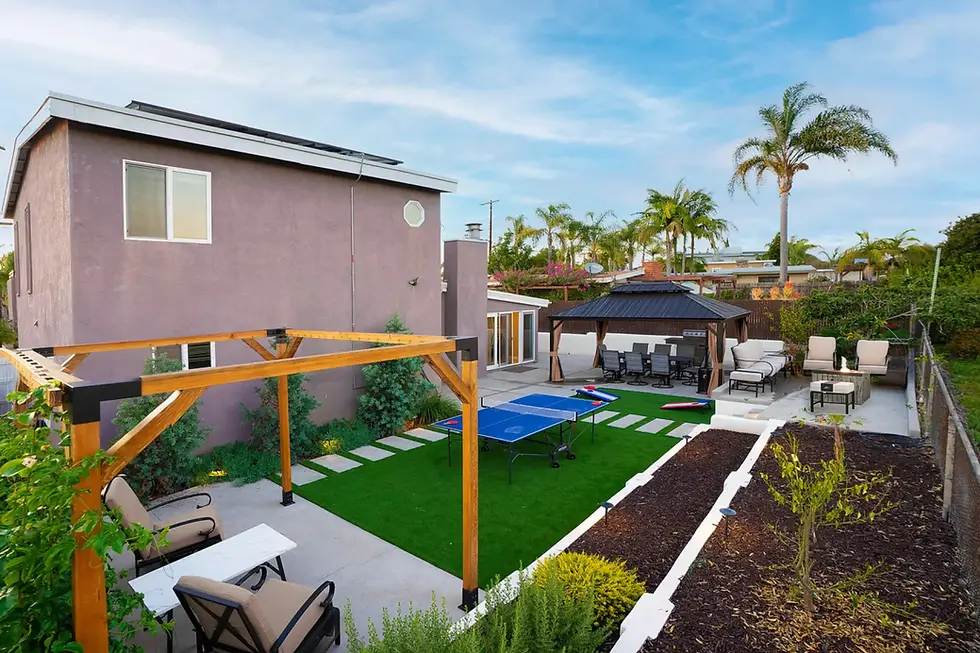
The platform Airbnb built from a San Francisco apartment in 2007 has created a serious income opportunity for property owners across San Diego's coastal neighborhoods. Capturing that opportunity fully requires more than a listing. It requires the same kind of systematic attention to guest experience, pricing, and presentation that Airbnb's founders applied when they were building the platform itself. That is exactly what West Coast Homestays delivers across its managed portfolio. With $121,000-plus in revenue increases achieved through dynamic pricing and listing optimization, and a hybrid STR/MTR strategy that generated $136,732 in annual revenue for one San Diego property, the results speak for themselves. To find out what professional management could do for your property, visit West Coast Homestays and start the conversation.
Written by Mark Palmiere, Owner & CEO at West Coast Homestays
Comments