_edited.png)


Should I Rent My Home on Airbnb? What to Ask First


Renting your home on Airbnb is worth considering if your property is in a high-demand area, you can meet local permit requirements, and you understand the true cost structure before your first booking. At West Coast Homestays, we manage short-term and mid-term rentals across San Diego's coastal neighborhoods, and the single most common mistake we see is hosts who list first and calculate later. This guide helps you reverse that order.
Net Airbnb income is typically 20-30% lower than the gross nightly rate once platform fees, cleaning, and consumables are factored in.
San Diego's STRO permit system is tiered by neighborhood; operating without a valid permit in 2026 carries real enforcement risk.
Standard homeowners insurance rarely covers STR activity; Airbnb's AirCover provides damage and liability protection but does not replace a dedicated policy.
A hybrid short-term and mid-term rental strategy hit $136,732 in annual revenue for one West Coast Homestays client versus a $98,800 STR-only projection.
Dynamic pricing misconfiguration can cost $30,000 to $40,000 in a single year, making rate calibration the highest-leverage decision after launch.
Stopping Airbnb hosting requires more planning than simply unpublishing a listing.
Is Renting Your House Through Airbnb Worth It?
Renting your house through Airbnb is worth it when demand in your area is strong, your property can meet minimum stay and cleanliness standards consistently, and you have a realistic picture of net income rather than gross revenue. For many San Diego homeowners, the answer is yes. For some, especially those in neighborhoods with tight permit caps or HOA restrictions, the math is considerably harder.
Airbnb hosts share more than six million listings around the world, according to the official Airbnb Newsroom. That scale signals genuine demand. But supply has also grown: the U.S. rental vacancy rate reached 7.3% in Q1 2026, up from 7.1% in Q3 2026, according to the U.S. Census Bureau via FRED. In short-term rental markets, higher supply means more competition for each booking, which is exactly why listing quality and pricing strategy matter more in 2026 than they did three years ago.
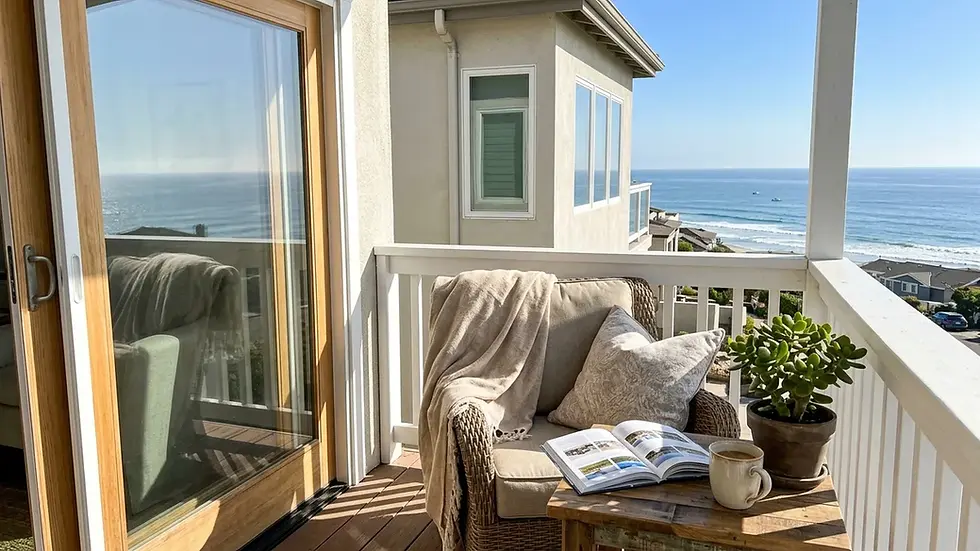
The honest answer is that Airbnb hosting is not passive income. It is a hospitality operation that rewards owners who treat it with operational seriousness. For San Diego properties in La Jolla, Pacific Beach, Mission Beach, Encinitas, or Carlsbad, the demand fundamentals are strong enough that a well-run listing can generate meaningful returns. A poorly run one bleeds money quietly.
What Does Your Net Income Actually Look Like After Fees and Costs?
Net Airbnb income refers to what you actually keep after Airbnb's platform fee, cleaning costs, restocking consumables, maintenance reserves, and your time are subtracted from the gross booking value a guest pays. Most prospective hosts focus on the gross nightly rate displayed in listing search results. That number is not your income.
Here is how the math typically breaks down. Airbnb charges hosts approximately 3% of the reservation subtotal as a service fee, collected from your payout rather than upfront. If a guest books five nights at $200 per night, you pay roughly $30 in platform fees. That is relatively small. The larger variables are cleaning and consumables.
A professional turnover cleaning for a two-bedroom property in San Diego typically runs $120 to $180 per stay. Shampoo, soap, paper products, and kitchen staples add another $15 to $30 per turnover depending on stay length. For a property averaging 15 bookings per month, consumable and cleaning costs alone run $2,025 to $3,150 monthly before a single maintenance call.
Pricing decisions compound this further. At West Coast Homestays, we have seen miscalibrated dynamic pricing tools cost owners $30,000 to $40,000 in a single calendar year. That is not a typo. An automated tool set to the wrong comp set can confidently undercut your rate during high-demand weekends and overcharge during slow periods, driving away bookings when you need them most.
On the revenue side, Airbnb occupancy averages in high-performing San Diego markets are encouraging: according to Awning (2026 data), Encinitas entire-home listings average 81.4% occupancy and Carlsbad averages 80.0%. Those are strong baselines. But occupancy rate multiplied by nightly rate gives gross revenue. Subtract fees, cleaning, maintenance, and your time, and net income is the real number worth tracking.
What Legal and Regulatory Rules Apply Before You List?
Short-term rental regulations in San Diego refer to the city's Short-Term Residential Occupancy (STRO) ordinance, which governs which properties can be listed on Airbnb, for how many nights, and under what permit tier. Operating without a valid STRO license in 2026 exposes San Diego hosts to fines and license revocation.
San Diego's STRO system uses a tiered structure. Tier 1 licenses cover hosted stays where the host is present. Tier 2 covers whole-home rentals for primary residences. Tier 3 covers non-primary residence whole-home rentals and is subject to a citywide cap. Mission Beach falls under Tier 4 with its own distinct limits. You can review active license data on the City of San Diego's STRO Active Licenses Open Data Portal and verify your neighborhood's tier on the City of San Diego STRO Official Page.
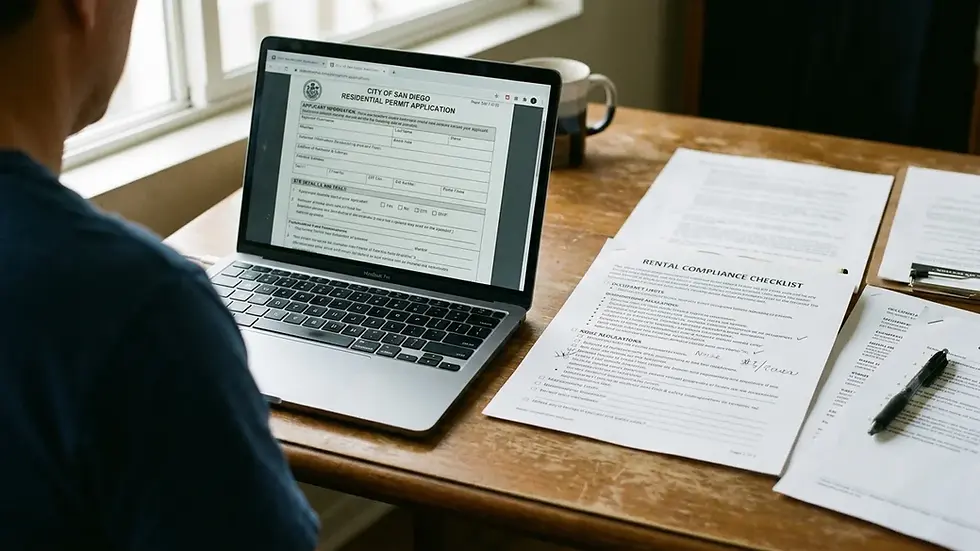
Before applying for an STRO license, you also need a Transient Occupancy Tax (TOT) certificate and an active Rental Unit Business Tax (RUBT) account. The Transient Occupancy Registration System handles TOT certificate applications online. Applications for the STRO license itself are submitted through the City of San Diego Accela portal.
Beyond San Diego, if your property is governed by an HOA, review your CC&Rs before listing. Many San Diego HOAs added explicit STR restrictions in 2026 and 2026, and a HOA notice violation can result in fines separate from city enforcement. If your property is mortgaged, check whether your lender agreement requires notification before converting to a short-term rental use.
Does Your Insurance Actually Cover Short-Term Rental Activity?
Standard homeowners insurance typically does not cover short-term rental activity. Most policies classify Airbnb hosting as a commercial use of a residential property, which voids standard dwelling coverage during guest stays. This is one of the most consequential risks new hosts overlook, and none of the major competing listing platforms solve it fully.
Airbnb's AirCover for Hosts program provides meaningful protection: up to $3 million in damage protection and up to $1 million in liability insurance, included automatically with every hosting arrangement. That is a real safety net for most damage and injury scenarios. But AirCover is not a replacement for a comprehensive insurance policy.
AirCover does not cover every scenario. It excludes cash and jewelry theft, certain types of pre-existing damage, and situations where the host is found negligent. It also does not cover loss of rental income during periods when a claim is being processed, which can mean weeks of vacancy with no payout.
Dedicated short-term rental insurance products fill these gaps. Several specialized insurers now offer STR-specific policies that cover loss of rental income, guest liability, and property damage on a 24/7 basis regardless of whether AirCover applies. If you are listing a property in a market with high booking volume and high nightly rates, the annual premium for a dedicated STR policy is typically recouped in a single claim that AirCover would have disputed.
Talk to your existing homeowners insurer first. Some carriers offer STR endorsements or riders that extend coverage to short-term rental use at a fraction of the cost of a standalone policy. Others will simply decline coverage entirely. Know which situation you are in before your first guest checks in.
How Do You Prepare Your Home for Guests?
Preparing your home for Airbnb guests means creating a space that photographs well, functions reliably, and leaves nothing personal exposed to strangers. It is not just cleaning; it is a deliberate reset of the space from how you live in it to how a guest expects to find it.
Start with personal belongings. Guests book a space, not a window into someone's life. Store personal documents, medications, clothing, and valuables before any booking. Zip-up cases like the IKEA SKUBB storage case are a practical solution for consolidating and hiding personal items in closets or under beds. For families with children, organizing drawer contents into a portable container like the IKEA STUK box with compartments before a stay makes the reset process faster and more consistent.
Linens are a separate category entirely. Invest in a dedicated set of plain white towels and bed sheets reserved exclusively for guest use. White shows cleanliness, photographs well, and makes replacement decisions easy when wear accumulates. Hotel-grade white linens from a wholesale supplier outperform retail options on durability per wash cycle.
Smart home devices add genuine operational value. A NEST thermostat, for example, allows remote temperature adjustment so the property is comfortable at check-in without running climate control unnecessarily between stays. A smart lock eliminates the coordination problem of physical key handoff and lets you issue unique entry codes for each booking that expire automatically at checkout.
Finally, prepare a printed or digital information sheet covering appliance instructions, Wi-Fi credentials, parking details, trash schedules, local restaurant recommendations, and nearby beach access points. For San Diego properties near the coast, guests consistently ask about parking (almost always limited), beach access hours, and where to find groceries. Answering those questions before they become a message at 10 p.m. is the single fastest way to earn a 5-star review.
What Is the 80/20 Rule for Airbnb and How Should It Shape Your Strategy?
The 80/20 rule for Airbnb refers to the principle that approximately 80% of your bookings and revenue will come from 20% of your calendar, specifically peak weekends, holiday periods, and seasonal demand windows. Understanding this concentration of demand should shape your minimum stay settings, pricing approach, and rental strategy from day one.
In San Diego, the practical translation of this rule is that summer weekends in Pacific Beach and Mission Beach can command nightly rates two to three times higher than a midweek January stay in the same property. If your minimum stay is set too short, you fill your calendar with low-rate weekday bookings that block your ability to capture premium weekend demand. Many self-managing hosts make this exact miscalculation.
The 80/20 concentration also means that the months outside your peak window matter more than most hosts realize. January through March tends to be San Diego's softest booking period for short-term rentals. Hosts who have a plan for those weeks earn substantially more annually than those who let the calendar sit open at unattractive rates.
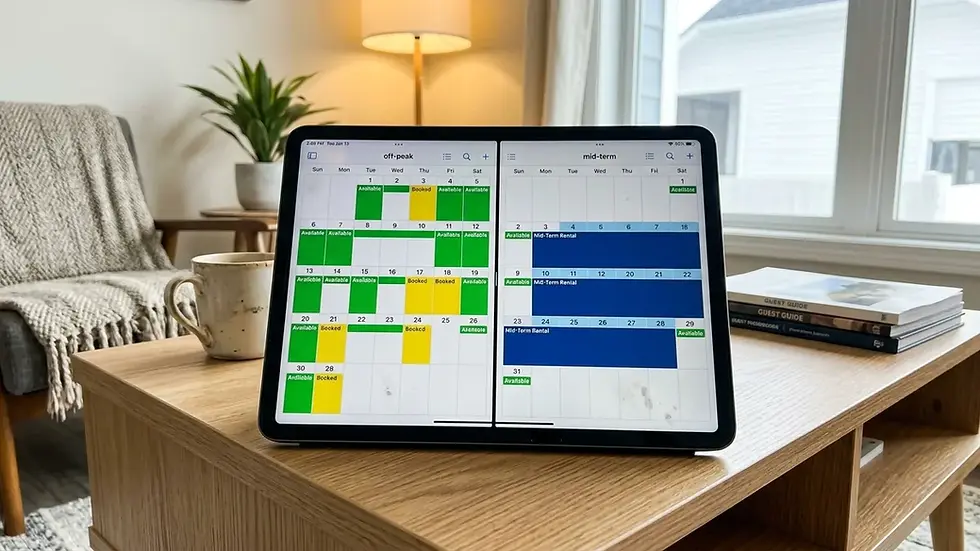
One strategy that directly addresses this seasonal gap is a hybrid short-term and mid-term rental model. Rather than leaving off-peak weeks open at low rates, you place a qualified 30-plus-night tenant for the slow season at a rate that often exceeds what nightly bookings would have generated with full occupancy. One West Coast Homestays client using this hybrid approach reached $136,732 in annual revenue, compared to a $98,800 projection running short-term only. The 35 gap nights filled at mid-term rates made the difference.
Knowing where your 80% demand window sits is the foundation of every other pricing and availability decision you make. In San Diego, that window runs roughly late May through early September, with secondary peaks around Thanksgiving, the December holidays, and spring break in March.
What Does the Decision Framework Look Like Side by Side?
A structured decision framework for renting your home on Airbnb compares the key variables that determine whether listing is financially and operationally viable for your specific situation. The table below covers the factors that most commonly determine success or failure for San Diego hosts in 2026.
Decision Factor | Favors Listing on Airbnb | Raises a Red Flag |
Location demand | Coastal San Diego (La Jolla, Pacific Beach, Mission Beach, Encinitas, Carlsbad, Oceanside) | Low-tourism inland area with limited booking history on AirDNA |
STRO permit eligibility | Primary residence in Tier 1 or Tier 2; non-primary in Tier 3 with available cap slots | HOA restriction, no available Tier 3 cap slots, or pending code enforcement complaint |
Insurance coverage | Carrier offers STR endorsement or you have a dedicated STR policy | Existing homeowners policy voids coverage during commercial use |
Mortgage/lender terms | No STR restriction in loan documents; investment property loan | Owner-occupancy requirement or lender notification clause not yet reviewed |
Pricing strategy | Willingness to calibrate dynamic pricing against live comp set data | Planning to use default Smart Pricing or Airbnb's automated tool without adjustment |
Operational capacity | Reliable cleaning team, responsive availability, or professional management in place | No local support network; anticipating managing all guest communication personally |
Financial cushion | Can absorb 1-3 months of soft bookings while establishing listing momentum | Relying on first-month revenue to cover mortgage or carrying costs |
If your situation falls predominantly in the left column, listing your San Diego property is worth pursuing with a clear plan. If you have multiple red flags in the right column, address them before publishing a listing. A listing launched with unresolved insurance gaps or without a valid STRO permit creates financial and legal exposure that a good first-month revenue cannot cover.
For a deeper look at the revenue side of this decision, the investment resources on the West Coast Homestays blog cover STR financial analysis in detail, including how to evaluate a San Diego property's revenue potential before committing to a listing strategy.
What Happens If You Want to Stop Hosting?
Stopping Airbnb hosting refers to the process of winding down an active short-term rental listing, including managing pending bookings, addressing cumulative wear on the property, and understanding ongoing regulatory obligations after the final guest departs. Most hosts underestimate how long a clean exit actually takes.
The most immediate issue is confirmed future bookings. Airbnb's cancellation policy for hosts carries financial penalties and review consequences; if you cancel a confirmed reservation, guests receive a refund and you may receive a negative mark on your host profile that affects future search ranking. If you decide to stop hosting, the cleanest path is to block all future dates immediately and honor any bookings already confirmed, rather than cancelling them.
Property wear is a second consideration that rarely gets discussed. Short-term rental use accelerates wear on flooring, furniture, kitchen equipment, and bathroom fixtures compared to owner-occupancy. A property that hosted 150 stays over two years will need a realistic audit before it returns to full-time personal use or long-term tenancy. Budget for that refresh in advance.
On the regulatory side, your San Diego STRO license and TOT certificate carry ongoing reporting obligations that persist after your last booking. Tier 3 and Tier 4 license holders must submit quarterly reports to the City, and failure to close those accounts properly can result in continued fee assessments. Contact the City of San Diego Treasurer's Office directly to formally deactivate your registrations.
If your reason for stopping is burnout rather than a strategic exit, it is worth having a conversation about professional management before pulling the listing entirely. Handing operations to a management team changes the math: the time cost disappears, the guest communication stops landing on your phone, and the revenue often improves because of professional pricing and turnover standards. For context on what that transition looks like in practice, the San Diego Airbnb exit strategies guide for 2026 covers both the management transition path and the full exit path in detail.
Frequently Asked Questions About Renting Your Home on Airbnb
Is renting your house through Airbnb worth it financially?
Renting your house through Airbnb is financially worth it when your location generates consistent demand, your net income after fees and operating costs is materially higher than a long-term rental would produce, and you have the operational infrastructure to maintain listing quality. In high-demand San Diego coastal neighborhoods like Pacific Beach, Encinitas, and La Jolla, well-managed properties routinely outperform long-term rental income. The key word is "well-managed": strong gross revenue with poor cost control or missed pricing opportunities can still produce disappointing net returns.
What is the 75/55 rule for Airbnb?
The 75/55 rule for Airbnb is not an official Airbnb policy. It is a host community shorthand that some operators use to describe a pricing threshold where a listing should aim for a minimum 75% occupancy at a rate at least 55% of the local market rate to generate sustainable revenue. Airbnb does not publish or endorse this rule. Use your actual local comp set data from tools like AirDNA to set realistic occupancy and rate targets for your specific market and property type rather than applying a generic formula.
What is the 80/20 rule for Airbnb?
The 80/20 rule for Airbnb refers to the pattern where approximately 80% of a listing's total annual revenue comes from roughly 20% of the calendar, specifically peak weekends, holiday periods, and seasonal demand windows. In San Diego, that concentration centers on summer weekends from late May through early September, with secondary peaks around spring break, Thanksgiving, and December holidays. Understanding this demand concentration helps hosts set minimum stay requirements, calibrate seasonal pricing, and plan mid-term rental coverage for off-peak periods.
Do I need an STRO permit to rent my San Diego home on Airbnb?
Yes. The City of San Diego requires a valid Short-Term Residential Occupancy (STRO) license for any property rented on platforms like Airbnb for fewer than 30 consecutive nights. The application process begins with obtaining a TOT certificate and an active RUBT account, then submitting an STRO license application through the City's Accela portal. Operating without a license in 2026 carries enforcement risk including fines and permit denial. Review the City of San Diego STRO Official Page for current requirements and tier eligibility before listing.
Does standard homeowners insurance cover Airbnb rentals?
Standard homeowners insurance typically does not cover short-term rental activity because most policies classify hosting as a commercial use of a residential property. Airbnb's AirCover for Hosts provides up to $3 million in damage protection and $1 million in liability coverage automatically, but it does not replace a comprehensive insurance policy. Ask your existing insurer about an STR endorsement or rider, or purchase a dedicated short-term rental insurance policy to cover scenarios AirCover excludes, particularly loss of rental income during claim disputes.
How does a mortgage affect my ability to list on Airbnb?
Your mortgage agreement may restrict or prohibit short-term rental use of the property, particularly if the loan was issued under an owner-occupancy requirement. Listing your home on Airbnb without reviewing your loan documents first is a meaningful legal risk. Some lenders require notification before any commercial use begins; others include clauses that technically allow the lender to call the loan if the occupancy terms are violated. Review your mortgage agreement carefully, or consult a real estate attorney before your first booking.
How hard is it to stop hosting on Airbnb once I start?
Stopping Airbnb hosting requires more steps than simply unpublishing a listing. Confirmed future bookings must be honored or cancelled with financial and reputational penalties. Ongoing STRO and TOT registrations with the City of San Diego carry quarterly reporting obligations that persist until formally closed. The property itself may need a condition audit after intensive short-term use. If burnout is the reason for stopping, transferring management to a professional team is often a more financially sound decision than a full exit, since revenue typically improves when operational systems are professionalized.
What does professional Airbnb management cost in San Diego, and is it worth it?
Professional Airbnb management companies in San Diego typically charge a percentage of gross booking revenue, with full-service arrangements generally ranging from 20% to 30% depending on the scope of services included. For many owners, this fee is offset by the revenue improvement that professional pricing, listing optimization, and multi-channel distribution produce. At West Coast Homestays, our full-service management model has generated documented revenue increases across properties in La Jolla, Pacific Beach, Carlsbad, and Encinitas. You can explore what that looks like for your property at WestCoastHomestays.com.
Making the Right Call for Your Property
The decision to rent your home on Airbnb is not a simple yes or no. It is a series of smaller decisions: whether your location supports the demand, whether your insurance and mortgage terms allow it, whether you have the operational capacity to maintain the listing, and whether your exit plan is realistic if it does not work out.
For San Diego property owners in coastal neighborhoods from Oceanside down to La Jolla, the demand fundamentals support listing. Occupancy rates above 80% in Encinitas and Carlsbad reflect a market where a well-run property should perform. The risk is not demand; it is operational quality, pricing precision, and regulatory compliance. Those three factors separate San Diego hosts who generate strong net income from those who generate impressive gross revenue while quietly losing money.
If you are evaluating whether to list in 2026, start with the decision framework table above, verify your STRO permit eligibility before anything else, and build a realistic net income projection rather than working from the gross rate. For additional context on the investment side of this decision, the Airbnb management resources on the West Coast Homestays blog cover revenue strategy, pricing optimization, and market-specific benchmarks across San Diego's coastal neighborhoods.
Should you rent your home on Airbnb? If the variables line up, yes. If they do not, fix them first or find a management partner who already has the systems to navigate them.

If managing a San Diego short-term rental has become more complicated than you anticipated, or if you want to launch with professional systems already in place, West Coast Homestays manages 80-plus coastal properties across San Diego with documented results: $121,000-plus in revenue increase through dynamic pricing and listing optimization, and a hybrid STR/MTR strategy that produced $136,732 in annual revenue for one client versus a $98,800 STR-only baseline. Reach out at WestCoastHomestays.com to find out what professional management could mean for your property.
Written by Mark Palmiere, Owner & CEO at West Coast Homestays

Comments