_edited.png)


Burned Out as an Airbnb Host? Here Is What to Do

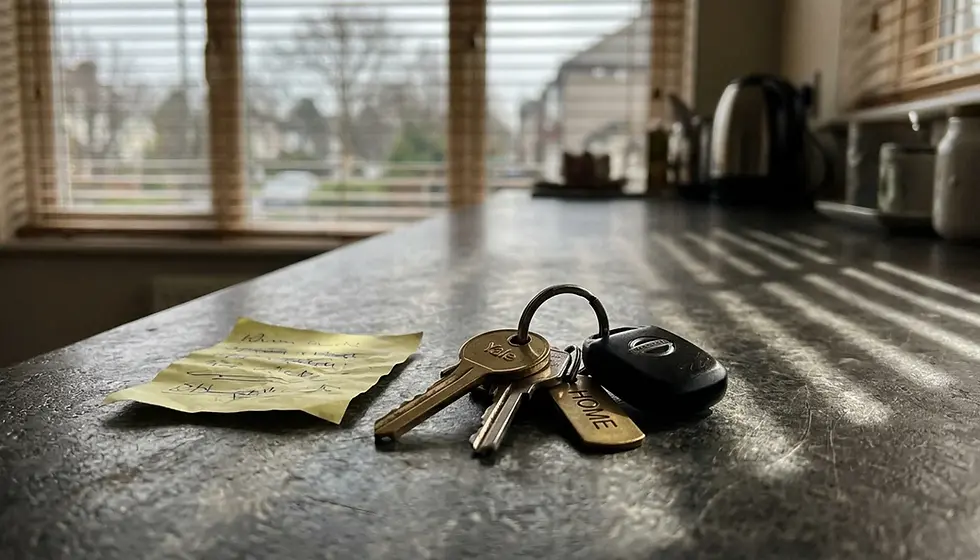
Being a burned out Airbnb host is more common than the platform's glossy success stories suggest. STR educator Drew Pierce, whose LinkedIn post on this topic went viral in 2026, put it plainly: the average Airbnb host burns out after just two years. At West Coast Homestays, we manage 80-plus properties across San Diego's coastal neighborhoods, and the pattern we see consistently is not that hosting is too hard. It is that self-managed hosting, without the right systems, becomes an unrelenting second job that pays inconsistently and never fully clocks out.
Drew Pierce's widely-cited data point: the average Airbnb host burns out after approximately two years of solo operation.
The leading burnout triggers are not bad guests alone: Airbnb's misaligned star rating system, 24/7 guest messaging, and inconsistent turnover quality compound into a daily grind.
Setting a 4 to 5-night minimum stay instead of a 2-night minimum can reduce turnover frequency significantly, cutting one of the most physically exhausting parts of hosting.
San Diego Airbnb hosts averaged $57,973 in annual gross revenue in 2026, according to AirROI, but miscalibrated pricing alone can cost a host $30,000 to $40,000 per year, adding financial frustration to operational fatigue.
Burnout follows a predictable five-stage arc: enthusiasm, routine, frustration, resentment, and exit. Which stage you are in determines which remedy actually helps.
Professional co-management is the most durable long-term fix because it removes the human judgment burden that automation tools cannot fully replace.
What Does Airbnb Host Burnout Actually Mean?
Airbnb host burnout is a state of chronic operational exhaustion caused by the sustained demands of self-managing a short-term rental property without adequate systems, support, or recovery time. It is distinct from general work fatigue because it combines physical labor (turnovers, restocking, maintenance coordination), cognitive load (pricing decisions, platform monitoring, policy compliance), and emotional labor (guest communication, review management, dispute resolution) all in one role.
Unlike a traditional job, hosting does not have off hours. A guest checking in at 11 p.m. expects a reply within minutes. A cleaning team that no-shows on a Saturday morning between back-to-back bookings lands entirely on you. According to Hospitable.com's in-depth analysis of hosting fatigue, remedies, and prevention, four root causes drive the condition: the misaligned review system, the sheer volume of operational tasks, difficult guest experiences, and the human need for variety that repetitive hosting cycles never satisfy.
Recognizing burnout as a structural problem, not a personal failure, is the first and most important step. If your property is physically well-located and your pricing is competitive, the problem is almost always operational infrastructure, not the property itself.
The 5-Stage Burnout Arc Every Host Should Recognize
Burnout among Airbnb hosts follows a predictable progression that most hosts only identify in hindsight. Understanding the stages helps you intervene before reaching the final one.
Enthusiasm: The first bookings arrive. Revenue exceeds expectations. You handle every message personally and enjoy the guest interactions.
Routine: Systems solidify. Check-ins become mechanical. The income feels stable but the novelty has faded entirely.
Frustration: A string of difficult guests, an unfair review, or a cleaning team failure breaks the routine. You start dreading the notification sound on your phone.
Resentment: The property feels like a liability. Revenue no longer justifies the time. You find yourself hoping for slow booking periods.
Exit: You either sell the property, switch to long-term rental, or hire professional management. Hosts who reach this stage without a plan often sell at the wrong time for the wrong reasons.
Most burned-out hosts we speak with are in Stage 3 or Stage 4. The good news is that both are recoverable with the right operational changes. Stage 5 is not inevitable.

1. The Review System Is Working Against You
Airbnb's star rating system is one of the most psychologically damaging aspects of self-managed hosting because it measures a private home against hotel industry standards. Guests who would comfortably give a Four Seasons or Ritz Carlton five stars without question often reserve the same rating for perceived flaws in a private home they paid $150 per night to occupy. The platform's minimum average rating target sits at 4.7 stars. Fall below that threshold, and Airbnb sends warning emails and can temporarily deactivate your listing.
Forum host Xena, a Seattle-based Airbnb operator who shared her experience in a widely-read AirHostsForum thread, noted her review average dropped from 4.9 to 4.8 after she raised prices. That single-decimal shift triggered platform warnings even though her operation had not changed. The misalignment between guest expectations (shaped by hotel loyalty programs and premium hospitality training) and the reality of a furnished home is baked into the platform's structure.
The practical fix is not to obsess over Superhost status. It is to focus on the two categories where hosts have direct control: cleanliness scores and communication response time. Both are measurable, improvable, and directly tied to the operational areas most likely to generate 4-star rather than 5-star ratings. Chasing a 5.0 average is a trap. Managing cleanliness and responsiveness consistently is a strategy.
What Is the 80/20 Rule for Airbnb?
The 80/20 rule for Airbnb refers to the principle that roughly 80% of your revenue typically comes from 20% of your bookings, usually peak-season weekends, long stays, and repeat guests. For burned-out hosts, the implication is significant: optimizing for high-value bookings rather than maximum occupancy reduces the total number of turnovers, guest interactions, and potential friction points while protecting or improving total revenue.
Applied practically, this means raising your minimum stay from 2 nights to 4 or 5 nights during high-demand periods, accepting longer bookings at a modest discount, and being selective about the seasonal windows where you actively pursue nightly rates versus monthly rates. Forum host Ritz3 shared a concrete example in an AirHostsForum thread: switching from a 2-night minimum to a 5-night minimum with a 10% discount for longer stays reduced cleaning frequency from approximately 20 turnovers to 12 per period while total revenue actually increased.
For San Diego properties specifically, this strategy aligns well with the market's seasonality. According to West Coast Homestays' own 2026 market data, peak season occupancy from June through August averages 61.1%, while the low season months of January, February, and November average 47.9%. Concentrating your premium nightly rate on peak-period short stays, and filling shoulder-season gaps with mid-term bookings, captures the high-revenue 20% without burning out on the turnover-heavy 80%.
2. You Are the Bottleneck in Your Own Operation
Being the bottleneck in your Airbnb operation means that every decision, problem, and task flows through you personally before it can be resolved. A self-managing host who has not built systems around communication, turnover coordination, maintenance response, and pricing review is not running a rental business. They are working in one.
Drew Pierce framed this distinction precisely: "Until you can turn off your phone for an extended period of time, weeks not hours, without everything falling apart, you have a job, not a business." That line resonates because it names exactly what burnout feels like from the inside. The property is theoretically an asset generating passive income, but in practice it demands daily attention.
The operational areas where solo hosts most commonly become the single point of failure are: guest communication (no backup when you are unavailable), cleaning coordination (no standardized inspection system that works without your presence), and maintenance response (no vetted contractor who can act without your direct approval). Addressing all three simultaneously is a system rebuild, not a quick fix. But addressing even one removes a meaningful portion of the cognitive load.
For hosts managing properties across Pacific Beach, Mission Beach, or Carlsbad, the compounding effect of being the bottleneck across multiple neighborhoods or time zones is particularly exhausting. The hosts who reach Stage 5 burnout fastest are almost always managing two or more properties alone.
3. Guest Messaging Is Consuming Your Evenings
Guest messaging burnout refers to the cumulative exhaustion of responding to a constant stream of pre-booking inquiries, check-in questions, mid-stay issues, and post-checkout review prompts, often outside normal waking hours. Hospitable (formerly Smartbnb) reports that their automation platform saves hosts an average of 50 minutes per guest interaction using a basic 9-message communication flow covering booking confirmation through review reminders.
Fifty minutes per guest sounds modest until you multiply it across 15 to 20 bookings per month. That is 12 to 17 hours of messaging tasks monthly, roughly the equivalent of two full workdays, consumed in 5-minute increments at unpredictable times. One forum host cited by Hospitable.com reported that switching to automated messaging doubled her Airbnb income from just over $6,000 in 2017 to $13,000 in 2018, not because the software was magic, but because it freed her attention for property improvement decisions instead of reactive communication.
The tools worth knowing in 2026 are Hospitable for automated messaging sequences, and Hostfully and Touchstay for digital guest guidebooks that preemptively answer the most common check-in questions before guests ask them. A well-built guidebook eliminates 60 to 70% of routine guest questions entirely, specifically the ones that arrive at 10 p.m. about Wi-Fi passwords and parking instructions.

4. Turnover Frequency Is Physically Exhausting You
Turnover fatigue is the physical exhaustion that accumulates when a host is personally managing same-day cleanings, restocking, and property resets between short stays, often on a weekly or twice-weekly schedule. For hosts accepting 1 to 2-night bookings year-round, turnover can become the dominant activity in their week, consuming more time than all other hosting tasks combined.
There are three concrete interventions that reduce turnover frequency without sacrificing meaningful revenue. First, raise your minimum stay to 4 or 5 nights, as discussed in the 80/20 section above. Second, structure your seasonal calendar deliberately: concentrate short-stay bookings in peak months when nightly rates justify the labor, and block or open for mid-term bookings during shoulder season. Third, hire dedicated professional cleaners with standardized checklists rather than relying on a general housekeeping contact.
Seattle-based host Xena, who shared her experience in the AirHostsForum thread, noted that professional Airbnb cleaners in her market start at $40 per hour, higher than general housekeepers. The premium is worth it because STR-specific cleaners understand the turnover window, know what a guest-ready reset looks like, and operate on the timeline that back-to-back bookings demand. A cleaner who arrives at noon for a 3 p.m. check-in is not interchangeable with one who arrives at 2:45 p.m. When you review our Airbnb management resources, you will find that cleaning protocol is consistently the operational variable most directly tied to review quality.
5. Pricing Errors Are Draining Your Revenue Confidence
Pricing errors in short-term rental management refer to the systematic miscalibration of nightly rates, either too low during high-demand periods or too high during slow seasons, caused by relying on automated tools without understanding their configuration logic. For burned-out hosts, revenue underperformance compounds emotional fatigue because the effort of self-management no longer feels financially justified.
Based on what West Coast Homestays sees across its managed portfolio, the gap between a well-configured pricing strategy and a poorly calibrated automated tool can reach $30,000 to $40,000 in a single calendar year on a mid-range San Diego coastal property. That is not a rounding error. For a host already spending 15 hours per week on operations, discovering that their Dynamic Pricing tool has been systematically undercharging during ComicCon weekend or the July 4th corridor is demoralizing.
Airbnb's own Smart Pricing tool is a starting point, not a complete strategy. It optimizes within Airbnb's platform without accounting for cross-platform demand, competitor comp set changes, or event-driven demand spikes in San Diego's specific neighborhoods. La Jolla's pricing during the UC San Diego graduation weekend, for example, behaves very differently from Pacific Beach during the same dates. A tool calibrated to "San Diego" averages misses these neighborhood-level demand signals entirely.
6. You Are Only Listed on One Platform
Single-platform dependency in short-term rental hosting means relying exclusively on Airbnb for all bookings, which leaves significant revenue untapped on VRBO, Booking.com, and direct booking channels, particularly during San Diego's shoulder seasons when Airbnb's search volume softens.
Most self-managing hosts we encounter are Airbnb-only not because they believe it is the best strategy, but because they fear double-booking if they expand to additional platforms without a channel management system in place. That fear is rational. Manual calendar management across multiple OTAs is a genuine operational risk. But the solution is a channel manager, not permanent single-platform dependence.
For context, VRBO management for San Diego properties can materially improve annual revenue, particularly for properties that attract families and longer-stay guests, audiences that skew more heavily toward VRBO than Airbnb's platform. Channel management is built into every West Coast Homestays management engagement, with automated calendar synchronization that eliminates double-booking risk while capturing demand from multiple platforms simultaneously.
7. Bad Guest Experiences Leave Lasting Stress
Bad guest experiences in Airbnb hosting refer to incidents involving property damage, noise complaints, rule violations, or hostile interactions that create lasting emotional stress for the host beyond the immediate incident. Unlike hotel management, where a trained staff handles these situations within a formal corporate structure, self-managing hosts absorb the full psychological weight of each incident personally.
The cumulative effect is significant. A host who has dealt with property damage, a noise complaint from a neighbor, and an unfair 3-star review in the same month starts approaching every new booking with apprehension rather than openness. That shift in mindset, from welcoming to defensive, is a reliable indicator of Stage 3 or Stage 4 burnout.
Practical mitigation starts at the booking stage with thorough guest screening, clear house rules, and a security deposit structure that gives guests a financial stake in respecting the property. One host in the Hospitable.com article banned stovetop cooking entirely after four years of dealing with kitchen damage and odor issues, allowing only microwave and small appliance use. That single structural rule change eliminated a recurring source of property damage and post-checkout frustration. Sometimes the most effective burnout prevention is simply removing the category of problem before it recurs.
Learning how to respond to Airbnb reviews professionally also matters. A composed, factual response to an unfair review signals confidence and professionalism to future guests and to the platform's algorithm.
What Are Red Flags for Airbnb Hosts?
Red flags for Airbnb hosts are behavioral signals from prospective guests that indicate elevated risk of property damage, rule violations, noise complaints, or booking disputes. Recognizing these signals before confirming a booking is one of the most effective burnout prevention strategies available to self-managing hosts.
Specific red flags to watch for include: same-day booking requests with no profile photo or reviews, requests to accommodate more guests than your listing's stated maximum, questions specifically about your noise enforcement or neighbor proximity, resistance to Airbnb's standard security deposit or damage protection structure, and messages that reference bringing additional items (speakers, outdoor games, large equipment) not mentioned in the listing.
Additionally, watch for booking patterns that suggest unauthorized events: single-night Friday or Saturday bookings for properties with more than 4 bedrooms, or groups of guests where the booking lead is significantly younger than Airbnb's minimum age. Airbnb's platform provides host tools for setting additional guest requirements, including government ID verification and booking restrictions by review history. Using these tools proactively reduces the frequency of difficult guest situations before they materialize. One important resource worth bookmarking is the official Airbnb co-host terms of service, which clarifies host responsibility during co-managed arrangements and what platform protections apply.
8. The Monotony of Identical Hosting Cycles
Hosting monotony refers to the psychological fatigue that develops when the hosting routine becomes so repetitive that it no longer provides any of the variety, challenge, or novelty that made it appealing initially. Hospitable.com references Tony Robbins' Six Human Needs framework to explain this: humans need both certainty and uncertainty to remain engaged. Hosting, once fully routinized, provides certainty (predictable revenue, predictable tasks) at the complete expense of uncertainty (creative challenge, new problem-solving, personal growth).
This dimension of burnout is frequently underestimated because it looks like ingratitude from the outside. The property is performing. Bookings are steady. Why would you be exhausted? The answer is that operational sustainability and emotional sustainability are different things. A profitable but soul-crushing operation is still a burnout risk.
The practical response to monotony burnout is strategic reinvention rather than operational retreat. Hosts who have used property improvement projects (restaging a bedroom, adding an outdoor amenity, building a digital guest guidebook with Hostfully or Touchstay) report renewed engagement because the project temporarily restores the creative challenge that attracted them to hosting originally. Alternatively, shifting a portion of your inventory to mid-term rentals changes the tenant profile, the pricing logic, and the operational rhythm enough to feel meaningfully different from the short-stay treadmill.

9. You Have a Job, Not a Business
The distinction between having a job and owning a business as an Airbnb host is the single most clarifying framework for understanding burnout at the structural level. A business owner sets strategy, reviews performance, and makes decisions. A job holder executes tasks. If removing yourself from your Airbnb operation for two weeks would cause it to collapse, you have a job.
The practical path from job to business runs through three transitions: from personal execution to documented systems, from reactive problem-solving to proactive protocols, and from solo operation to a team with defined roles. None of these transitions requires hiring full-time staff. A reliable cleaning team with a standardized checklist, an automated messaging sequence through a tool like Hospitable, and a professional revenue management review process together constitute the foundation of a real business operation.
For hosts managing San Diego properties while living elsewhere or while working a full-time career, the job-to-business transition often requires professional co-management. West Coast Homestays offers a co-management model that handles the execution layer (guest communication, turnover coordination, platform monitoring) while keeping the owner informed and in strategic control. One client managing two properties across Pacific Beach moved from a permanent state of operational overwhelm to quarterly performance reviews and no notification interruptions within 90 days of engagement.
What Is the 75/55 Rule in Airbnb?
The 75/55 rule in Airbnb refers to a pricing and occupancy framework that some revenue management practitioners use to evaluate whether a property is optimally priced. Specifically, the principle suggests that if your occupancy rate exceeds 75%, your nightly rate is probably too low and you are leaving revenue on the table. If occupancy drops below 55%, your rate may be too high or your listing's conversion quality (photos, title, amenity descriptions) may need improvement.
The practical implication for burned-out hosts is significant. A host running at 80% occupancy with constant back-to-back turnovers and moderate nightly rates may actually be working harder for less total revenue than a host running at 62% occupancy with higher rates and longer minimum stays. More bookings does not always mean more money. It almost always means more work.
For San Diego specifically, peak season from June through August averages 61.1% occupancy across active listings, according to West Coast Homestays' 2026 market data. If your Pacific Beach or Mission Beach property sits significantly above that figure during peak season, revisiting your rate floor is worth doing before adding more turnover capacity. For a deeper look at how pricing strategy connects to annual revenue outcomes, the VRBO dynamic pricing guide for San Diego rentals covers the comp set calibration process in practical detail.
Burnout vs. a Business That Needs Systems: How to Tell the Difference
Airbnb host burnout and a poorly systematized short-term rental business produce nearly identical symptoms: exhaustion, frustration, declining performance, and the impulse to exit. The difference is that burnout is primarily an emotional and psychological state, while a business systems gap is primarily an operational one. Treating a systems gap as burnout leads to quitting a viable business. Treating burnout as a systems gap leads to adding more complexity to an already overwhelmed host.
Use this framework to distinguish between the two. If you feel genuinely enthusiastic about your property's potential but drained by the execution, the problem is systems. If your revenue metrics are objectively strong but you still dread opening the app, the problem is likely burnout. If both are true simultaneously, you need to address systems first: improved systems reduce the day-to-day grind that feeds burnout, making the emotional recovery possible.
Symptom | Likely Cause | Primary Remedy |
Too many turnovers, physically exhausted | Minimum stay too short, no cleaning team | Raise minimum stay, hire dedicated STR cleaners |
Phone notifications at all hours | No automated messaging system | Implement Hospitable or equivalent automation |
Revenue feels too low for the effort | Miscalibrated pricing tool, single-platform distribution | Revenue management audit, add VRBO or Booking.com |
Anxiety before every new booking | Past bad guest experiences, no screening protocol | Tighten booking requirements, add security deposit |
Boredom and resentment despite good revenue | Monotony burnout, identity fatigue | Reinvention project or co-management transition |
Cannot take a vacation without panic | No team, entirely solo-dependent operation | Build team or engage professional management |
When Does It Actually Make Financial Sense to Hire Help?
The financial break-even calculation for hiring a professional cleaner, co-manager, or full-service property manager is simpler than most hosts assume. Start with your effective hourly rate: take your monthly net revenue and divide it by the number of hours you personally spend managing the property. If that hourly rate is below $50, you are likely undervaluing your time relative to the professional cost of replacing your labor.
A professional STR cleaning service for a 2-bedroom San Diego property typically runs $120 to $180 per turnover. If you are doing 12 turnovers per month at 3 hours each, that is 36 hours of labor you could redirect to your career, investment research, or simply recovering energy. At a professional cleaning cost of $150 per turnover, that is $1,800 per month to reclaim 36 hours. Most hosts with a demanding career or family obligations will find that math favorable.
For full-service co-management, the calculation involves management fees (typically a percentage of gross revenue) offset against the revenue lift that professional listing optimization, dynamic pricing calibration, and multi-channel distribution deliver. San Diego Airbnb hosts averaged $57,973 in annual gross revenue in 2026, according to AirROI. A documented $121,000-plus revenue increase from professional pricing and listing optimization, as achieved for properties in the West Coast Homestays portfolio, represents a return that far exceeds the management fee on most mid-to-high-performing coastal properties. For further context on investment returns and property management strategy, the investment resources section covers the relevant frameworks in detail.
Why Are People No Longer Using Airbnb?
Some guests and hosts are moving away from Airbnb in 2026 for distinct but related reasons. On the guest side, platform fee accumulation has made some Airbnb bookings cost-competitive with hotel stays, particularly for short 1 to 2-night trips where cleaning fees represent a disproportionate percentage of the total cost. This shift in guest behavior directly affects hosts who built their operation around high-frequency short stays, which is also one of the primary burnout patterns.
On the host side, frustration with Airbnb's policy environment has intensified. Arbitrary listing suspensions, algorithm changes that deprioritize established listings without warning, and a review system perceived as structurally unfair have pushed some experienced hosts toward VRBO, direct booking websites, or hybrid platforms. Mark House, cited in STR industry discussions, sold both of his Airbnb properties due to neighborhood and by-law conflicts, illustrating that regulatory burnout and platform frustration are distinct from operational burnout but equally capable of driving hosts toward exit.
The practical takeaway for burned-out hosts is that platform diversification reduces your vulnerability to any single platform's policy changes. If 100% of your revenue flows through Airbnb, every algorithm update or policy shift is an existential threat. Distributing across Airbnb, VRBO, and one additional channel creates enough redundancy that no single platform decision can collapse your revenue stream. The Get Paid For Your Pad community and the STR Legends network are both worth exploring for host-to-host perspective on platform strategy and long-term hosting sustainability.
Frequently Asked Questions
How long does it typically take to recover from Airbnb host burnout?
Recovery time depends on which stage of burnout you have reached and which operational changes you implement. Hosts in Stage 3 (frustration) who address the primary trigger, usually turnover frequency, guest messaging, or pricing stress, typically notice meaningful relief within 60 to 90 days of making structural changes. Hosts in Stage 4 (resentment) usually require a more complete operational rebuild, including professional cleaning support or co-management, before they experience sustained recovery. Attempting to recover through willpower alone without changing the underlying structure rarely works beyond a few weeks.
Is it worth staying an Airbnb host if I am burned out, or should I sell my property?
For most San Diego property owners, selling during a period of operational burnout is the worst financial timing because the decision is driven by exhaustion rather than market analysis. The smarter evaluation is whether the property's revenue potential justifies the investment in professional management. If a well-located coastal property in Pacific Beach or Encinitas is underperforming because of operational friction rather than a genuine market problem, professional management typically recovers more revenue than the cost of the management fee, making the sale a financially inferior choice in most cases.
What is the single fastest change a burned-out Airbnb host can make?
The fastest high-impact change is implementing an automated messaging system through a tool like Hospitable. Eliminating the constant demand of real-time guest communication, which Hospitable estimates consumes an average of 50 minutes per guest without automation, removes the most immediate source of attention fragmentation for self-managing hosts. This single change does not solve every burnout source, but it reclaims the most time with the least operational disruption and typically produces noticeable relief within the first two weeks.
Can I reduce my Airbnb workload without sacrificing revenue?
Yes, and in many cases reducing your workload actually increases revenue. Raising your minimum stay from 2 nights to 4 or 5 nights reduces turnovers and the associated cleaning costs and labor, while longer bookings often generate more total revenue per calendar period. Eliminating your lowest-margin booking windows and concentrating on high-demand peak periods captures the 20% of bookings responsible for 80% of revenue while reducing the operational load generated by frequent short stays.
Should a burned-out Airbnb host hire a co-manager or a full-service property manager?
The right choice depends on how much operational involvement you want to retain. Co-management suits hosts who want professional execution support for specific tasks (guest communication, turnover coordination, platform monitoring) while staying engaged in strategic decisions like pricing and calendar management. Full-service management is better suited to hosts who want to step back entirely from day-to-day operations, including hosts living out of state or managing multiple properties. For San Diego properties specifically, full-service management typically delivers a stronger revenue outcome because it includes listing optimization and multi-channel distribution that co-management alone may not cover.
Does Airbnb's review system inherently create burnout for hosts?
Airbnb's review system does create structural burnout pressure because it measures private home experiences against hotel industry benchmarks, with the platform's 4.7-star minimum average threshold treating any non-5-star review as a performance failure. Guests trained by Four Seasons and Marriott loyalty programs apply the same rating standards to a $150-per-night beach cottage that they would to a $500-per-night hotel suite. The mismatch is built into the platform's design, not a temporary policy that will be corrected. The most effective response is to focus operational energy on cleanliness scores and communication responsiveness, the two categories most directly within a host's control, rather than attempting to achieve a universal 5-star average across all review dimensions.
What proactive steps should new Airbnb hosts take to avoid burning out in the first place?
First, set your minimum stay at 3 nights or longer from day one rather than starting at 1 or 2 nights and adjusting later. Second, build an automated messaging sequence before your first booking, not after you are already overwhelmed. Third, hire a dedicated STR cleaning team from the start and do not attempt to self-clean beyond the launch period. Fourth, treat your pricing as a system to manage quarterly rather than a daily task to monitor. Hosts who build these four structures before their first booking rarely reach the frustration stage that leads to burnout, because the operational load never accumulates to the point where it becomes unmanageable.
The Right Next Step for a Burned-Out Airbnb Host
If you recognize yourself in the stages, the symptoms, or the specific triggers described throughout this article, the right response is not to endure. It is to audit: which single operational area is costing you the most energy relative to the revenue it generates? Start there. Add automation, raise your minimum stay, or hire a cleaning team for that specific category before attempting a full operational overhaul.
The hosts who successfully recover from burnout without exiting the business entirely are almost always the ones who stopped treating every hosting problem as a personal responsibility and started treating their rental as the business it is. That transition requires either building systems or delegating to professionals who already have them. Both are valid. Neither requires selling a well-located San Diego coastal property at the wrong time for the wrong reasons.
For deeper context on building a sustainable San Diego Airbnb operation, the 2026 guide to building an Airbnb brand in San Diego covers the listing and positioning foundations that make self-management more sustainable long-term.
Managing a short-term rental in San Diego well is not complicated. It is demanding. It requires consistent attention to pricing calibration, listing presentation, turnover quality, guest communication, and regulatory compliance, all at the same time. The owners who do it profitably either build systems to handle all of it, or they partner with a team that already has those systems in place.

If managing your San Diego rental has stopped feeling worth the effort, that is usually a sign the operation needs professional infrastructure, not a sale sign in the yard. West Coast Homestays was built specifically for this situation. Our full-service management, dynamic pricing calibration, and multi-channel distribution have generated documented results including a $121,000-plus revenue increase for a single property and $136,732 in annual revenue for a hybrid STR/MTR client who was previously projecting $98,800. If you want to know what professional management could look like for your specific property, visit West Coast Homestays and start the conversation.
Written by Mark Palmiere, Owner & CEO at West Coast Homestays
Content powered by inkSTR.co


Comments