_edited.png)


SEO Optimization Tactics for Airbnb Listings in Beach Markets


Airbnb SEO optimization refers to the specific set of tactics that improve a listing's visibility and ranking within Airbnb's internal search algorithm, ultimately driving more qualified guest clicks and confirmed bookings. In San Diego's coastal markets, particularly Pacific Beach, Mission Beach, and La Jolla, that competition is intense enough that generic advice leaves real money on the table. At West Coast Homestays, we manage properties across these neighborhoods and see firsthand which optimization levers move the needle and which ones are widely repeated but largely ineffective in a beach-specific context.
TL;DR: Key Takeaways
Airbnb's search algorithm weighs listing completeness, photo quality, response rate, pricing competitiveness, and booking conversion ratio as its primary ranking signals in 2026.
Beach market listings require hyperlocal keyword anchors such as "steps from Pacific Beach Boardwalk" or "walking distance to La Jolla Cove" to outrank generic coastal competitors.
Listings with at least 20 high-resolution photos (minimum 1024 x 683px, ideally 1900px or wider) consistently outperform those with fewer images, according to guidance from Hostaway and Guesty.
Enabling Instant Book, maintaining a response rate near 100%, and keeping a cancellation rate near zero are the three behavioral signals that most directly influence Airbnb ranking.
Dynamic pricing errors can cost a San Diego STR owner $30,000 to $40,000 in a single month, making rate calibration one of the highest-leverage SEO and revenue decisions you can make.
Professional listing optimization, when combined with dynamic pricing, has generated more than $121,000 in additional annual revenue across properties managed by West Coast Homestays.
San Diego's STR market in 2026 is not the same landscape it was two years ago. The City of San Diego's STRO licensing requirements, combined with rising guest expectations on Airbnb and a U.S. short-term rental market valued at approximately $8.9 billion, mean that a well-optimized listing is not a competitive advantage. It is a baseline requirement for staying visible. Properties in Pacific Beach face dozens of nearly identical ocean-view listings. La Jolla properties compete with high-ADR alternatives that have accumulated years of 5-star reviews. Getting found requires a deliberate, multi-layered strategy.
This guide answers the questions San Diego rental owners ask most often about Airbnb search ranking, from title construction and photo strategy to pricing signals and the off-platform content tactics that competitors rarely discuss. Each section is designed to be immediately actionable, whether you manage one Mission Beach condo or a portfolio of properties spanning North County San Diego.

What Is Airbnb SEO and Why Does It Matter More in Beach Markets?
Airbnb SEO refers to the deliberate optimization of a listing's content, pricing, availability, and performance signals to rank higher in Airbnb's internal search results. Airbnb's algorithm, often called the "Best Match" system, scores every listing against a combination of relevance factors and performance factors. In beach markets like San Diego's Pacific Beach, Mission Beach, and Oceanside, the density of competing listings makes this ranking gap especially costly. A property on page two of results in Pacific Beach effectively does not exist for most guests browsing with a weekend in mind.
Specifically, the algorithm weighs several signal categories. First, relevance signals determine whether the listing matches what the guest searched for, including location, dates, guest count, and amenity filters. Second, quality signals reflect listing completeness, photo count and resolution, and description thoroughness. Third, performance signals track booking conversion rate (the ratio of views to actual bookings), response time, cancellation rate, and review scores.
Beach markets amplify every one of these factors. A La Jolla listing competing against 50 similar beachfront properties cannot afford a slow response rate or a thin description. For example, including terms like "steps from La Jolla Cove" or "direct access to the La Jolla Shores tide pools" in a title connects the listing to specific guest searches that a generic "oceanfront condo" tag misses entirely. That hyperlocal specificity is the primary SEO differentiator available to coastal property owners, and most listings leave it unused.
How Should You Construct an Airbnb Title for a Beach Listing?
An Airbnb listing title is the single highest-impact text field for search visibility. According to Airbnb's own guidance and confirmed by practitioners at Hostaway and Guesty, the first five to seven words of the title carry the most weight in both Airbnb's internal ranking and the impression a guest forms in the split second before clicking. For beach market properties, the optimal title formula is: [Adjective or Quality Signal] + [Property Type] + [Defining Feature] + [Hyperlocal Landmark].
A Mission Beach property might use: "Surf-Ready Cottage with Boardwalk Access, Steps to Crystal Pier." A La Jolla listing might read: "Architect-Designed Studio, Walk to Prospect Street and the Cove." Both titles front-load the most searchable terms and connect the property to landmarks guests actively search.
Several common mistakes undermine beach titles. First, using generic modifiers ("beautiful," "amazing") wastes character space that could carry a keyword. Second, leaving "San Diego, CA" in the title is redundant because Airbnb's location filter already communicates geography. Third, omitting the property's physical relationship to the beach is perhaps the most common error. "Near the beach" is vague. "Three-minute walk to Pacific Beach Boardwalk" is a search phrase guests actually use.
Airbnb provides 50 characters for the listing title. Every character should earn its place. Review Airbnb's own search bar autocomplete suggestions by typing your neighborhood name to surface the exact phrases active guests are already searching in 2026.
What Photo Strategy Works Best for Competitive Beach Listings?
Photo strategy for Airbnb listings is the combination of image quantity, resolution, sequencing, and subject matter that maximizes both search visibility and click-through conversion. Airbnb's algorithm interprets a listing with fewer than 20 photos as less complete than one with 20 or more, and listing completeness directly affects ranking. According to guidance from Guesty, a minimum of 20 high-resolution images is the baseline, including lifestyle shots of amenities like coffee stations and outdoor seating. Hostaway recommends images at a minimum resolution of 1024 x 683 pixels, with 1900 pixels or wider producing the best display quality on large-screen devices.
For a beach market specifically, sequencing matters as much as quantity. The first image is what convinces a guest to click. In Pacific Beach or Mission Beach, that first image should show either a direct ocean view, the outdoor space (patio, rooftop, or balcony), or the most visually distinctive interior feature. Saving the best photo for position three or four is a conversion mistake.
Additionally, most competitors overlook photo captions. Airbnb allows descriptive captions on each image. For a beach property, a caption reading "Wrap-around deck with direct views of Mission Beach boardwalk, seats 6" is both descriptive and keyword-functional. Airbnb's algorithm reads caption text as part of listing content.
And practically speaking, professional photography is not optional in a market where a guest is choosing between your listing and a dozen others at a similar price point. Amateur photos lose clicks before the title is even read.

Which Amenities Have the Strongest Impact on Airbnb Search Ranking?
Amenity optimization refers to the practice of accurately and completely tagging every feature a property offers within Airbnb's amenity checklist, because the platform's algorithm uses those tags to match listings against guests who filter by specific amenities. Airbnb's filter system means that an untagged amenity is an invisible amenity. A Pacific Beach property with a rooftop deck that is not tagged as "outdoor furniture" or "patio/balcony" will not appear in searches where a guest filters for outdoor space. That is a direct ranking and booking loss.
Specifically, Airbnb rewards complete amenity lists, including basic items most owners overlook. An iron, a hair dryer, a dedicated workspace, and a starter supply of essentials each occupy a checkbox in Airbnb's system. Checking every accurate box signals a complete, well-maintained listing. For beach markets, the highest-conversion amenity tags are typically: beachfront or beach access, outdoor shower, surfboard or beach gear storage, parking (especially valuable in dense areas like Mission Beach and Pacific Beach near Garnet Avenue), and air conditioning (underrated for San Diego's inland-wind events in late summer).
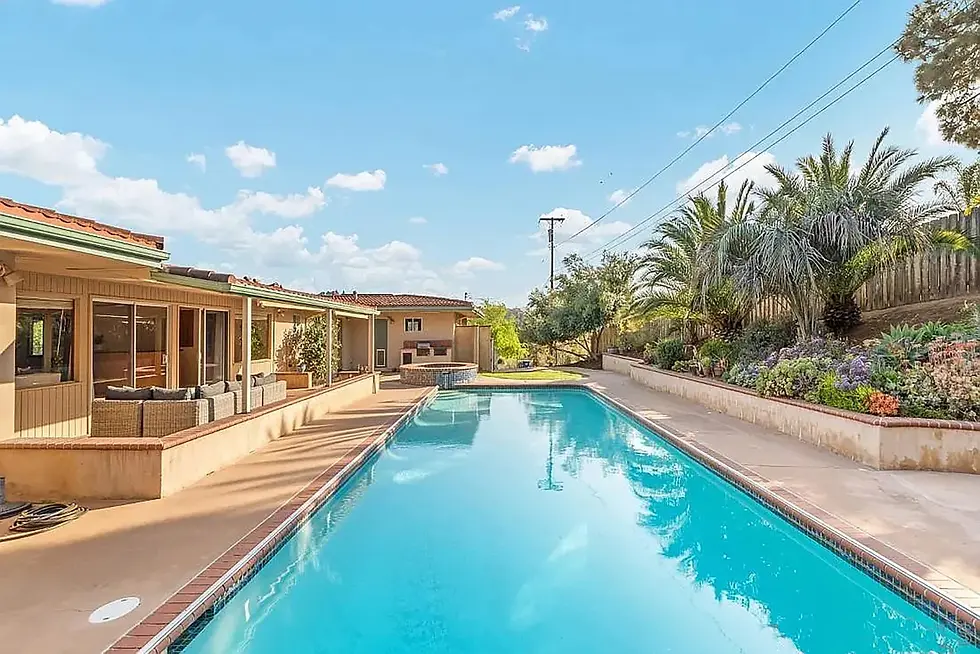
Pool and hot tub listings see significant search filter traffic on Airbnb, particularly from group travelers and families. In La Jolla and Carlsbad, properties with private pools can command substantially higher ADRs and rank prominently in amenity-filtered searches that have far less competition than broad "San Diego beach" queries.
One practical step: log into your Airbnb host dashboard and review every amenity category. Most owners are surprised to find several accurately applicable items they never checked. Each one is a free ranking signal left unclaimed.
How Do Pricing and Availability Settings Affect Your Airbnb Ranking?
Airbnb's search algorithm treats pricing and availability as active ranking inputs, not just booking-stage variables. A listing with a competitive nightly rate relative to nearby comparable properties receives a positive ranking signal because Airbnb prioritizes listings that are likely to convert into bookings. A listing priced 30% above market during the shoulder season without a corresponding value distinction will rank lower, receive fewer clicks, and accumulate the low conversion ratio that compounds into a permanent ranking disadvantage.
Dynamic pricing tools, including Airbnb's own Smart Pricing feature (see Airbnb's official guide on turning Smart Pricing on or off), adjust rates based on seasonality, local events, and competitor pricing. In San Diego, demand spikes around Comic-Con in July, the San Diego Padres home schedule, and the annual influx of spring break visitors to Pacific Beach and Mission Beach. A flat rate that misses these demand windows is a pricing error with direct revenue consequences. From the portfolio data we track at West Coast Homestays, pricing errors of this type can cost a single property $30,000 to $40,000 in a single month during peak demand periods.
Minimum stay length is another underused lever. A 2-night minimum for weekend searches dramatically expands the number of date combinations that trigger your listing in search results. A 7-night minimum during summer peak captures higher revenue per booking but reduces search visibility during the weeks when 3 and 4-night searches dominate.
Enabling Instant Book is consistently cited by Airbnb, Guesty, and Hostaway as one of the highest-impact single actions for improving search rank. Airbnb explicitly states that Instant Book listings receive preferential ranking because they improve the booking experience for guests. If security concerns are holding you back, Airbnb's guest vetting filters allow you to require government ID and positive review history before Instant Book approves a reservation.
For deeper guidance on dynamic pricing strategy across San Diego rental markets, the Master VRBO Dynamic Pricing guide on the West Coast Homestays blog covers rate calibration in specific coastal neighborhoods.
How Do Reviews and Response Rate Influence Your Listing's Visibility?
Reputation signals in Airbnb's algorithm refer to the combination of review volume, average star rating, response rate, and cancellation rate that collectively communicate a listing's trustworthiness and reliability to both the algorithm and potential guests. These behavioral performance signals are among the heaviest-weighted factors in Airbnb's ranking system, and in a competitive beach market they are the hardest for a new listing to catch up on once a gap opens.
Response rate measures the percentage of guest inquiries you reply to, and Airbnb tracks both the rate and the speed. Aiming to respond to all inquiries within 60 minutes is the widely cited benchmark across Guesty, Hostaway, and SEMrush's Airbnb SEO guide. A response rate of 100% combined with an average response time under one hour qualifies a listing for Airbnb's Superhost threshold, which carries an additional ranking boost. In practice, most self-managing San Diego owners fall below this standard during busy periods, which is exactly when fast response matters most.
Cancellation rate is the reputation signal most owners underestimate. A single host-initiated cancellation drops your listing's ranking and can result in a Superhost status revocation. In San Diego's crowded beach markets, where a guest comparing two similar properties will often choose the one with a longer, cleaner review history, a cancellation history is a visible disadvantage.
Review volume matters independently of rating. A listing with 85 reviews averaging 4.8 stars will outrank a listing with 12 reviews averaging 5.0 stars in most competitive search scenarios. Building review velocity early, through consistently excellent guest communication and a clean, well-staged property, is a compounding investment. Properties that earn 5-star reviews consistently generate roughly 20% more annual revenue than comparable listings with mixed ratings, based on performance patterns we track across our managed portfolio.
The official Airbnb reviews documentation outlines how the review system works and what triggers visibility for the Guest Favorite designation, which is one of the strongest ranking and conversion signals available on the platform in 2026.
What Listing Description Tactics Give Beach Properties an Edge?
An Airbnb listing description refers to the written content sections, including the property summary, the space description, and the neighborhood guide, that Airbnb's algorithm indexes for keyword relevance while guests use them to evaluate whether the property fits their trip. Airbnb rewards listings with detailed, well-structured descriptions, and the algorithm reads description text as part of the relevance matching process for searches that include terms guests type into the search bar.
For beach properties in San Diego, the neighborhood section is the highest-leverage description field. This is where hyperlocal detail converts searchers. Mentioning that a Pacific Beach property is "a four-minute walk to Crystal Pier and directly adjacent to the Ocean Front Walk" is more searchable and more convincing than "close to the beach." Naming specific restaurants on Garnet Avenue, the Encinitas Farmers Market for Encinitas properties, or the proximity to Torrey Pines State Natural Reserve for La Jolla listings creates a keyword-rich, human-readable description that serves both the algorithm and the undecided guest.
Descriptions should use bullet points to break up amenity highlights and practical logistics. Research from multiple STR optimization resources confirms that bullet-formatted content improves both readability and the likelihood that a guest reads past the first paragraph. Keep individual paragraphs short. Lead the summary with the property's defining feature and strongest search term, not a generic welcome statement.
One content gap that almost every competitor misses: multilingual description optimization. San Diego's coastal neighborhoods attract significant international visitor traffic, particularly from Australia, the UK, Canada, and Mexico. Airbnb automatically translates listings, but adding certain internationally recognized phrases in the original English text, such as "walking distance to beaches," "full kitchen," and specific neighborhood names, improves translation accuracy and search matching for non-English queries.
What Off-Platform SEO Tactics Work for Beach Vacation Rentals in 2026?
Off-platform SEO for Airbnb listings refers to the content, local search, and digital presence strategies that drive external traffic to a listing or build the brand authority that eventually feeds back into improved Airbnb performance. This is the gap that almost no competitor article addresses thoroughly, and it represents a genuine differentiation opportunity for San Diego property owners willing to invest beyond the Airbnb dashboard.
First, Google Business Profile optimization is directly actionable for vacation rental properties. A profile for a Mission Beach or La Jolla rental property, optimized with accurate address information, high-quality photos, and regular posts about seasonal availability or local events, can surface in Google's local search results when travelers search "beach house rental Pacific Beach" or "vacation rental near La Jolla Cove." The PriceLabs blog's guide on SEO for vacation rentals covers the Google Business Profile component in detail and is worth reviewing alongside platform-specific tactics.
Second, a neighborhood guide published on your property's website or on the West Coast Homestays blog creates a content asset that ranks in Google for informational queries like "best beaches in Encinitas" or "what to do near Pacific Beach boardwalk." Those ranked pages can link to your Airbnb listing or your booking page, generating external traffic that Airbnb interprets as a positive signal. Building an Airbnb brand presence in San Diego is a longer-horizon strategy, but the compounding effect is real. The West Coast Homestays guide on building an Airbnb brand in San Diego covers this approach in practical detail.
Third, social content on platforms like Instagram and YouTube that showcases the property's beach proximity, outdoor spaces, and neighborhood character creates inbound search demand that feeds the listing. This is not a volume play. One well-produced short video showing a morning walk from the property to the Pacific Beach boardwalk, posted with accurate location tags, reaches the exact demographic that books beach rentals.
Additionally, maintaining consistency in your property's name, address, and listing details across all platforms (Airbnb, VRBO, Google Business Profile, and any direct booking channels) is the local SEO equivalent of NAP consistency. Inconsistencies confuse both search engines and guests comparing options.

Airbnb Listing SEO: A Comparative Framework for Beach Markets
The table below summarizes the primary SEO optimization tactics for Airbnb listings in competitive beach markets, their implementation difficulty, and their estimated ranking impact. Use this framework to prioritize actions by the highest return for the effort required.
Optimization Tactic | Implementation Difficulty | Ranking Impact | Beach Market Specificity |
Hyperlocal title with landmark keywords | Low | High | Critical: beach towns have landmark-specific search terms |
20+ high-resolution photos (1900px+ preferred) | Medium (requires professional photography) | High | High: visual competition is intense in coastal markets |
Photo captions with keyword-rich descriptions | Low | Medium | Medium: algorithm reads caption text |
Complete amenity checklist | Low | High | High: beach gear, parking, outdoor shower are high-filter terms |
Instant Book enabled | Low | High | Universal: explicit Airbnb ranking signal |
Dynamic pricing (third-party or Airbnb Smart Pricing) | Medium | Very High | Critical: San Diego has strong event-driven demand spikes |
Response rate near 100%, under 60-minute response | High (time-intensive for self-managers) | High | Universal: Superhost status provides direct ranking boost |
Neighborhood description with hyperlocal landmarks | Low | Medium-High | Critical: guests search by landmark proximity in beach markets |
Google Business Profile optimization | Medium | Medium (external traffic) | High: coastal destination searches have strong Google volume |
Regular calendar activity (touch strategy) | Low | Medium | Universal: signals listing freshness to the algorithm |
What Are the Most Common Airbnb SEO Mistakes San Diego Owners Make?
The most expensive Airbnb SEO mistakes are not about missing an obscure algorithm trick. They are about ignoring the fundamentals that the algorithm weights most heavily. Across San Diego coastal properties, the patterns repeat consistently enough that a short list covers the majority of preventable ranking losses.
Mistake 1: A flat rate during peak demand periods. San Diego's STR market has well-documented demand spikes around Comic-Con (July), spring break (March), the Labor Day weekend, and the summer school-holiday window from late June through August. A property priced at its standard shoulder-season rate during these windows signals to Airbnb's algorithm that the property is less competitive and loses the click-conversion performance that drives ranking. The revenue loss alone justifies dynamic pricing, but the secondary ranking damage compounds over time.
Mistake 2: Treating the description as a formality. Many San Diego listings have descriptions that read like a furniture inventory. "1 king bed, 1 queen bed, full kitchen, 2 bathrooms." That is not searchable content. It does not answer the questions a guest is actually asking, which are: "Can I walk to the beach?" "Is there parking?" "Will it feel like a vacation rather than a generic apartment?" Answering those questions with specific, location-grounded language is both an SEO tactic and a conversion tactic.
Mistake 3: Not calibrating to your specific competitive set. A Pacific Beach condo near Garnet Avenue competes against a very different set of listings than a beachfront property in Carlsbad or a La Jolla cliff-view home. Tools like Rankbreeze allow you to run spot checks of your listing's actual position for specific date and guest count combinations, so you can see precisely where you rank against your direct competitors rather than making optimization decisions in the abstract. The Hostaway Airbnb SEO guide covers this competitive benchmarking approach in detail.
Mistake 4: Treating the calendar as a passive tool. Airbnb's algorithm interprets regular calendar activity as a freshness signal. Logging in and making a minor adjustment, even blocking and then unblocking a date, tells the algorithm that the listing is actively managed. Most self-managing owners touch their calendar only when a booking arrives or a date needs blocking. The result is a listing that reads as stale to the algorithm's freshness weighting.
For a broader framework on improving booking performance across San Diego rental properties, the San Diego Airbnb Management guide from West Coast Homestays covers the full revenue management picture beyond listing-level SEO.
Frequently Asked Questions About Airbnb SEO Optimization for Beach Listings
What is the single most impactful SEO change a San Diego Airbnb host can make today?
Enabling Instant Book is the single highest-impact change most owners have not yet made. Airbnb explicitly prioritizes Instant Book listings in its ranking algorithm because they convert browsers into confirmed guests more reliably. For San Diego beach properties where weekend demand is high but browsing competition is fierce, appearing in filtered Instant Book searches can meaningfully increase view volume within days of enabling the feature. Pair it with Airbnb's guest vetting filters (government ID requirement, prior positive reviews) if security is a concern.
How many photos does a competitive San Diego beach listing actually need?
The practical minimum is 20 high-resolution photos, but top-performing beach listings in Pacific Beach and La Jolla typically carry 30 to 40 images. Resolution should be 1024 x 683 pixels at minimum, with 1900 pixels or wider being the preferred standard according to Hostaway and Airbnb's own guidelines. Sequence matters as much as count: lead with the most visually compelling image, whether that is an ocean view, an outdoor deck, or a distinctive interior space. Include descriptive captions on each photo, as Airbnb's algorithm reads caption text as part of listing content.
Does dynamic pricing actually improve a listing's Airbnb search ranking?
Yes, indirectly but significantly. Airbnb's algorithm tracks booking conversion rate, the ratio of views to actual reservations. A listing priced above market during shoulder-season periods receives clicks but fewer bookings, which depresses its conversion ratio and causes gradual ranking decline. Dynamic pricing tools, including Airbnb's Smart Pricing and third-party platforms like PriceLabs, keep rates competitive relative to demand, which maintains a healthy view-to-booking ratio. In San Diego, where demand swings sharply around events like Comic-Con and spring break, a flat rate strategy is both a revenue loss and a ranking liability.
What keywords should I use in my San Diego Airbnb listing title?
Prioritize hyperlocal landmark references over generic beach descriptors. Phrases like "steps from Pacific Beach Boardwalk," "walk to La Jolla Cove," "Ocean Front Walk access," or "near Carlsbad Village" connect your listing to specific searches guests actually type rather than broad terms like "beach house" that produce thousands of results. Use Airbnb's search autocomplete by typing your neighborhood name to see which phrases guests are searching most frequently in 2026. Front-load the most specific and searchable term in the first five to seven words, since that is what appears in search result previews.
How does response rate affect an Airbnb listing's ranking in a competitive beach market?
Response rate is one of Airbnb's most heavily weighted behavioral signals. A 100% response rate combined with an average response time under one hour qualifies a listing for Superhost status, which carries an explicit ranking boost in Airbnb's algorithm. In Pacific Beach and Mission Beach, where guest inquiries frequently arrive on Friday evenings for same-weekend bookings, slow response time during peak windows is a direct booking loss. Self-managing owners who cannot maintain consistent sub-hour response times should consider professional co-management for guest communication, since the ranking cost of a low response rate compounds over time.
Can off-platform content like a blog or Google Business Profile actually improve my Airbnb ranking?
Not directly within Airbnb's algorithm, but meaningfully through external traffic and brand authority signals. A Google Business Profile for a La Jolla or Encinitas vacation rental that ranks in local Google searches generates clicks from travelers who then find and book through your Airbnb listing. That external traffic feeds Airbnb's view-to-booking conversion data positively. Published neighborhood guides and YouTube property walk-throughs create additional discovery channels that compound over time, particularly for properties in markets like Carlsbad and Oceanside where specific destination searches carry less Airbnb competition than Pacific Beach or Mission Beach.
What neighborhoods in San Diego have the most competitive Airbnb listing environments in 2026?
Pacific Beach and Mission Beach have the densest concentrations of active STR listings in San Diego's coastal neighborhoods, making search ranking competition especially intense there. La Jolla's STRO licensing constraints limit supply but push the competitive bar higher on quality and ADR. Encinitas and Carlsbad in North County San Diego represent moderately competitive markets with stronger off-season corporate and mid-term rental demand that can supplement STR income. Oceanside has grown as a lower-ADR alternative market with a distinct beachfront character. Each neighborhood requires a calibrated SEO approach, not a one-size-fits-all listing strategy.
Putting It All Together: Your Airbnb SEO Priority Checklist
Effective SEO optimization tactics for Airbnb listings in San Diego's beach markets follow a clear priority sequence. Start with the foundational elements: a hyperlocal, keyword-anchored title in the first 50 characters; a minimum of 20 high-resolution photos with descriptive captions; a complete amenity checklist that includes every accurately applicable item; and Instant Book enabled with appropriate guest vetting filters. These four changes alone will measurably improve a listing's ranking position within weeks.
Then address the behavioral signals. Bring your response rate to 100% and your average response time under 60 minutes. Keep your cancellation rate at zero. Maintain regular calendar activity by logging in and making small adjustments at least twice a week. These signals tell Airbnb's algorithm that your listing is actively managed and guest-ready.
Next, calibrate pricing dynamically. San Diego's event calendar creates demand windows that a flat rate completely misses. Use Airbnb Smart Pricing as a baseline and consider a third-party tool for more granular control during high-demand periods. Review the Guesty Airbnb SEO checklist for a structured reference on calendar management and pricing interplay.
Finally, invest in off-platform presence. A Google Business Profile, a neighborhood guide, and consistent social content create discovery channels that feed your Airbnb listing external traffic and build the brand authority that increasingly separates top-performing San Diego coastal properties from the crowd in 2026.
Managing all of these levers consistently, while responding to guests and coordinating turnovers, is a full-time discipline. The gap between a listing that ranks on page one in Pacific Beach and one that sits on page three often comes down to whether those optimization decisions are made systematically or only when something breaks.

If your San Diego rental is not ranking where it should on Airbnb, or you are leaving revenue on the table through inconsistent pricing and listing gaps, professional listing optimization is the fastest way to change that. West Coast Homestays manages listing SEO, dynamic pricing, guest communication, and turnover operations for property owners across Pacific Beach, Mission Beach, La Jolla, Encinitas, Carlsbad, and Oceanside. Our clients have seen more than $121,000 in additional annual revenue through dynamic pricing combined with listing optimization, and a hybrid STR and MTR strategy that generated $136,732 in annual revenue for one San Diego property originally projected at $98,800. If you want to see what your property could realistically earn with these systems in place, reach out at WestCoastHomestays.com.
Written by Mark Palmiere, Owner & CEO at West Coast Homestays


Comments