_edited.png)


Property Management Companies in San Diego California: What Owners Need to Know in 2026


Property management companies in San Diego, California are professional firms that handle day-to-day rental operations, including pricing, guest or tenant communication, maintenance coordination, and regulatory compliance, on behalf of property owners. San Diego's 15,445-listing short-term rental market and a long-term vacancy rate now at 5.7% make choosing the right management partner one of the most consequential decisions a rental owner can make in 2026.
San Diego's STR market averages $331.10 ADR and 60% occupancy, with average annual STR revenue of $38,700, according to AirDNA 2026 data.
Full-service property management fees in San Diego typically range from 8% to 30% of collected revenue, depending on whether the property is a long-term rental or a short-term vacation rental.
San Diego's long-term rental vacancy rate hit 5.7% in early 2026, the highest since 2009, which changes the revenue calculus for owners considering STR versus traditional leasing.
West Coast Homestays manages 80+ properties across San Diego's coastal neighborhoods and has generated $121K+ in additional revenue for owners through dynamic pricing and listing optimization.
Short-term rental properties in San Diego require an STRO license from the City of San Diego; failure to comply carries significant financial penalties.
A hybrid STR and mid-term rental strategy has produced $136,732 in annual revenue for one West Coast Homestays client versus a $98,800 STR-only projection on the same property.
TL;DR
San Diego's STR market posted a $331.10 average daily rate and 60% occupancy in 2026, per AirDNA, making professional revenue management a meaningful financial lever.
Long-term rental vacancy reached 5.7% in 2026, the highest since 2009, while 2-bedroom rents fell 7.5% year-over-year, shifting the economics toward STR for many coastal owners.
Full-service STR management in San Diego generally costs 20, 30% of gross booking revenue; long-term property management typically runs 8, 12% of monthly rent.
San Diego requires an STRO license for all short-term rentals, applied for through the City of San Diego's Accela portal.
The right management company depends on your property type, your involvement preference, and which neighborhoods you operate in. Coastal STR specialists like West Coast Homestays differ fundamentally from residential long-term managers.
San Diego welcomed approximately 32.4 million visitors in 2026 who spent an estimated $14.4 billion across the region, according to the San Diego Tourism Authority. That visitor volume creates strong underlying demand for short-term rentals. But the market is also maturing: active STR listings grew 8% year-over-year, competition is stiffer, and regulatory requirements around STRO licensing are not forgiving. Owners who approach management as an afterthought are leaving real money behind.
At West Coast Homestays, our team manages 80+ properties across San Diego, Encinitas, Carlsbad, La Jolla, Oceanside, Mission Beach, and Pacific Beach. The patterns we see in listing performance, pricing errors, and operational gaps are consistent enough that this guide addresses the ones costing owners the most. Whether you are evaluating your first management partner or reconsidering an existing one, the frameworks below apply directly to how San Diego's rental market works in 2026.
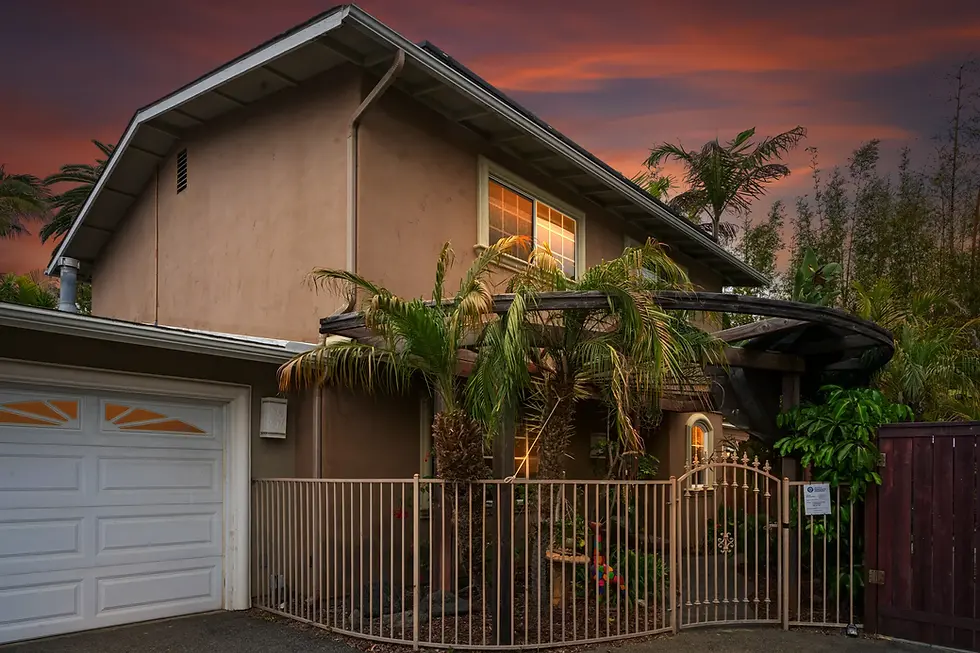
What Do Property Management Companies in San Diego, California Actually Do?
Property management companies in San Diego, California are firms that take over some or all operational responsibilities for a rental property, acting as the owner's representative with tenants, guests, platforms, vendors, and regulators. The specific scope varies widely between long-term residential managers and short-term rental specialists, and understanding that difference is the most important distinction an owner can make before signing any agreement.
For long-term residential properties, management companies typically handle tenant screening and placement, lease execution, rent collection, maintenance coordination, property inspections, and eviction proceedings when necessary. Firms like Good Life Property Management, which holds a 4.9-star rating across 1,000+ reviews, and Utopia Property Management operate primarily in this segment. Good Life, for example, offers up to $3,500 in tenant damage coverage and $3,000 in eviction protection as part of its owner guarantee package.
For short-term vacation rentals, management encompasses a completely different operating model: dynamic pricing and revenue strategy, OTA listing optimization across Airbnb and VRBO, professional photography and staging, guest communication around the clock, turnover cleaning coordination, and STRO license compliance. This is where West Coast Homestays specializes. The two business models serve different owner goals and should not be treated as interchangeable when you are evaluating options.
A third category, mid-term rental management, covers stays of 30 days or more. This is a growing segment in San Diego because it sidesteps some STRO licensing complexity while still capturing significantly higher revenue than long-term leases. The best STR management companies, including West Coast Homestays, run hybrid strategies that blend short-term and mid-term placements to optimize annual revenue across seasonal demand patterns.
How Much Do San Diego Property Managers Charge?
San Diego property management fees depend on rental type, service scope, and contract structure. Long-term residential managers typically charge 8, 12% of monthly collected rent, plus a leasing fee of 50, 100% of one month's rent when placing a new tenant. Short-term rental managers generally charge 15: 30% of gross booking revenue, with full-service firms on the higher end of that range because they handle pricing, guest communication, and turnover logistics that long-term managers do not touch.
Management Type | Typical Fee Structure | What's Included | Best For |
Long-Term Residential PM | 8: 12% of monthly rent + leasing fee | Tenant screening, rent collection, maintenance, inspections | Landlords seeking stable, hands-off income |
Short-Term Rental (Full Service) | 20: 30% of gross booking revenue | Dynamic pricing, OTA management, guest comms, cleaning, maintenance | Owners maximizing coastal STR income |
Co-Hosting / Co-Management | 15: 25% of gross booking revenue | Operational support while owner retains involvement | Owners who want local help but stay engaged |
Mid-Term / Corporate Rental PM | 10: 20% of monthly revenue | Tenant sourcing, lease management, corporate network placements | Owners targeting 30+ day stays or relocation clients |
One number worth anchoring to: market analysis cited in San Diego investor benchmarks uses approximately 8% of rental income as a standard property management cost assumption for long-term rentals. For STR, the percentage is higher, but so is the potential revenue ceiling. San Diego STR properties averaged $38,700 in annual revenue in 2026 per AirDNA, and a professionally managed property with proper dynamic pricing and listing optimization consistently outperforms that figure. A 25% management fee on $60,000 in gross revenue is a better outcome than self-managing toward the $38,700 average.
Watch for hidden costs when comparing firms: maintenance markups (some managers charge 10: 20% above vendor invoice), leasing or onboarding fees, early-termination penalties, and technology or software fees. Firms that disclose pricing clearly, like Keyrenter San Diego Property Management, are worth prioritizing over those that bury fee structures in contract footnotes. Ask specifically about what happens when you switch managers and whether there is a contract exit clause.

What Makes San Diego's STR and Rental Markets Different in 2026?
San Diego's rental market in 2026 is experiencing its first annual rent decline in 15 years, driven by a surge in new supply. According to Realtor.com, 2-bedroom rents fell 7.5% year-over-year as of March 2026, the steepest decline among 19 of the top 20 U.S. rental markets. The long-term rental vacancy rate hit 5.7%, the highest since 2009. Approximately 10,200 new apartment units were delivered between 2026 and 2026, with another 4,000 units expected by year-end. Downtown San Diego's vacancy exceeds 10%, with landlords offering concessions of up to three months' free rent.
This long-term supply glut is actually a meaningful argument for short-term and mid-term rental strategies for qualifying coastal properties. Where a La Jolla or Pacific Beach property might generate $2,950 per month on a long-term lease (the current median 2-bedroom rent), a well-managed STR in those same neighborhoods can produce significantly higher gross revenue, with San Diego's ADR sitting at $331.10 and RevPAR at $185.70 per AirDNA's 2026 data.
The STR market has its own complexity, though. Active listings grew 8% year-over-year in coastal neighborhoods including Pacific Beach and Mission Beach, which means competition for bookings is real. The San Diego Tourism Authority reports that visitor activity generated roughly $425 million in Transient Occupancy Tax revenue countywide in fiscal year 2026, signaling healthy overall demand. But demand alone does not guarantee performance for individual properties. Listing quality, pricing precision, and review velocity are the differentiators. A professionally managed property on Airbnb with 5-star reviews generates approximately 20% more revenue than a comparable property with a 4.5-star average, based on what West Coast Homestays consistently observes across our portfolio.
Major demand events in 2026 also reward prepared operators. A NASCAR street course race at Naval Base Coronado in June 2026, expected to draw 50,000 daily attendees, and FIFA World Cup spillover from Los Angeles represent concentrated demand spikes. Properties without dynamic pricing in place for these windows leave substantial revenue uncaptured. According to the San Diego Business Journal, San Diego's hotel market projects RevPAR growth of 1.5% in 2026, which signals moderate optimism but also a competitive environment where pricing precision matters more, not less.
Which San Diego Neighborhoods Should Property Owners Prioritize?
San Diego's rental market is not a single market. Performance, demand profiles, regulatory exposure, and ideal rental models differ significantly by neighborhood. Understanding these distinctions is how professional management companies in San Diego, California create strategies that generic firms miss.
Pacific Beach and Mission Beach
Pacific Beach and Mission Beach are San Diego's highest-density STR corridors. The Crystal Pier stretching over the Pacific, the Ocean Front Walk, and the concentration of bars and restaurants along Garnet Avenue create year-round leisure demand from domestic travelers. These neighborhoods are Tier 3 STR license territory under the City of San Diego's STRO Ordinance (Mission Beach qualifies as Tier 4 with a separate cap). Active STR listings grew 8% year-over-year in these markets per AirDNA. The competition is real, and a listing without professional photography, optimized pricing, and strong review velocity loses clicks to better-presented neighbors on every search page.
La Jolla
La Jolla commands the highest ADR ceiling of any San Diego coastal neighborhood. Properties near the Cove and along Prospect Street attract international travelers, luxury travelers, and biotech conference attendees linked to the Torrey Pines Research Corridor. La Jolla properties managed by West Coast Homestays operate at a completely different pricing strategy than Pacific Beach condos: the guest profile is distinct, the booking window is longer, and the design quality bar is higher. Beach proximity adds several hundred dollars to monthly rent in La Jolla's long-term rental segment, and that premium is even more pronounced in STR.
Encinitas and Carlsbad
Encinitas and Carlsbad are North County markets with a different seasonal profile than South Bay neighborhoods. Carlsbad's Coaster station and proximity to LEGOLAND drive a family-travel segment that performs differently from the young-adult leisure crowd dominating Pacific Beach. Corporate relocation demand near Carlsbad's tech and biotech employers makes mid-term rental strategy particularly compelling here. Our 2026 Encinitas Airbnb guide covers neighborhood-specific strategy in depth for property owners in that market.
Oceanside
Oceanside is the most price-accessible coastal market in the West Coast Homestays service area, with lower property acquisition costs and a strong military-adjacent mid-term rental segment. Marine Corps Base Camp Pendleton creates steady demand for 30-to-90-day furnished rentals from service members in transition. For owners who want to maximize their mid-term revenue rather than compete head-to-head in the high-supply STR segments closer to downtown, Oceanside warrants serious evaluation.
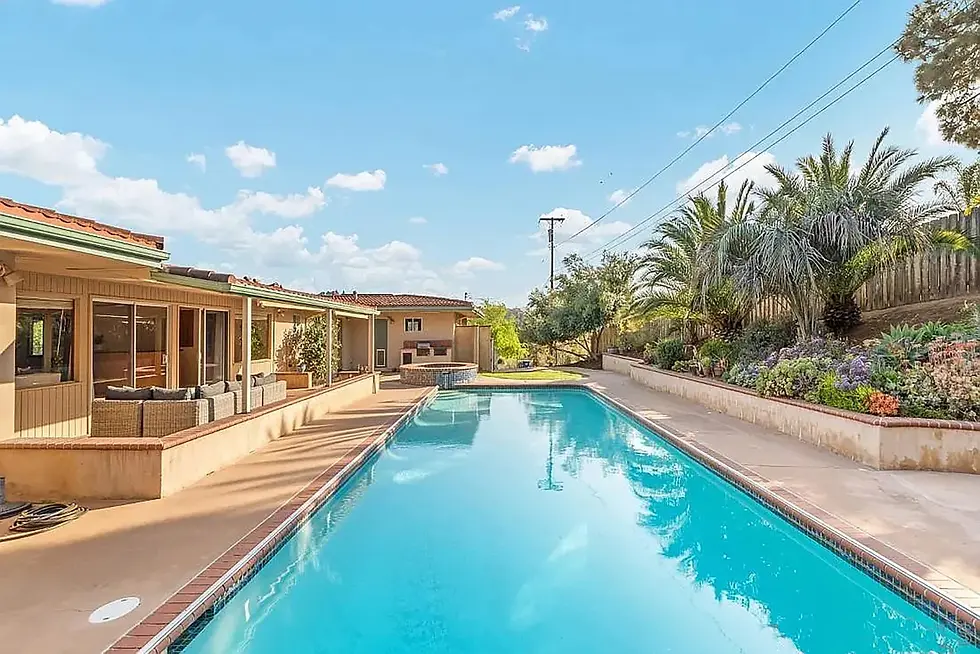
How Do You Evaluate Property Management Companies in San Diego?
Evaluating property management companies in San Diego, California requires going beyond star ratings and website claims. The right criteria depend on your property type, but several evaluation frameworks apply universally to sorting credible operators from those who underdeliver.
Verify Specialization, Not Just Coverage
A company that manages long-term residential leases is not the same as one that manages short-term vacation rentals, even if both use the phrase "property management." Torrey Pines Property Management, with over 40 years of San Diego experience, focuses primarily on residential long-term management. Onyx Property Management, operating for more than 20 years and affiliated with six industry associations including NARPM and the San Diego County Rental Housing Association, is similarly positioned for traditional landlord clients. These are credible firms for their segment. But if your goal is STR revenue optimization on a Pacific Beach condo, their expertise is a poor match for your problem.
Ask About Fee Transparency and Contract Terms
Specifically ask: What is the monthly management fee percentage? Is there a leasing fee? Do you mark up vendor invoices? What are the exit terms if I want to switch managers? Good Life Property Management, rated 4.8 out of 5 stars with 1,000+ reviews, offers a 6-month money-back guarantee with no long-term contract requirement, which is a meaningful consumer protection. Firms that refuse to discuss exit clauses before you sign are giving you relevant information about how they handle the relationship when things go sideways.
Look for Verified Third-Party Reviews
Testimonials on a company's own website are the least useful signal. Prioritize reviews on Google, Zillow's property manager directory, and platforms like Yelp where manipulation is harder. Zillow's San Diego directory lists Ziprent, Doorstead, Belong, and Poplar Homes among its most-reviewed managers. Cross-reference review patterns across platforms rather than relying on any single source. For a deeper look at what separates strong management reviews from weak ones, our guide on how to find property management reviews that boost San Diego rental revenue breaks down exactly what to look for.
Demand Revenue Proof, Not Just Client Count
Any STR management company worth hiring should be able to show you what properties under their management actually earn, not what they project. West Coast Homestays can point to specific, verifiable outcomes: $121K+ in additional revenue through dynamic pricing and listing optimization, an 83.29% occupancy rate for one client running a hybrid STR and mid-term rental strategy, and cleaning fee optimization alone generating $6,600 per year in incremental profit. Firms that respond to revenue questions with vague claims about "maximizing your potential" are not measuring what matters.
Understand the Technology Stack
For STR management specifically, the underlying tools matter. Does the company use integrated channel management to sync calendars across Airbnb, VRBO, and Booking.com in real time? Do they use dynamic pricing tools calibrated to San Diego's demand calendar, or do they rely on Airbnb's built-in Smart Pricing tool (which you can read about in Airbnb's official Smart Pricing documentation)? Manual pricing and calendar management in a market with 15,445 active listings is a structural disadvantage. Dynamic pricing errors across a portfolio can cost $30,000 to $40,000 in a single month, an outcome West Coast Homestays has documented repeatedly when onboarding properties that were previously self-managed without a pricing system.
What Are the Regulatory Requirements San Diego Rental Owners Must Know?
San Diego's regulatory environment for rental properties, particularly short-term rentals, is one of the most structured in California. Property owners need to understand both the city-level STRO licensing requirements and the state-level compliance obligations before signing with any management company, because compliance gaps create liability that no management fee covers.
Short-Term Rental Ordinance (STRO) Licensing
The City of San Diego requires an STRO license for any rental of 30 days or fewer. Applications are submitted through the City of San Diego's Accela portal. Before applying, you need a Transient Occupancy Tax (TOT) certificate, which you can obtain through the City's TOT Online Application system, and a Rental Unit Business Tax (RUBT) account. The full regulatory framework is available at the City of San Diego STRO official page.
License tiers matter for your strategy. Tier 3 licenses cover STR properties that are not the owner's primary residence, and they are subject to a citywide cap. Tier 4 applies specifically to Mission Beach. You can check the active license distribution on the City's Active STRO Licenses Open Data Portal, last updated April 10, 2026. All STRO license holders are also required to follow the City's Good Neighbor Policy, which governs noise, parking, and occupancy limits.
State-Level Compliance for San Diego Owners
California's AB 1482 rent control caps apply to many long-term residential rental properties, limiting annual rent increases to 5% plus local Consumer Price Index, with a maximum of 10%. San Diego's just-cause eviction rules add additional tenant protections on top of state law. Any long-term property management company operating in San Diego should be fluent in both. For STR owners, the California Coastal Commission imposes additional development and use restrictions on properties within the coastal zone, which covers much of Pacific Beach, Mission Beach, and La Jolla. Verify your property's coastal zone status before assuming your STRO application will be straightforward.
One regulatory development affecting operations in 2026: San Diego's Hospitality Minimum Wage Ordinance takes effect July 1, 2026, raising the minimum wage to $19.00 per hour for employees at hotels with 150 or more guest rooms and event centers, with a phased path to $25.00 per hour by 2030. While this directly impacts hotels rather than STR operators, it signals a broader labor cost environment affecting cleaning and turnover vendor pricing across the market.
Is a Hybrid STR and Mid-Term Rental Strategy Right for Your San Diego Property?
A hybrid short-term and mid-term rental strategy is an approach that uses short-term bookings during high-demand periods and fills shoulder-season gaps with 30-plus-day mid-term placements, rather than holding a property vacant or discounting heavily to compete. For the right San Diego property, this model consistently outperforms a pure STR strategy on annual revenue.
The numbers from our portfolio make the case clearly. One West Coast Homestays client running a hybrid STR and MTR model on a San Diego coastal property generated $136,732 in annual revenue at 83.29% occupancy, compared to a $98,800 STR-only projection for the same property. That is a 38% improvement in gross revenue, not from a different property or a different market, but from a smarter deployment of the same asset.
Mid-term placements also access a high-value tenant segment that most STR operators miss entirely. Insurance relocation clients, traveling medical professionals, and corporate relocation guests paying for furnished monthly accommodations represent some of the most reliable, highest-paying tenants available in San Diego's rental market. West Coast Homestays has placed properties in $20,000-per-month insurance contracts and 13-month relocation arrangements generating $18,000 monthly. These placements require a specific network and operating infrastructure that most STR-only managers do not have.
The hybrid model also provides regulatory protection in San Diego's tiered STRO licensing environment. If Tier 3 availability in your neighborhood tightens or regulatory changes affect STR operating windows, a management company with MTR infrastructure can pivot quickly rather than leaving your property revenue-exposed. For more on how revenue management strategy intersects with San Diego's STR market, the San Diego Airbnb management co-host guide covers the revenue mechanics in detail.
Frequently Asked Questions About Property Management Companies in San Diego
What is the difference between a short-term rental management company and a long-term property management company in San Diego?
Short-term rental management companies in San Diego, California specialize in vacation rental operations: OTA listing management across Airbnb and VRBO, dynamic pricing, guest communication, turnover cleaning coordination, and STRO license compliance. Long-term property management companies focus on tenant screening, lease execution, rent collection, and eviction proceedings for 12-month-or-longer leases. The two business models require different expertise, different technology, and different operational infrastructure. Using the wrong type of manager for your rental model is one of the most common and costly mistakes San Diego property owners make.
How much do property management companies in San Diego charge for short-term rentals?
Full-service short-term rental management in San Diego, California typically costs 20, 30% of gross booking revenue. Co-hosting arrangements, where the owner stays more involved, generally run 15, 25%. Long-term residential management fees are lower, typically 8: 12% of monthly collected rent plus a leasing fee. Always ask about additional charges: maintenance markups, onboarding fees, and early-termination penalties can significantly affect total cost. The right management fee is best evaluated against net revenue improvement, not gross percentage. A 25% fee on a professionally managed property earning $60,000 per year beats a 10% fee on a self-managed property earning $38,700.
Do I need an STRO license to rent my San Diego property on Airbnb?
Yes. The City of San Diego requires an STRO (Short-Term Residential Occupancy) license for any rental of 30 days or fewer. The application is submitted through the City of San Diego's Accela portal and requires a pre-existing Transient Occupancy Tax (TOT) certificate and a Rental Unit Business Tax (RUBT) account. Operating without a valid STRO license carries significant financial penalties. You can verify your neighborhood's license tier and availability using the City's Active STRO Licenses Open Data Portal, updated as of April 2026.
Is it worth hiring a property management company in San Diego for a single rental property?
For most coastal San Diego property owners, professional STR management generates enough incremental revenue to justify the management fee and then some. Dynamic pricing errors alone can cost self-managed properties $30,000 to $40,000 in a single month during peak demand periods. Properties managed by West Coast Homestays have generated $121K+ in additional revenue through professional pricing and listing optimization. The calculation shifts further when you account for the time cost of self-management, which typically runs 20 or more hours per week for a single actively managed STR. The break-even point is usually lower than owners expect.
What neighborhoods does West Coast Homestays serve in the San Diego area?
West Coast Homestays manages vacation rental properties across San Diego, Encinitas, Carlsbad, La Jolla, Oceanside, Mission Beach, and Pacific Beach. Each neighborhood requires a distinct pricing and revenue strategy based on its guest demographic, seasonal demand patterns, and competitive set. A La Jolla property near the Cove operates on a fundamentally different model than a Pacific Beach condo near the Crystal Pier, and West Coast Homestays calibrates strategy at the neighborhood level rather than applying a single citywide approach.
Can a San Diego property management company handle mid-term and corporate rentals?
Some can, but most STR management companies in San Diego are not set up for mid-term or corporate rental placements, which require a different network and operating structure. West Coast Homestays manages both STR and MTR placements within a single hybrid strategy, including insurance relocation contracts and corporate housing arrangements. Mid-term rentals of 30 or more days also sidestep some STRO licensing complexity, making them a strategic complement to short-term bookings rather than a fallback option.
How do I switch property management companies in San Diego without losing revenue or bookings?
Switching property management companies requires reviewing your current contract's exit clause first, as some managers charge early-termination fees or retain listing control for a period after termination. For STR properties, the transition period between managers carries real occupancy risk if the calendar is not properly managed. West Coast Homestays builds listings under its own admin account, which means the listing is purpose-built for optimal performance from day one rather than inherited from a prior operator's setup. Plan transitions during shoulder season when possible to minimize revenue exposure during the handover period.
What should I look for in San Diego property management company reviews?
Prioritize reviews on Google, Zillow, and other third-party platforms over testimonials on a company's own website. Look for patterns in owner reviews specifically, not just tenant reviews, since the goals of both groups differ. Red flags include complaints about slow maintenance response, opaque financial reporting, or difficulty reaching the management team. Verify that the company's review volume is consistent with its stated years in operation. A firm with 20+ years of operation and fewer than 50 verifiable third-party reviews deserves scrutiny. Our detailed guide on evaluating San Diego property management company reviews covers the specific signals that correlate with owner satisfaction.
What Should You Do Next If You Are Evaluating San Diego Property Management?
Property management companies in San Diego, California serve a wide range of owner needs, from traditional long-term landlords navigating California's evolving tenant protection laws to coastal STR operators competing in a market with 15,445 active listings and $331.10 average daily rates. The single most important decision is matching the management model to your property type and revenue goal. A long-term residential manager handling STR operations, or vice versa, is a structural mismatch that no amount of goodwill resolves.
In 2026, the economics favor serious operators. San Diego's long-term vacancy rate is at its highest since 2009, with 2-bedroom rents down 7.5% year-over-year. Coastal STR properties with professional management, a hybrid revenue strategy, and consistent 5-star reviews are outperforming both self-managed STRs and traditional leases on a net annual basis. The gap between a professionally managed coastal property and an unmanaged or poorly managed one is not marginal. It is the difference between $98,800 and $136,732 in annual revenue on the same asset. Managing a San Diego vacation rental well is a full-time discipline, and the details compound. Whether that means a pricing adjustment for a NASCAR race weekend in June or a listing rebuild before summer demand peaks, the decisions made every week determine the outcome.

West Coast Homestays manages 80+ properties across San Diego's coastal neighborhoods, from Pacific Beach and Mission Beach to La Jolla, Encinitas, Carlsbad, and Oceanside. Our clients have generated $121K+ in additional annual revenue through professional dynamic pricing and listing optimization, and one owner running a hybrid STR and mid-term rental strategy hit $136,732 in annual revenue against a $98,800 STR-only baseline. If you own a San Diego rental and want to understand what professional management could change about your property's performance, reach out at WestCoastHomestays.com. We will give you a real answer based on your specific property and neighborhood, not a projection built to close a sale.



Comments