_edited.png)


Comic Con San Diego 2026: Dates, Tickets, and Survival Guide

Updated: May 12
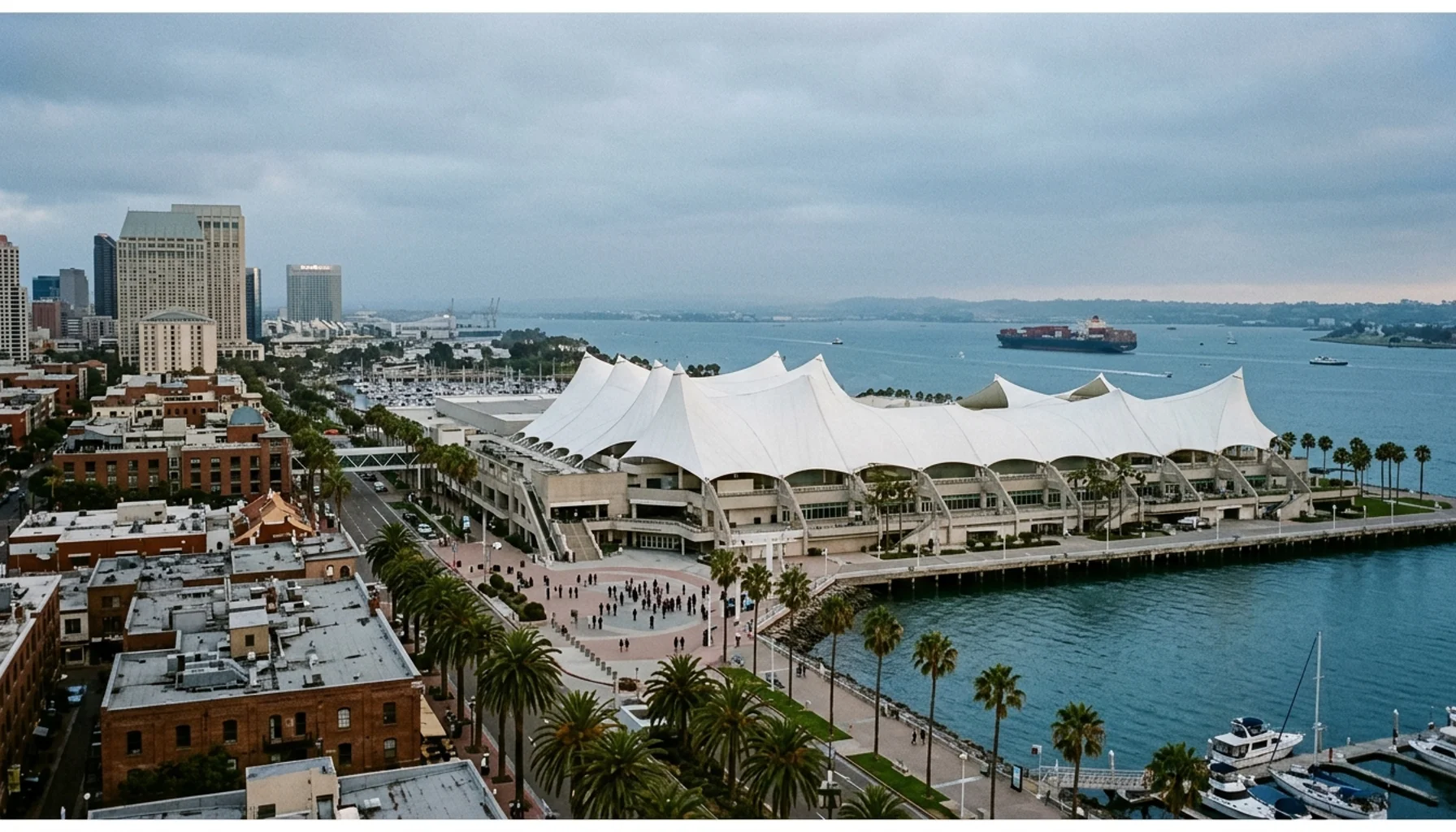
Comic Con San Diego 2026 is scheduled for July 23: 26, 2026, at the San Diego Convention Center, with Preview Night on July 22. The convention draws more than 130,000 attendees annually, generates an estimated $140 million or more in regional economic impact, and stands as the largest pop culture convention in North America. If you are planning to attend, badge logistics, hotel booking, and off-site event strategy all require advance planning.
Comic Con San Diego 2026 main dates are July 23: 26, with Preview Night on Wednesday, July 22, at the San Diego Convention Center.
Badge registration uses a lottery system; checking the official Comic-Con International website early is the only reliable way to secure a pass.
Hotel rooms near the Convention Center book out months in advance through Comic-Con's official hotel lottery, distinct from the badge lottery.
Off-site activations in the Gaslamp Quarter run simultaneously with the main show and are often free to the public without a badge.
The Comic-Con Museum in Balboa Park is open year-round and offers a separate, lower-stakes way to experience the convention's legacy outside the July crowds.
San Diego's short-term rental market sees significant demand spikes during Comic-Con week, with STR average daily rates across the city sitting at $331.10 as of 2026, according to AirDNA.
What Are the Dates of Comic-Con in San Diego?
Comic-Con San Diego 2026 officially runs from Thursday, July 23 through Sunday, July 26, 2026, at the San Diego Convention Center on Harbor Drive. Preview Night is Wednesday, July 22, and gives four-day badge holders, professionals, and exhibitors early access to the Exhibit Hall before the general public arrives. The convention has called the Convention Center home since 1991, after outgrowing earlier venues including the U.S. Grant Hotel basement, El Cortez Hotel, and the University of California San Diego campus.
The official Comic-Con International website at comic-con.org is the only authoritative source for schedule updates, badge availability announcements, and hotel lottery openings. Third-party resellers and social media rumors regularly circulate false information about badge availability and event changes.
As of 2026, Comic-Con International has a lease agreement that keeps the convention in San Diego through at least 2027, addressing a question many fans have raised about the event's long-term future in the city.

What Day Is San Diego Comic-Con 2026?
San Diego Comic-Con 2026 spans four official days, Thursday through Sunday, July 23: 26. Each day carries a distinct energy and programming focus worth understanding before you plan your schedule.
Day-by-Day Breakdown
Day | Date | What to Expect |
Preview Night | Wednesday, July 22 | Exhibit Hall access for four-day badge holders, professionals, and exhibitors. Least crowded opportunity to hit the floor. |
Thursday | July 23 | Opening day. Hall H lines form early for major studio panels. Programming ramps up across all rooms simultaneously. |
Friday | July 24 | Peak panel day. Major TV and film announcements typically land Friday. Expect the heaviest crowds in Hall H and Ballroom 20. |
Saturday | July 25 | The Masquerade cosplay competition takes place Saturday evening. Cosplay density on the show floor reaches its peak this day. |
Sunday | July 26 | Final day. Smaller crowds, more Exhibit Hall access, and exclusive Sunday-only merchandise. Many attendees depart Saturday night, leaving the floor surprisingly walkable. |
Sunday is genuinely underrated. Experienced attendees often save their Exhibit Hall shopping for Sunday morning, when booths are clearing inventory and lines have thinned considerably.
How Much Does It Cost to Go to San Diego Comic-Con?
The cost to attend Comic Con San Diego varies by badge type and length of stay. Single-day badges typically range from around $30 to $70 depending on the day, with Saturday commanding the highest price. Four-day badges with Preview Night have historically been priced higher, in the $300-plus range for the full package, though exact figures for 2026 are confirmed only through the official badge registration system on comic-con.org. These prices reflect only entry to the convention itself; travel, accommodation, and food costs add significantly to the total.
Budget realistically for accommodation. The cost of a four-night family trip to San Diego has risen 19.1% in recent years, outpacing the national increase of 14.5%, with lodging costs specifically rising 23.4%, according to travel cost index data. Comic-Con week pushes those numbers higher still.
What Badge Options Are Available?
Four-day badge with Preview Night: The most sought-after option. Covers Wednesday evening through Sunday and sells out fastest in the badge lottery.
Single-day badges (Thursday, Friday, Saturday, Sunday): Available separately. Saturday sells out first; Sunday often remains available longer.
Professional and exhibitor badges: Industry-specific credentials, not available through the general lottery.
Child badges: Children 12 and under accompanied by a paying adult typically receive complimentary or discounted entry, but verify current policy on the official site before assuming this applies.
The badge lottery, not a first-come-first-served queue, controls access. You register your interest during an announced window, and the system randomly selects buyers. Missing the registration announcement is the single most common reason people miss out entirely. Set calendar alerts the moment Comic-Con announces the open registration period.
Is San Diego Comic-Con Staying in San Diego Until 2027?
Yes. As of 2026, Comic-Con International has a confirmed agreement to hold the convention at the San Diego Convention Center through at least 2027. The question of Comic-Con's San Diego future has surfaced periodically since other cities have lobbied to host the event, but the convention's deep organizational ties to the city make a relocation unlikely in the near term. Comic-Con International purchased a 29,000-square-foot office in San Diego's Little Italy neighborhood in 2018 and acquired buildings in Barrio Logan in 2015, signaling a long-term physical investment in the city beyond the annual convention itself.
The organization is a California Nonprofit Public Benefit Corporation, officially operating as Comic-Con International since 1995. Its institutional roots in San Diego run back to the convention's founding on March 21, 1970, when Shel Dorf organized the first event, then called San Diego's Golden State Comic-Minicon, as a one-day dry run held at the U.S. Grant Hotel. The founding team included Richard Alf, Ken Krueger, Mike Towry, Ron Graf, and others who grew the event from a 300-person basement gathering into a global cultural institution.
What Happens at Comic-Con San Diego Beyond the Exhibit Hall?
Comic Con San Diego is far larger than its Exhibit Hall footprint. The convention features more than 350 hours of programming across dozens of rooms at the Convention Center, covering comics, film, television, gaming, animation, and science fiction literature. Specific recurring events give the show much of its personality beyond the blockbuster studio panels.
Hall H and the Major Panels
Hall H holds approximately 6,500 people and hosts the convention's highest-profile presentations from studios including Disney, Marvel, Lucasfilm, Netflix, Sony Pictures, and Universal Pictures. Lines for Hall H form the night before for the most anticipated panels. If your primary goal is a specific Hall H event, plan on spending the preceding night in the queue. That is not an exaggeration; experienced attendees bring sleeping bags and treat it as part of the experience.
The Masquerade
The Masquerade is Comic-Con's cosplay competition, held Saturday evening. Participants compete in categories including Novice, Journeyman, and Master, with judging criteria covering craftsmanship, presentation, and execution. Past winners have included costumes built over months with professional-grade materials. You do not need to compete to attend as an audience member, but seats fill quickly. The Official Comic-Con Merchandise Store sells event-specific apparel that many Masquerade attendees incorporate into their looks.
The Eisner Awards
The Eisner Awards recognize creative achievement in American comic books and are widely considered the comics industry's equivalent to the Academy Awards, as documented by the VCU Libraries Gallery exhibit on the Eisner Awards. The ceremony takes place during Comic-Con week and is open to badge holders. Categories cover writing, illustration, coloring, lettering, and publishing. For comics readers, the Eisner ceremony is one of the most meaningful events of the entire convention.
Traditional Programming Highlights
Scott Shaw!'s "Oddball Comics" slide show, the "Quick Draw!" live cartooning event hosted by Mark Evanier, and animation historian Jerry Beck's "worst cartoons ever" program are fixtures that attract devoted repeat audiences. These events sit in smaller rooms without the Hall H chaos and represent some of the most genuinely fun programming the convention produces.
What Off-Site Events Happen During Comic-Con Week?
Off-site activations during Comic Con San Diego week represent one of the convention's least-covered but most rewarding dimensions. Studios, streaming services, and brands set up immersive experiences, parties, screenings, and pop-up installations throughout the Gaslamp Quarter and surrounding downtown blocks. Many of these are free and open to the public, meaning you can participate in significant Comic-Con energy without a badge.
The Gaslamp Quarter, which runs along Fifth Avenue from Broadway to the waterfront, transforms during convention week into a street-level pop culture experience. Pop-up activations have historically included everything from themed escape rooms and brand lounges to outdoor screenings and live performance spaces. Specific activations change year to year based on which studios and networks are promoting major releases or returning seasons.
A few practical notes on off-site events. First, most are not officially announced until one to two weeks before the convention. Following entertainment news outlets closely in early July is the best way to catch announcements. Additionally, popular off-site events fill up quickly and often require a separate RSVP or ticket, separate from your Comic-Con badge. Treat off-site logistics as a parallel planning track from your main convention schedule.
The Gaslamp Quarter's concentration of restaurants and bars also means that Comic-Con week, while crowded, is an excellent time to visit spots that otherwise require reservations well in advance. Tables become more available later in the evening once convention programming ends, typically around 9 p.m. to 10 p.m.

How Do You Navigate Badge Logistics and Hotel Booking?
Badge and hotel logistics for Comic Con San Diego operate through two separate systems, and understanding both well in advance of July is essential. Missing either window makes the convention nearly inaccessible from a cost and convenience standpoint.
The Badge Lottery
Comic-Con uses an online lottery system for general badge sales, managed through the official site. The process works as follows. First, you create or log in to your Member ID account at comic-con.org. Second, during the announced open registration window, you enter the lottery for your preferred badge types. Third, the system randomly selects buyers and notifies them by email within days. If you are not selected, the system may offer a second-chance opportunity when unclaimed badges return to the pool.
The critical mistake most first-time attendees make is waiting for the lottery announcement to create their Member ID. Create your account now, before any announcement. The registration window opens and closes within 24 to 48 hours, and any technical difficulty during account creation will cost you your entry.
The Hotel Lottery
Comic-Con's official hotel lottery operates separately from badge sales and is managed through a third-party hotel registration system linked from comic-con.org. Hotels within walking distance of the San Diego Convention Center, including properties on Harbor Drive and throughout the Gaslamp Quarter, participate in this system at reduced convention rates. The lottery typically opens months before the convention, often in the spring.
If you miss the hotel lottery, alternatives include properties in Mission Valley accessible via the San Diego Trolley's Green Line, which stops directly at the Convention Center. Carlsbad and Encinitas to the north are also viable if you have a car, though drive times during convention traffic can extend considerably. Budget for rideshare costs if you are staying more than a mile from the Convention Center.
Getting Around During Comic-Con Week
The San Diego Trolley's Blue Line and Green Line both serve the Santa Fe Depot and the Convention Center. For visitors staying in Mission Valley or near the Old Town Transit Center, the trolley is significantly faster than driving during peak convention hours. Rideshare services, specifically Lyft and Uber, operate surge pricing throughout the week. Walking remains the most reliable option for anyone within a 15-minute radius of the Convention Center.
Parking in the immediate Convention Center area during Comic-Con week is not a strategy. The few available spaces fill by 7 a.m. on peak days, and rates reflect the demand. Use park-and-ride lots linked to the trolley system if driving is unavoidable.
What Is the Comic-Con Museum and Is It Worth Visiting?
The Comic-Con Museum is a permanent cultural institution located in Balboa Park, San Diego, separate from the annual convention. Comic-Con International acquired the lease to the Federal Building in Balboa Park in 2017, a structure originally built for the California Pacific International Exposition, to house the museum. The Comic-Con Museum offers exhibits on the history of comics, pop culture, and the convention itself.
For visitors who cannot secure Comic-Con badges or are visiting San Diego outside of July, the museum provides genuine engagement with the convention's 50-plus year legacy without the July crowds. Balboa Park also contains the San Diego Zoo and numerous other cultural institutions, making a museum visit a natural anchor for a broader park day.
The museum is particularly relevant for families traveling with younger children who may find the July convention overwhelming. Programming at the museum is designed for broader audiences, and the park setting gives children room to move in a way the Convention Center floor does not. Check the museum's current exhibition schedule directly on its website, as programming changes throughout the year.
How Does Comic-Con San Diego Impact the City's Economy and Short-Term Rentals?
Comic Con San Diego generates an estimated $140 million or more in regional economic impact annually, based on multiple economic analyses conducted since the early 2000s. The 2023 convention alone produced an estimated $161.1 million in economic activity according to reporting by the San Diego Union-Tribune. This impact flows across hotels, restaurants, transportation, and retail throughout the city.
For context on the broader tourism environment, San Diego County welcomed approximately 32.4 million visitors in 2026, who spent an estimated $14.4 billion across the region, according to the San Diego Tourism Authority. Comic-Con week represents one of the highest-demand periods in that annual calendar.
San Diego's short-term rental market reflects this demand directly. According to AirDNA, San Diego STR average daily rates sit at $331.10 as of 2026, up 3% year-over-year, with RevPAR at $185.70, up 6%. The city has 15,445 total available STR listings, with active listings up 8% over the past year. During major events like Comic-Con, Pacific Beach and Mission Beach properties in particular experience some of the sharpest demand spikes.
At West Coast Homestays, we manage properties across San Diego's coastal neighborhoods and see firsthand how major convention weeks drive measurable revenue premiums. Property owners who fail to adjust pricing strategy ahead of Comic-Con week routinely leave significant income on the table. Dynamic pricing errors during a single high-demand week can cost an owner thousands in foregone revenue, which is why event-aware revenue management matters as much as annual rate strategy.
For property owners thinking about STR revenue across the full calendar, our San Diego Airbnb management guide covers how demand events like Comic-Con fit into a full-year pricing strategy.
What Are the Best Practical Tips for Attending Comic-Con San Diego?
Attending Comic Con San Diego successfully requires preparation well beyond buying a badge. The convention's scale, 130,000-plus attendees in a compact waterfront venue, creates logistical challenges that first-timers consistently underestimate.
What to Bring Each Day
Comfortable shoes, broken in before July: You will walk 8 to 12 miles per day on hard floors. New shoes will destroy the experience.
A portable battery pack: Phone battery dies by midday for most attendees. A 10,000 mAh pack covers a full day.
Reusable water bottle: Water stations are available inside. Convention center food and beverage pricing is high; a water bottle saves money and reduces queue time.
A printed or downloaded schedule: Cell service inside the Convention Center is unreliable at peak times. Download your schedule before entering.
A small backpack or tote: You will accumulate free items in the Exhibit Hall. A bag with room for swag prevents the awkward armload shuffle by noon.
Hall H Strategy
If you want Hall H, commit fully. The line forms the night before for Friday's most anticipated panels. Bring a sleeping bag, a portable chair, and food. The convention staff manages the line with wristbands distributed at specific intervals. Once you have a wristband, you can leave the line briefly, which makes the overnight wait more manageable than it sounds.
If a specific Hall H panel is not on your non-negotiable list, skip the overnight wait entirely. Ballroom 20, which holds around 4,900 people, contains many of the same-tier panels without the six-hour line. Programming across the convention's smaller rooms is consistently excellent and far more accessible.
Cosplay Practicalities
The convention's cosplay policy prohibits functional weapons, projectiles, or masks that completely obscure vision in a way that creates safety concerns. Props must comply with the official prop and costume guidelines posted on comic-con.org each year. Rules update annually, so review the current year's specific policy before constructing or purchasing a costume.
The Masquerade costume competition judges on craftsmanship, so store-bought costumes without significant modification are competing in a different category than hand-constructed pieces. If you are entering the Masquerade, documentation of your construction process helps judges assess the work accurately.
Food Strategy
Convention center food is expensive and the lines are long at peak hours. Eat before arriving each morning, and plan to leave the floor for lunch during the 12 p.m. to 1 p.m. rush, when lines inside are longest. The Gaslamp Quarter, directly adjacent to the Convention Center, offers dozens of options. Walking five minutes north on Fifth Avenue puts you in a different crowd density entirely. Food trucks along Harbor Drive also provide a faster, cheaper alternative to convention center concessions throughout the week.
Frequently Asked Questions About Comic Con San Diego
What day is San Diego Comic-Con 2026?
San Diego Comic-Con 2026 officially runs Thursday through Sunday, July 23: 26, 2026, at the San Diego Convention Center. Preview Night is Wednesday, July 22, and is available to four-day badge holders, professionals, and exhibitors. The convention does not have a single "main day"; each day features distinct programming, with Friday typically hosting the highest-profile studio panels and Saturday featuring the Masquerade cosplay competition.
How much does it cost to go to San Diego Comic-Con?
Badge prices vary by day and badge type. Single-day badges have historically ranged from approximately $30 to $70, with Saturday priced higher due to demand. Four-day badges with Preview Night access represent the highest per-entry cost and sell out fastest. Accommodation, travel, and food costs add substantially to the total; lodging near the Convention Center books out months in advance, and costs for a multi-night stay during Comic-Con week can reach several hundred dollars per night depending on proximity. Always verify current badge pricing through the official comic-con.org badge system, as prices are confirmed only upon registration opening.
What are the dates of Comic-Con in San Diego?
Comic-Con San Diego 2026 dates are July 23: 26, 2026, with Preview Night on July 22. The convention has been held annually in July at the San Diego Convention Center since 1991. Comic-Con International maintains a confirmed agreement to hold the event in San Diego through at least 2027.
Is San Diego Comic-Con staying in San Diego until 2027?
Yes. As of 2026, Comic-Con International has a confirmed agreement to keep the convention in San Diego through at least 2027. The organization has made substantial long-term investments in the city, including purchasing office space in Little Italy in 2018 and acquiring buildings in Barrio Logan in 2015, suggesting the convention's connection to San Diego extends well beyond any single contract term.
How do you get a badge for Comic-Con San Diego?
Comic-Con badges are sold exclusively through an online lottery system on comic-con.org. You must create a Member ID account before the registration window opens. During the announced window, you enter the lottery for your preferred badge types; the system randomly selects buyers and notifies them by email. Creating your Member ID well before any announcement is the single most important preparation step, as the registration window typically opens and closes within 24 to 48 hours.
Can you attend Comic-Con San Diego events without a badge?
Yes, partially. Many off-site activations in the Gaslamp Quarter and surrounding downtown blocks are free and open to the public, regardless of badge status. Brand activations, outdoor screenings, and promotional events from studios and streaming services typically do not require convention credentials. The Comic-Con Museum in Balboa Park is also accessible year-round and offers pop culture exhibits independent of the July convention.
What is the Comic-Con Museum in San Diego?
The Comic-Con Museum is a permanent cultural institution in Balboa Park, San Diego, operated by Comic-Con International. Comic-Con acquired the Federal Building in Balboa Park in 2017 to house it. The museum features exhibits on comic book history, pop culture, and the convention's own 50-plus year legacy. It is open year-round and provides a lower-pressure alternative for visitors who want to engage with Comic-Con's history outside of the July convention week.
How early should I book a hotel for Comic-Con San Diego?
Book as early as possible, ideally six to nine months before the convention. Comic-Con's official hotel lottery, managed through a third-party system linked from comic-con.org, opens in the spring and allocates discounted rooms at Convention Center-adjacent properties. These rooms fill within hours of the lottery opening. If you miss the official lottery, Mission Valley hotels accessible via the San Diego Trolley's Green Line offer a practical alternative, though they require additional transit time during peak convention traffic hours.
Is Owning a San Diego Property Near Comic-Con Week Worth It for STR Revenue?
Comic Con San Diego week represents one of the clearest examples of event-driven short-term rental demand in Southern California. For property owners in downtown San Diego, the Gaslamp Quarter area, Little Italy, and coastal neighborhoods within a reasonable distance of the Convention Center, the week of July 23: 26 generates outsized booking demand that a well-managed listing captures with appropriate pricing strategy.
San Diego's broader STR market is performing well in 2026, with average annual revenue per property at $38,700 and a 60% occupancy rate, according to AirDNA data. Event weeks like Comic-Con, combined with the NASCAR street course race at Naval Base Coronado bringing roughly 50,000 daily attendees in June 2026, and anticipated FIFA World Cup spillover from Los Angeles, mean that the San Diego market rewards owners who time their pricing strategy to demand events rather than relying on flat-rate annual pricing.
One recent client whose property West Coast Homestays manages achieved $136,732 in annual revenue using a hybrid short-term and mid-term rental strategy, compared to a $98,800 projection under an STR-only model. That kind of result requires treating each demand spike, including Comic-Con week, as a discrete revenue opportunity with its own pricing logic, not simply a period where the standard rate applies. For more on how a revenue strategy like that works across the full San Diego calendar, the team at West Coast Homestays covers the methodology in detail through our San Diego property management resources.
What Is the History of Comic-Con San Diego?
Comic Con San Diego traces its origins to March 21, 1970, when Shel Dorf organized a one-day "dry run" event called San Diego's Golden State Comic-Minicon. The founding team included Richard Alf, Ken Krueger, Mike Towry, Ron Graf, Barry Alfonso, Bob Sourk, Scott Shaw, John Pound, Roger Freedman, David Clark, and Greg Bear. The first three-day convention followed in August 1970, drawing only 300 people to the basement of the U.S. Grant Hotel.
Early conventions moved between El Cortez Hotel, the University of California San Diego campus, and Golden Hall before the convention outgrew those venues. The move to the San Diego Convention Center in 1991 marked the transition to the convention's modern scale. The event operated as San Diego West Coast Comic Convention until 1973, was renamed San Diego Comic-Con in 1973, and became Comic-Con International: San Diego in 1995, the same year the convention logo by Richard Bruning and Josh Beatman was created.
Since 2010, Comic-Con has consistently filled the Convention Center to capacity with over 130,000 attendees. The 53rd convention in 2020 was cancelled on April 17, 2020 due to COVID-19, replaced by a digital "SDCC@Home" streaming event. The 2021 in-person convention was also cancelled, with a smaller Special Edition held in November 2021 under vaccination and testing requirements. The full-scale convention returned in July 2022, drawing over 135,000 attendees. In 2023, the SAG-AFTRA strike caused Disney, Marvel, Lucasfilm, Netflix, Sony Pictures, and Universal Pictures to withdraw from in-person participation, yet the convention still drew approximately 135,000 attendees, demonstrating the event's resilience beyond studio participation.
Final Thoughts: Planning Your Comic Con San Diego 2026 Trip
Comic Con San Diego 2026 is a genuinely singular event that rewards preparation and punishes improvisation. The badge lottery, hotel booking, and off-site event strategy each require advance action, months ahead for some elements. But for fans of comics, film, television, gaming, and pop culture, the convention remains an experience without a close equivalent anywhere in North America.
Start with your Member ID on Comic-Con International's official website if you have not already. Track the badge lottery announcement, book accommodation through the hotel lottery in spring 2026, and plan your off-site event strategy for the Gaslamp Quarter alongside your in-hall schedule. Sunday is underrated for Exhibit Hall access. Hall H requires genuine commitment. The Masquerade on Saturday evening is worth attending even if your badge only runs through that day.
For visitors who own or are considering purchasing San Diego property, Comic-Con week is a useful lens for understanding how event-driven demand shapes the city's short-term rental market throughout the year. The broader San Diego tourism picture in 2026 is strong, with the San Diego Tourism Authority reporting approximately 32.4 million visitors in 2026 and $14.4 billion in regional visitor spending.
If you own a short-term rental in San Diego and want to maximize revenue during Comic-Con week and throughout the year, West Coast Homestays manages properties across Pacific Beach, Mission Beach, La Jolla, Encinitas, Carlsbad, and Oceanside with event-aware dynamic pricing, listing optimization, and full-service management. Across our portfolio, we have generated over $121,000 in additional annual revenue through dynamic pricing and listing optimization alone. To learn what professional management could mean for your San Diego property's Comic-Con week performance and year-round revenue, reach out at WestCoastHomestays.com.


Comments